



The relationship between American lenders and non-US citizens has grown more distant than ever.
Immigrants are closing bank accounts in favor of storing cash at home and may be borrowing less, rights advocates and data analysts say. The share of consumer loans to a group of borrowers that includes many undocumented people has slumped by more than 70% since 2024, according to a recent report. And some lenders say they are becoming more cautious about extending credit to undocumented people, said an industry group representative who asked not to be named discussing sensitive matters.
Many migrants living in the US have long found it hard to access the country’s banking system. But in the months since the Trump administration embarked on America’s most sweeping immigration crackdown in decades, the connections between immigrant families and lenders are coming loose, according to immigration lawyers, rights organizations and financial-sector groups.
“We’ve seen a reduction overall in people who come for financial services, education services, workforce development,” said Erica Serna, associate director of financial empowerment for UnidosUS, the largest Hispanic civil rights group in the US. In the government’s actions, she sees a de-emphasis on due process and the law “that is truly frightening for families.”
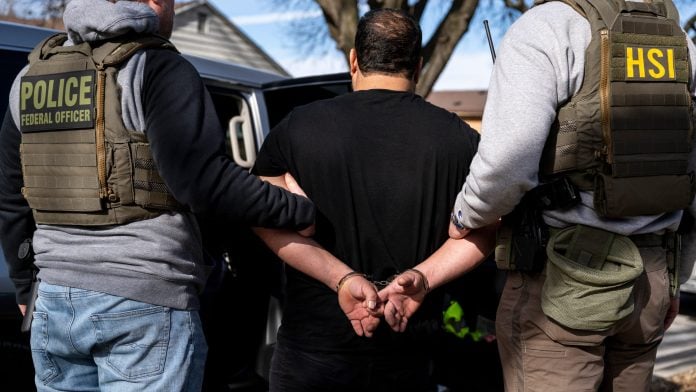
More than a million people have been deported, arrested or lost the right to work since Jan. 20, 2025 as Immigration and Customs Enforcement efforts continue, a tally of information released by the Department of Homeland Security shows. More than 50 people have died in custody, according to ICE.
Yet the banking system has, until recently, remained largely untouched by government pressure. US citizenship isn’t a requirement for opening a checking or savings account, so banks don’t generally collect information about their customers’ immigration status. Government proposals to force banks to verify customers’ status were dropped following fierce industry pushback earlier this year.
However, President Donald Trump signed an executive order in May directing financial regulators to guide banks on keeping a closer watch over their customers’ status and activities.
In their responses to the order, industry representatives including the American Bankers Association and the Independent Community Bankers of America sought to balance praise for the goal of protecting financial integrity with reiterating concerns about any requirement to check their customers’ citizenship.
In a statement responding to the order, ICBA head Rebeca Romero Rainey said her group had stressed the need to “avoid information collection requirements that impose substantial burdens on community banks, undermine their ability to meet the needs of local communities, and drive American citizens out of the regulated banking system.”
In June, the Treasury Department’s Financial Crimes Enforcement Network advised banks to check whether their customers were earning wages illegally, while the Consumer Financial Protection Bureau told lenders to consider immigration status when assessing borrowers’ abilities to repay loans, on the basis that some are at risk of suddenly losing their income sources or being deported. Neither FinCEN nor the CFPB responded to requests for comment.
Since Trump’s re-election, there has been a dramatic slump in loans to borrowers without credit scores — the best available proxy for undocumented people, according to a report by data analytics firm dv01, a subsidiary of Fitch Group.
Across all asset classes, the share of loans to people without credit scores fell more than 70% from 2024 to 2025 and another 40% in 2026, according to the report, which was issued last month and is based on Equifax Market Pulse consumer credit origination data.
Dollar values for the share aren’t included in the dv01 report. The highest concentration of lending to people without credit scores is in auto loans and credit cards, says Vadim Verkhoglyad, head of research at dv01 and the report’s author. Lending in those two classes is expected to be about $7.2 billion in 2026, down from about $37 billion in 2024.
This category of borrowers isn’t a perfect matchup with undocumented people. Many other people in the US, including the very young and the very old, don’t have credit histories that are tracked and scored, while some undocumented migrants do have scores. But the cohort is the closest stand-in for a group that is otherwise unmeasured by the financial industry, says Verkhoglyad. In his view, the change in loans is so big and visible across so many different types of loans that there is no other explanation for it.
“It is the segment with the largest concentration of undocumented borrowers,” Verkhoglyad wrote in the report. “The timing suggests lenders may be reducing exposure to these borrowers amid changes to the political and policy environment.”
Lenders and lobbyists were unwilling to speak on the record about dv01’s findings, but several industry representatives said the category was too “noisy” to be as meaningful as Verkhoglyad says it is.
“Individuals without a score simply have a smaller footprint in the formal banking system,” said Tiffany Smith, an Equifax spokesperson, in an email to Bloomberg News. She added that, overall, lenders are focusing their businesses on people with higher credit scores.
The industry representative who said that some banks are becoming less willing to lend to undocumented people said the shift only began when lenders started to worry about regulatory repercussions, following the CFPB’s guidance in June.
Some of the earlier drop-off may have come from immigrants themselves, Verkhoglyad said.
“My clients are afraid, so they’re pulling their money out of banks,” said Jennifer Oltarsh, an immigration lawyer in New York. “They’re holding it in their mattresses.”
A lot of Oltarsh’s clients had legal status until recently, she said, when the administration began revoking protections for people from countries like Haiti and Venezuela. Many worry their banks will share information with the Department of Homeland Security, making it easier for ICE agents to track and arrest them, she added. They’re also concerned about the government’s recent efforts to levy fines of anywhere between $5,000 and more than $1 million against people alleged to be in the country illegally.
Murad Awawdeh, president of the New York Immigrant Coalition, an advocacy group, said he tells people seeking advice not to shut down their bank accounts.
Oltarsh is less sure about what to recommend. Some of her clients are worried that, as a result of the guidance from the Treasury’s FinCEN unit, banks will start filing a lot more suspicious activity reports “to protect their own safety.” Such reports can lead to information being shared with law enforcement agencies or access to banking services being restricted or removed. In her view, it’s not an unreasonable concern. “I’m not sure how it’s going to play out.”
Yobania is a Nicaraguan immigrant who lives in North Carolina with her husband and five children. Before Trump’s immigration policies went into effect, Yobania — who spoke with Bloomberg on the condition that her last name and other identifying details be withheld — spent her days caring for one of her children, who has special needs. She received around $900 per month from the federal government to administer the child’s care, while her husband earned $700 or so every two weeks working at a local manufacturing facility.
The family members share one bank account, with Wells Fargo. Several years ago, the bank issued them a credit card with a $2,000 limit.
This year, the government told Yobania that her child needed to be a naturalized citizen to receive disability benefits and ended the payments. After ICE raided her husband’s job site, he was afraid to return to work. While Yobania still earns a little cash cleaning houses, the family’s finances are essentially frozen. They maxed out their credit card long ago. Their opportunities to borrow are gone.
“These regulations are a tool of fear more than anything else,” said Ben D’Avanzo, senior strategist for federal advocacy at the National Immigration Law Center. “Banks are part of the overall environment of fear that immigrants are experiencing.”
This report is auto generated from the Bloomberg news service. ThePrint holds no responsibility for its content.