



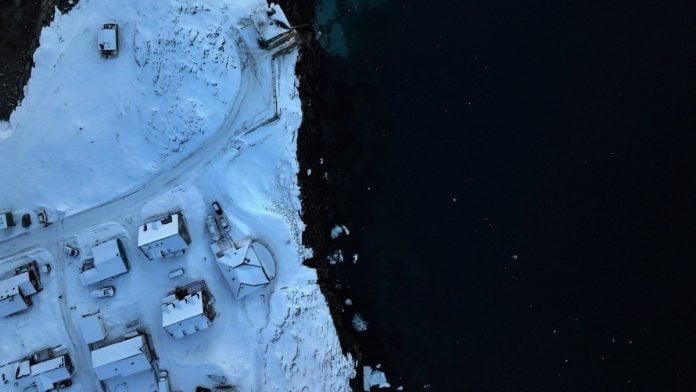
New Delhi: US President Donald J. Trump’s Friday announcement, of an agreement with Denmark over Greenland, comes after months of high-stakes negotiations over an island that the American President has sought to purchase during the course of his two presidencies.
The announcement made by Trump is light on details of the full contours of the deal, but highlights key points of what Washington considers a part of the deal.
Danish Prime Minister Mette Frederiksen has welcomed the agreement as “great for NATO [North Atlantic Treaty Organisation] and Europe as well”.
Trump’s deal for greater military access in Greenland falls short of his call for handing over the territory to the US, an outcome he had deemed as “unacceptable” in January. The new agreement, according to Trump, will ensure “permanent US control” over security of the self-governing autonomous territory part of the Kingdom of Denmark, while also underlining that “no adversary” will ever build a base on the island.
The agreement is likely to be signed next week on the margins of the United Nations General Assembly (UNGA), potentially easing transatlantic tensions.
Trump and the other NATO member-states, including Denmark, have had major differences over the fate of Greenland, especially as the US President called for either annexation or the purchase of the island during the early months of his second term.
ThePrint explains the contours of the deal as it currently stands.
Also Read: ‘Will not take Greenland by force…we will remember if Europe says no,’ Trump says at Davos
‘Permanent control’ over security of Greenland
The agreement is expected to allow greater American military presence in Greenland, while preventing China or Russia from stationing troops or building bases in the strategically placed Arctic island, according to Bloomberg.
The US will be empowered to restrict investments in Greenland made by countries it deems as adversaries, reports Bloomberg, while also allowing Washington to act to safeguard its interests in the region.
The island found to the Northeast of Canada is roughly 2.16 million square kilometres in size, with over 39,000 kilometres of coastline. Around 80 percent of the island is covered by a large ice-sheet, which is the second largest in the world, following Antarctica.
The strategic importance of Greenland has grown in recent decades, especially with record rates of melting ice across the Arctic, which has led to more activities by countries in the region.
Russia is one of the eight countries to have a geographical footprint in the Arctic, alongside Canada, Norway, Finland, Denmark, Iceland, Sweden and the US.
Other countries including China and India have also shown interest in the Arctic for multiple reasons. From research into the melting ice-caps for better understanding of glacial melt in the Himalayas, to the Northern Sea Route, the region has increasingly become important for countries outside its immediate vicinity.
“We will immediately begin the process of developing a large Military presence in the appropriate part of Greenland, of which there are many. We will work with the people of Greenland in its development and construction,” Trump said in a statement on the micro-blogging platform X.
The latest agreement could potentially allow the US a potential veto over any investments in Greenland from countries like Russia and China, given American concerns that Chinese or Russian investment, especially in sensitive areas such as minerals, could impact the US’ position in Greenland.
The US in Greenland since WWII
The US’ interest in Greenland is not new. Since World War II, its military has had a presence in Greenland. The American military moved quickly to capture the island during WWII, after NAZI Germany occupied Denmark in the summer of 1940.
Denmark and the US eventually negotiated a military treaty in 1951, which allowed the US the right to build military bases across Greenland as long as prior consent was sought from Copenhagen.
The US will likely not require any consent from Denmark or Greenland to expand its military footprint on the island, according to the BBC. Throughout the Cold War, the US maintained a number of military installations in Greenland, especially as the polar route was the quickest trajectory for an inter-continental ballistic missile between the US and the Soviet Union.
The US eventually reduced the number of its active bases to just one at Thule, which was renamed as the Pituffik Space Base in 2023. The US-Denmark 1951 agreement has been amended and supplemented in the past, including in 2004 signed in Igaliku between the two countries. The primary fixture in all these agreements remained the Danish consent required for US military presence.
The agreement, which could be signed next week on the margins of the UNGA, may finally bring to an end the ongoing chapter between the US and the rest of NATO over the fate of Greenland. Trump’s provocative claims, including over the territory, had led to an united response by Europe, which inflamed tensions within the transatlantic partnership.
Frederiksen’s response to the agreement highlights that the deal recognises Denmark’s sovereignty over the Arctic island. Greenland also welcomed the agreement, while making no comment on the final contours of the deal.
(Edited by Amrtansh Arora)
Also Read: Trump’s fight for Greenland has shaken his most committed European allies—the Far-Right