







With tensions constantly surging across West Asia, certain nations which are existing members of this zone, have been directly exposed to impacts, both economic and political. The conflict’s consequences, or rather ramifications, extend their jurisdiction to observer nations as well, including India.
From the rampant inadequacy of Liquefied Petroleum Gas to the rising gratitude of Electric Vehicle drivers towards their vehicles, New Delhi has found itself buried, and even perhaps burdened, by the commotion created by a conflict which witnessed India’s relative inactiveness.
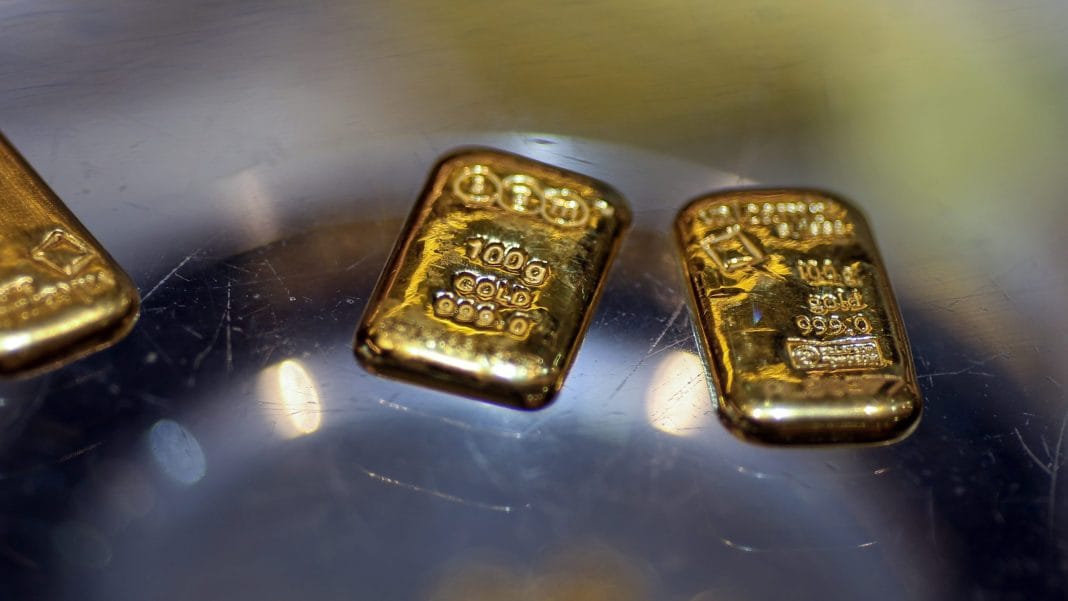
The Indian economy reveals how the same concept applies to gold, a precious metal far too precious during times of political and economic instability and uncertainty. The value of the ‘safe haven’ asset rises when there is risk of the collapse of traditional currencies. Likewise, to some extent, the commodity-for-commodity economy is a safety net, acting as a fallback when basic necessities are the need of the hour. And therefore, the Indian economy stands on a rather paradoxical juncture.
While the State has high potential for gold exports through various reserves, with 88 percent of the total reserves residing in Karnataka only, as per the World Gold Council, it fails to produce an amount to appease at least half of the total global gold demands.
The root cause for this contradiction is the heavy capital expenditure on project developers are compelled to consider. There is a national scarcity of domestically-crafted specialised equipment for gold mining. Hence, developers resort to their last straw—worldwide assets.
And yet, the import duty on this equipment is consistently high, resulting in resentment in the extraction of the yellow metal. At the same time, infrastructure that is poor and unsuitable is persistent, particularly in the remotest of gold reserves. Eventually, India is forced to import gold, and estimates suggest about 5.6 billion USD has been welcomed into the nation in the month of April this year.
However, the nation’s approach is bound to bring other complications, especially with the ongoing Middle East crisis. At times like these, the prices for gold are an exemplification of Demand-Pull Inflation. Globally, the demand for the metal is rapidly elevating, but India’s supply is scarce. Therefore, the prices will increase, in order to fill up the vacuum created.
But gold prices also decrease due to the restored faith of investors in bonds, savings accounts and fixed deposits, wherein interest rates are involved. The sudden increase in these rates is what attracts investors. Additionally, surplus gold exports only widen and exacerbate the trade deficit.
The rise in gold imports has placed its implications on the Indian Rupee and India’s foreign exchange reserves. On an international level, gold is exchanged in American Dollars. Thus, surging gold demands surge trading in USD, which strengthens the Dollar, and weakens the Rupee. Also, with a widened trade deficit, a larger amount of the Indian currency is to be allocated for international exchange, for its conversion in USD. This depreciates the value of the INR, and hence, the value of the USD in INR has shown a steady increase.
In addition to this, increasing demands for gold domestically drain the nation’s foreign exchange reserves, which are employed to fund international trade. The reserves encompass all of India’s imports, some of which are essential for the country. Hence, it is not ideal for a singular asset to deplete a broader spectrum of valuable resources for purchasing other foreign assets.
In the 2025-26 financial year, according to Al Jazeera, India imported about 72 billion USD worth of gold. Perhaps this is what moved Prime Minister Narendra Modi to bring out a declaration in Hyderabad on the 10th of May, 2026. He discouraged the citizens from making rather futile and trivial purchases of gold. To some extent, it was right of the Prime Minister to do so.
However, an address to the public has effects linger only temporarily, becoming somewhat impractical. The fault lies not in the heavy imports, but in the gold extraction structure. There should be initiatives encouraging deep dives into the nation’s gold reserves, and policies should be crafted defining the creation of adequate infrastructure and capital required. Perhaps the tax structure should give way to leniency, in terms of equipment required for gold metal extraction.
The nation once advocated and spread the word of Swadeshi, or self-reliance. But why does it now hesitate to maintain and uphold the very meaning of the word, relying instead on its citizens to reduce their expenditure, in the name of patriotism?
Kabir Dahiya is a student of The Oberai School of Integrated Studies, Dehradun. Views are personal.
Also read: Paper leaks, marksheet mix-ups—it’s a bad time to be a student in India