



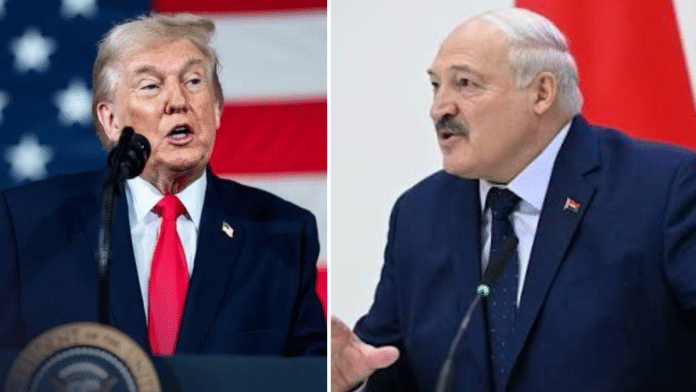
New Delhi: President Donald Trump has announced that the US is working on a “massive deal” to buy potash from Belarus, saying the prices were substantially lesser than what is paid to Canada.
Canada is central to Trump’s announcement because it is the supplier he is directly pitting Belarus with. The northern neighbour supplies most of the potash imported by America.
Belarusian potash, Trump said Monday in a post on Truth Social, would cost the US substantially less than what it currently pays Canada, describing the lower price as good news for American farmers and ranchers.
That means the proposed Belarus deal is not only about reopening trade with Minsk. It also introduces another supplier into a US market heavily dependent on Canada. Potash is a group of potassium-containing minerals and chemicals used as a vital agricultural fertiliser.
The announcement comes after more than a year of talks between Trump’s envoy John Coale and President Alexander Lukashenko. The talks have already produced prisoner releases and US sanctions relief. They also cover frozen funds and trade.
In March, Belarus released 250 prisoners, after which Washington lifted sanctions on Belarusian potash producers Belaruskali and the Belarusian Potash Company.
The latest agreement came 16 September where Belarus released another 25 prisoners, with the US agreeing to lift sanctions on Lakokraska, a paint manufacturing unit and Bellesbumprom, a state-owned forestry and wood processing group.
Coale said the talks were not over and he expected hundreds more prisoners could be released in the coming months. He has been tasked by Trump with securing the release of hundreds of people, including political activists, human rights campaigners, journalists, and lawyers.
The proposed purchase follows Washington’s earlier sanctions relief on Belarusian potash producers. Lukashenko has said Belarus had resumed selling potash to the US after sanctions were lifted.
Putin’s looming presence
Despite the new US engagement, Lukashenko has made clear that Belarus is not abandoning Russia.
In December 2025, as talks with Washington gathered pace, the Belarusian president said his country was moving towards a “big deal” with the US but would not do so at Russia’s expense. Belarus, he asserted, would not deviate from its close-ties policy with Russia.
Washington is negotiating directly with a government that remains closely aligned with Moscow. Reports also suggested that American officials see engagement with Lukashenko as a way of potentially reducing his dependence on Russian President Vladimir Putin.
The talks, meanwhile, also include Belarusian money frozen in the US.
During the September negotiations, Coale said, Washington was working on a mechanism to unblock tens of millions of dollars in Belarusian funds held in American banks. Lukashenko had put the amount at around $43 million to $44 million.
A brief shift from 2020 stance
The current engagement is a marked change from Trump’s language in 2020.
After mass protests followed the disputed Belarusian presidential election that year, Trump described the situation as “terrible” and said the US was watching it closely.
Now, Trump has described his relationship with Lukashenko positively, with his special envoy negotiating prisoner releases with Minsk.
The next test of the Trump-Lukashenko relationship will come when Coale returns to Minsk. The US envoy has already indicated that hundreds more prisoners could be released, potentially expanding the prisoner-for-lifting the sanctions arrangement that has driven the talks so far.
Washington is also working on a mechanism to unblock the $43 million to $44 million in Belarusian funds, which Lukashenko says are frozen. With sanctions on Belarusian potash producers lifted, the groundwork is now in place for the larger purchase that Trump has announced with Belarus entering the western trade market along with Canada.
As Lukashenko said any major US deal will not come at Russia’s expense, the coming negotiations will test how far Washington and Minsk can expand trade and sanctions relief under Putin’s shadow on Lukashenko.
(Edited by Tony Rai)