


New Delhi: Pakistan Sunday imposed emergency and governor’s rule in Khyber Pakhtunkhwa, escalating its standoff with former PM Imran Khan’s Pakistan Tehreek-e-Insaf (PTI), the ruling party in the region. The declaration brings an end to the PTI’s rule in the restive northwestern region.
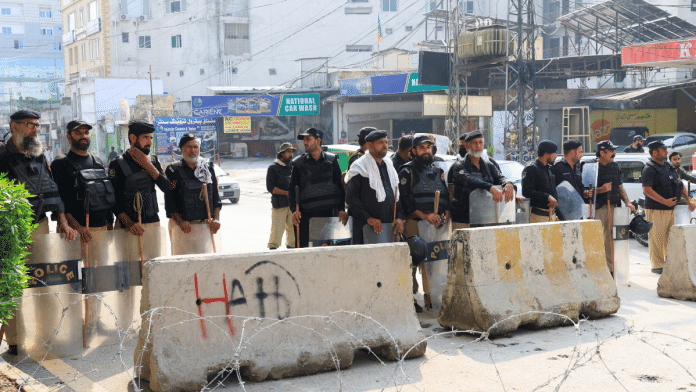
The decisions coincide with a PTI protest march demanding access to Khan, who has been in jail for over three years, and his eventual release, with organisers initially planning to take the demonstration to Islamabad. The federal government warned that it will not allow protesters to enter the capital.
The confrontation between the PTI and the federal government extends beyond the march. Counterterrorism policy has become one of the central points of disagreement, with both sides accusing the other of failing to address the province’s security crisis.
Khyber-Pakhtunkhwa Chief Minister Sohail Afridi has argued that the provincial government’s proposals have been ignored. Faisal Kundi, the KP governor, has accused the PTI of failing to condemn terrorism adequately and lacking a credible strategy to combat it. The governor said the province could not be surrendered to militant groups and described counterterrorism as a non-negotiable priority.
The PTI has said the party will challenge the decision through constitutional, legal and democratic forums, Dawn reported.
‘Extraordinary threat’
Under the proclamation, Afridi, provincial ministers, advisers, special assistants and the provincial advocate general will immediately vacate their offices.
The measures were approved by Pakistan President Asif Ali Zardari following recommendations from the federal cabinet, which held a meeting in an emergency session chaired by Pakistan Prime Minister Shehbaz Sharif, according to local reports. The government has cited Articles 232 and 234 of Pakistan’s constitution, provisions governing emergencies and the failure of constitutional machinery in a province, to push the measures.
Article 232 allows the president to proclaim an emergency when the security of Pakistan, or part of the country, is threatened by war, external aggression or internal disturbances beyond a provincial government’s ability to control. Article 234 addresses a breakdown of constitutional machinery in a province and provides for the exercise of certain provincial functions by the president.
In a statement, the Prime Minister’s Office accused the provincial government of deliberately disengaging from the fight against terrorism. Cabinet members argued that the security situation required the federal government to exercise its constitutional authority.
In the presidential declaration, the government argued that the scale of militant violence had created an extraordinary threat to public safety. It cited attacks on government installations, infrastructure and law enforcement agencies, and accused the provincial administration of failing to take adequate action against terrorism and lawlessness.
“The extraordinary intensity of terrorist incidents poses serious threats to the lives and property of the public,” the declaration said.
It also cited a report from the provincial governor that described a breakdown of constitutional machinery, and asserted that the provincial government was unable to function in accordance with the Constitution.
The proclamation authorises the federal government to direct the governor to assume some or all functions of the provincial government. The governor may also exercise powers assigned to other provincial institutions, including the provincial assembly, as directed by the federal government.
The cabinet pursued the measure after other efforts to resolve the dispute reportedly failed. Those efforts included an attempt to mediate between the federal and provincial governments through Maulana Fazlur Rehman, the leader of the Jamiat Ulema-e-Islam-Fazl party.
The mediation did not produce an agreement. Sharif told cabinet members that the province’s security situation had deteriorated despite substantial federal funding. He said the federal government had provided at least 800 billion Pakistani rupees over the past decade to support counterterrorism efforts and improve security.
Political standoff
Afridi continues to lead a PTI protest campaign seeking concessions for Khan, who is imprisoned at Adiala Jail in Rawalpindi.
Afridi Saturday said the PTI will continue peaceful demonstrations, and rejected military operations as a solution to the province’s problems.
The march began after two rounds of negotiations between the PTI and the federal government failed to bridge their differences. The principal dispute centered on the party’s demand for access to Khan before agreeing to call off the protest. The government insisted that the demonstration end first.
The march began in Lakki Marwat on 4 October. Following the president’s approval, the Pakistan government appointed Dr Muhammad Fakhr Alam Irfan, a senior Pakistan Administrative Service officer, as chief secretary of Khyber Pakhtunkhwa.
(Edited by Sunanda Ranjan)