





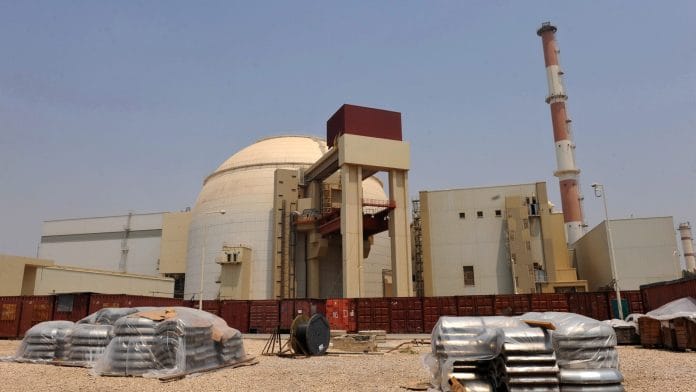


Iran permitted monitors at the United Nations atomic watchdog this week to visit its Bushehr nuclear power plants while stonewalling inspectors’ demands to verify the condition and location of its enriched uranium stockpile.
While the visit to Bushehr was welcomed by the International Atomic Energy Agency, it failed to resolve growing concern over the Islamic Republic’s inventory of near-bomb-grade uranium, according to a report by the group. That material — enough to craft about a dozen warheads — hasn’t been verified for a year.
While monitors conducted a three-day visit to Bushehr, “the agency has not received information from Iran regarding the status of any of its other declared nuclear activities,” according to the 10-page restricted report seen by Bloomberg.
IAEA Director General Rafael Mariano Grossi reiterated demands for Iran to allow his inspectors to resume their work and appealed to a negotiated resolution to the stalemate between Israel, the US and Iran.
“The long-standing problem and recurrent crises surrounding these issues must be resolved trough a long-lasting, verifiable diplomatic agreement,” he said.
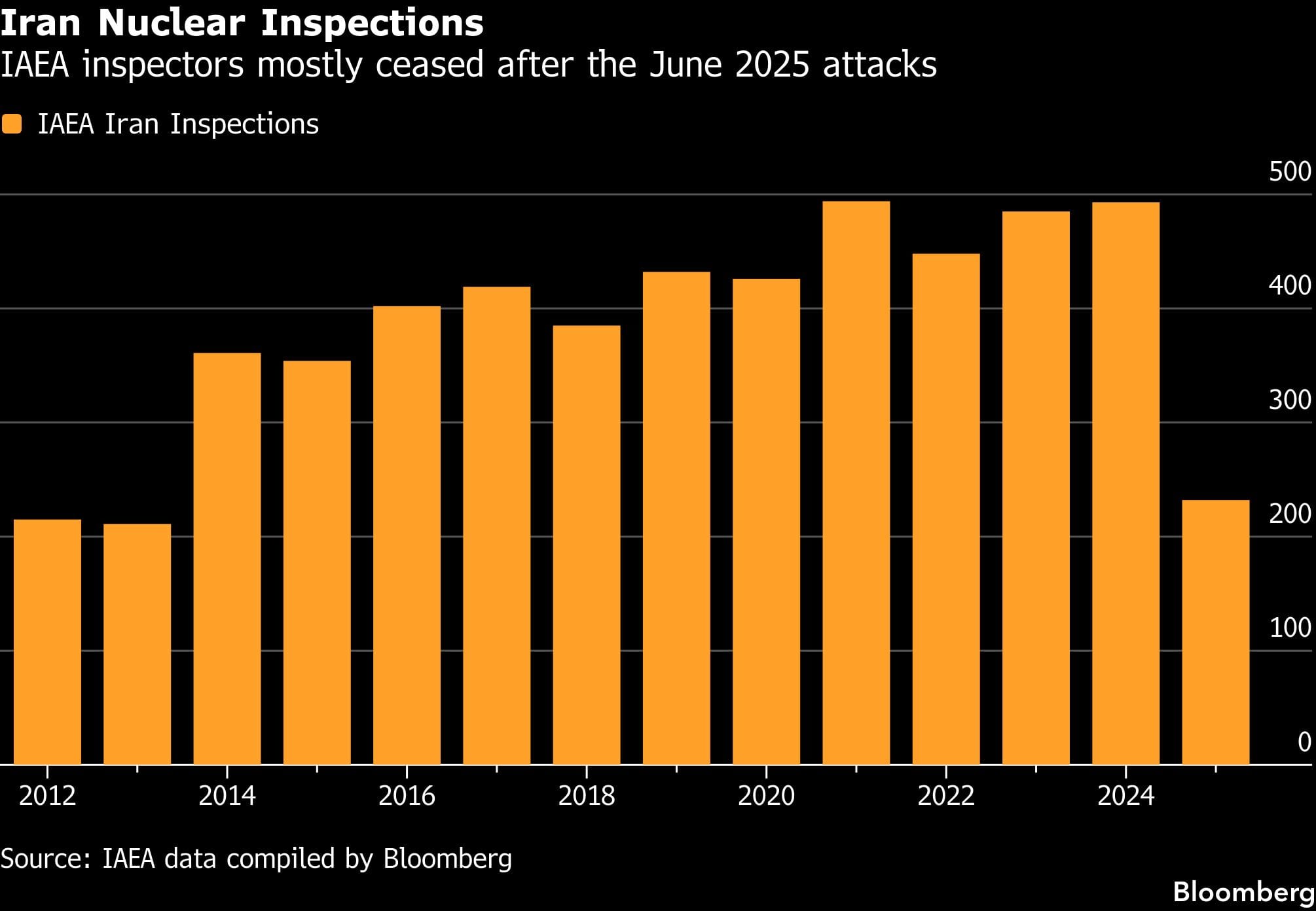
IAEA inspections plummeted by more than half last year after Iran imposed new restrictions following the 12-day war that saw Israel and the US bombard their nuclear sites. Monitors have yet to return to damaged sites in Fordow, Isfahan and Natanz, where Iran’s 440.9 kilograms (972 pounds) and 8,599.6 kilograms of lower enriched material was last seen.
The IAEA’s report underscores how the US-Israeli war on Iran has created new nuclear dilemmas that didn’t previously exist, according to two senior diplomats familiar with the report, who asked not to be identified discussing sensitive data. The longer the material remains outside of IAEA safeguards, the higher the risks grow that the material could be diverted for non-peaceful uses, they said.
While the White House maintains that Iran’s nuclear program has been obliterated, it’s sought to negotiate access to the uranium. US President Donald Trump has alternately suggested the material could be exported from Iran or domestically rendered inert under IAEA supervision.
With a key IAEA board meeting set to convene June 8 in the Austrian capital, markets are closely watching for new information about Iran’s nuclear program.
The US and Israel attacked Iran, sparking the current war, less than 24 hours after the agency’s Feb. 27 report suggesting activity near bombed nuclear sites. Last June’s strikes followed a day after the IAEA’s board censured Iran over stonewalling its inspectors.
Disclaimer: This report is auto generated from the Bloomberg news service. ThePrint holds no responsibility for its content.