



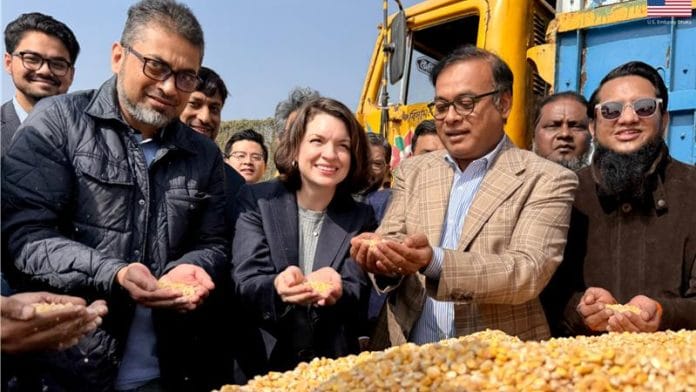
New Delhi: Bangladesh is now diversifying its food imports from the West. This week, the country resumed its imports of American corn for the first time in eight years. A shipment of nearly 58,000 metric tons of yellow corn harvested in Minnesota and the Dakotas arrived at Chattogram port Tuesday, according to a statement from the US embassy in Dhaka. The last time Bangladesh imported corn from the United States was in 2018.
In 2024, Bangladesh moved away from India, once its largest supplier of corn, and shifted to South American exporters such as Brazil and Argentina. In 2023, Bangladesh imported the most corn from India, valued at USD 171 million, but in 2024-25, Brazil accounted for 93 per cent of the country’s corn imports, followed by Argentina at 4 per cent and Pakistan at 2 per cent.
The renewed US imports now come as Dhaka and Washington seek to recalibrate trade ties amid a widening bilateral trade gap. Washington recently reduced its reciprocal tariff rate on Bangladeshi goods to 20 per cent, down from an initial 37 per cent, after Dhaka agreed to increase imports from the US, part of efforts to narrow an annual trade deficit exceeding 6.2 billion dollars.
Westward shift
Corn is important for Bangladesh’s feed and livestock industry, and despite being the country’s second-largest grain crop after rice, domestic production falls far short of demand, reports noted.
The shipment that landed on 1 January comprised around 58,000 metric tons of corn sourced from North Dakota, South Dakota, and Minnesota. According to local reports, it has been jointly imported by three of Bangladesh’s leading animal feed producers: Nahar Agro Group, Paragon Group, and Narish Poultry and Hatchery Limited.
Bangladeshi feed millers said the decision to turn back to US suppliers was primarily economic. Traders involved in the shipment, in local reports, were quoted saying American corn was priced 3 to 5 dollars per tonne cheaper than supplies from Bangladesh’s traditional sources, while meeting required quality standards.
“The decision was based on the best balance of price and quality,” Rakibur Rahman Tutul, managing director of Nahar Agro Group, one of the importers involved, was quoted in The Daily Star. Brazilian corn, he said, was being offered at around 250 dollars a tonne, while US suppliers undercut that price by several dollars through a competitive bidding process.
Amid a strain in Bangladesh–India trade ties, both countries have imposed restrictions on trade in items like yarn and cotton. Bangladesh is now likely to discuss the imposition of tariffs on Indian cotton yarn imports, with the Bangladesh Trade and Tariff Commission set to take up this issue on 5 January.
Bangladesh has also signed an MoU to import 660,000 metric tons of US wheat, about 300,000 metric tons of which have already been delivered.
(Edited by Varnika Dhawan)