



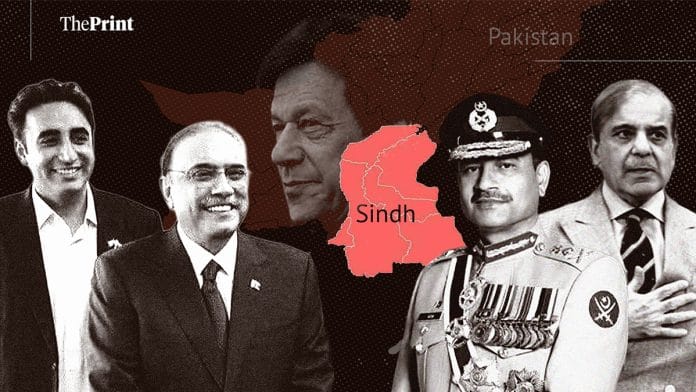

New Delhi: The debate over redrawing of provincial boundaries in Pakistan through the highly anticipated 28th Amendment has reached a crescendo, particularly over speculation that it might involve division of the Sindh province. Talk of a divided Sindh has triggered backlash, most of all from the Pakistan People’s Party (PPP), which is a key constituent of the ruling federal coalition led by Pakistan Muslim League-Nawaz (PML-N).
Sindh, Pakistan’s second most populous province, has long been PPP’s political bastion. It has had a chief minister there since 2008, barring two brief and one relatively longer interregnum. The PPP’s objection is also born out of the fear that the 28th Amendment may separate Sindh’s capital, the port city of Karachi, from the rest of the province.
“It’s like attempting to create a Maharashtra without Mumbai in it,” said Husain Haqqani, senior fellow at Hudson Institute and Pakistan’s former ambassador to the US (2008-2011).
“There is going to be a civil war in Sindh if the 28th Amendment comes to a pass,” Ayesha Siddiqa, senior fellow at the Department of War Studies at King’s College London, told ThePrint.
On 3 September, the Sindh Assembly unanimously passed a resolution rejecting any proposal or suggestions which may, in effect, alter the province’s existing territorial limits. Labeling Sindh as a “historic, civilizational and constitutional” entity, the resolution, according to The Express Tribune, highlighted that Sindh was “British India’s first provincial legislature to come out in support of Pakistan’s establishment on 3rd March 1943”.
“Sindh is one and shall remain one,” read the concluding line.
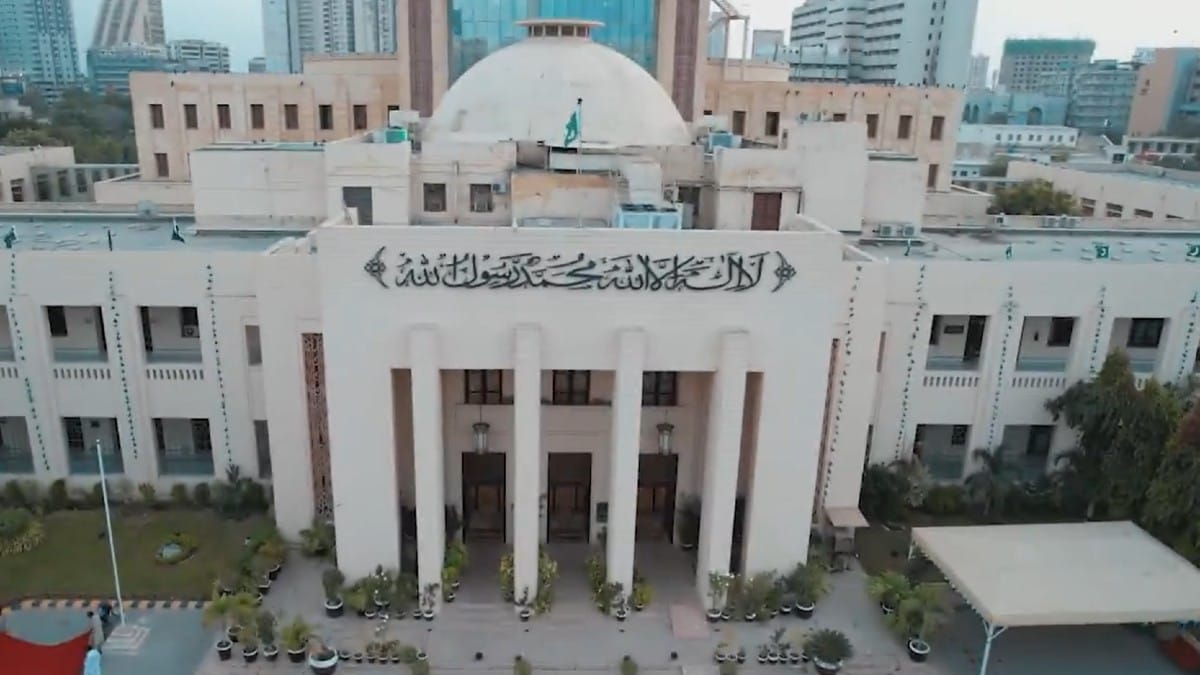
The resolution also invoked Article 239(4) of the constitution Pakistan adopted in 1973, which says that any constitutional amendment which would have the effect of altering the limits of a province cannot be presented to the President for assent unless passed by the relevant provincial Assembly with a two-thirds majority.
Also Read: North Pakistan communities are marrying glaciers to make new ones
28th Amendment & ‘collapse’ of governance
For weeks now, reports in the Pakistani media have hinted at the powers that be weighing a 28th Amendment, which may involve either creation of new provinces, administrative units, or empowerment of local governments. In late July, Pakistan’s interior minister Mohsin Naqvi remarked at the Pakistan Economic Summit that the current system of governance has “collapsed” and the country is in need of new administrative units.
A day later, DG-ISPR, spokesperson of Pakistan military’s media wing, endorsed Naqvi’s comments, saying, “…if good governance requires an administrative reset, then let that happen.”
These back-to-back statements were widely interpreted as a signal that the Pakistan’s military establishment is looking to restructure provinces, more so given Naqvi’s proximity to Chief of Defence Forces (CDF) Field Marshal Asim Munir.
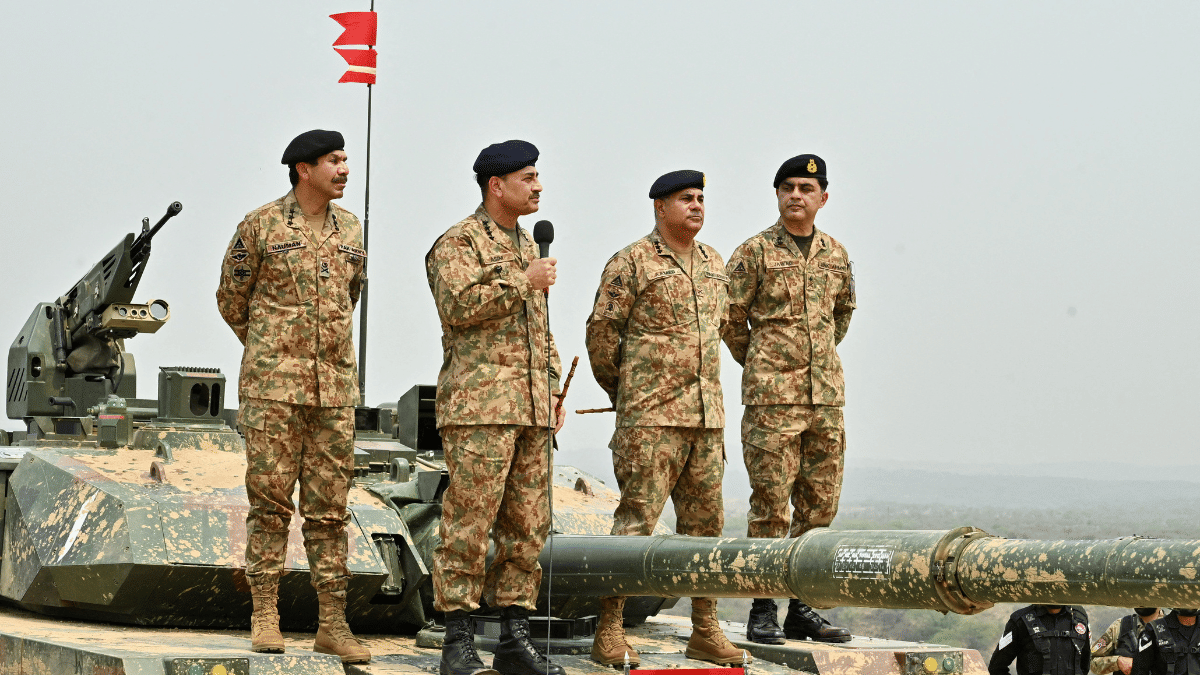
The 28th amendment in the context of Munir’s powers is significant considering what the last amendment gave him in terms of power consolidation. In November 2025, Pakistan’s national assembly passed the 27th Constitutional Amendment Bill, which made Asim Munir Field Marshal for life, the chief of all defence forces, including the navy and the air force, and gave him President-like immunity from prosecution. Meanwhile, the 26th Amendment had increased the Army chief’s term to five years, extendable for another five.
On 5 September, Naqvi doubled down, asserting that he will not “back down” from his position whether he remains in his job or not, and that new administrative units should be created according to the will of the people, and not on the basis of ethnicity or community.
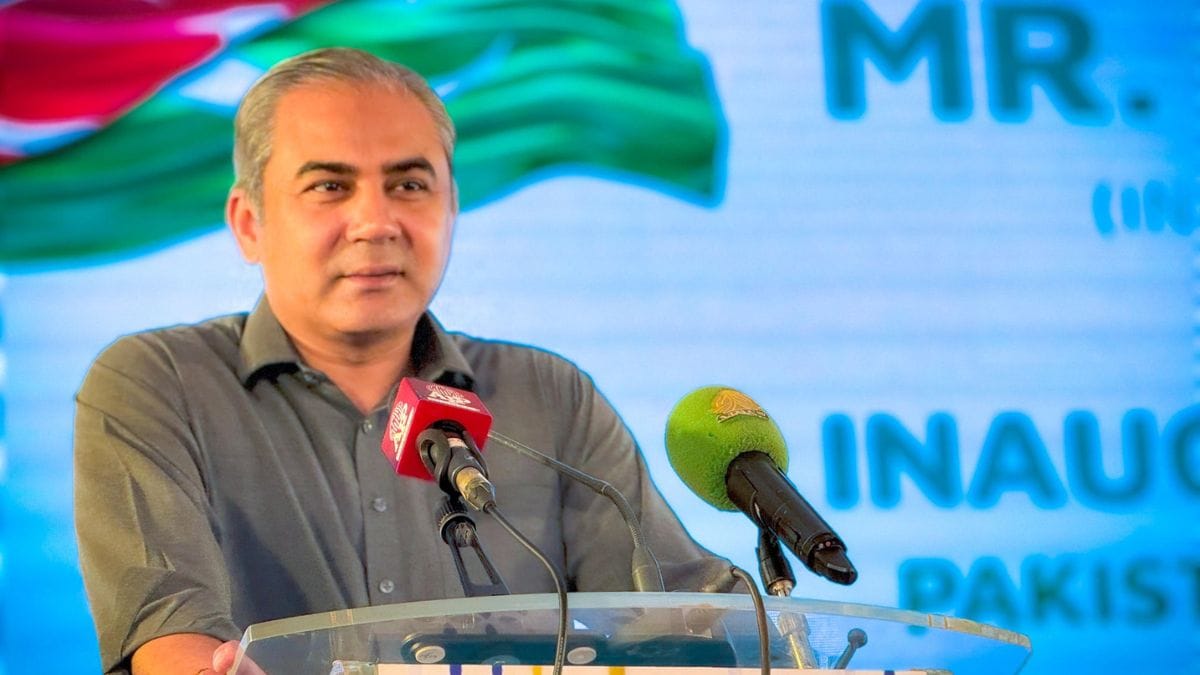
Some political commentators in Pakistan saw the latest remarks as Naqvi hinting at the possibility of a referendum.
Ayesha Siddiqa sees it differently. “I don’t think they will go for a referendum. The earlier referendums in Pakistan were mostly about extending tenures of military chiefs as Presidents, like in the case of Zia-ul-Haq and Pervez Musharraf. These referendums were rigged.”
This time, a referendum cannot be initiated unless martial law is first imposed.
— Ayesha Siddiqa
While it is not new, the debate over redrawing provincial boundaries gained fresh momentum after the passage of the contentious 26th (2024) and 27th (2025) amendments, which emboldened the Pakistani Establishment to push through more consequential changes to the constitution. The 28th Amendment, if introduced, would be the most sweeping overhaul of the provincial system since the 18th Amendment.
Passed in 2010, the 18th Amendment not only devolved significant autonomy and powers to provincial governments, but also cemented the 7th National Financial Commission (NFC) Award of 2009, which increased provinces’ share of the federal divisible pool of taxes to 57.5 percent, with the federal government retaining the remaining 42.5 percent.
Now, the federal government wants a greater share of funds for debt restructuring and defence needs, and may be looking to amend the NFC award to this end.
Provinces view this with deep suspicion, seeing it as an attempt to chip away at their autonomy and centralise federal authority further.
According to Husain Haqqani, the 28th Amendment is “not so much about creating new provinces,” but undoing existing provinces to divert more resources to the federal government.
“Usually, when the establishment is defence-oriented, they try to find new funds for that purpose.”
— Husain Haqqani
“The establishment believes the provinces squander money and think there is more corruption in the provinces,” Haqqani told ThePrint, adding that the boundaries of the provinces are more or less what they were in 1947.
Since provinces have failed to devolve powers to local bodies, as mandated under Article 140A, resulting in weak governance at the grassroots level, the Pakistani Establishment is using this rationale to push for provincial reorganisation.
Circling back to the 18th Amendment, Haqqani explained that the idea was to empower provinces to provide better schooling and overall good governance at the grassroots.
“In the process, the central government believes they have taken disproportionate resources and now wants greater control over them. The establishment does not particularly care about schools and healthcare. Pakistan has some of the worst human development indicators,” he said.
Haqqani also described the Pakistani Establishment’s approach as one aimed at creating a “new country with very little regard of the pre-Pakistan history”.
“The establishment thinks if the boundaries are erased, then their idea of Pakistan will be further advanced,” he said, adding that this has been the Pakistani Establishment’s “modus operandi for some time”.
Imran Khan factor
The PPP’s staunch opposition to the idea of a divided Sindh puts the ruling coalition led by PML-N in a fix, given that for any constitutional amendment to be passed, the government will require a two-thirds majority in both houses of parliament.
The 28th Amendment, said Siddiqa, may be tabled officially at the end of this month.
If the PPP backs out, the only way a constitutional amendment will clear either the National Assembly or the Senate is if the PML-N and jailed former Prime Minister Imran Khan’s Pakistan Tehreek-e-Insaaf (PTI) come together.
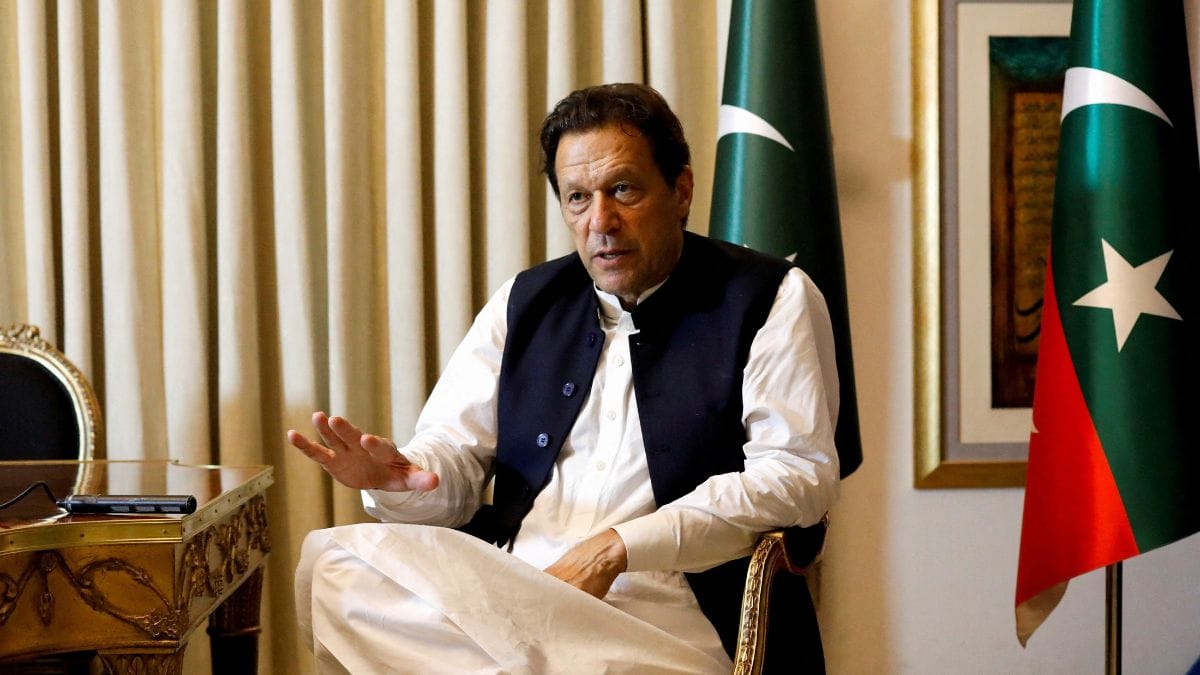
“Anything can happen. But the question is if Imran Khan will agree,” Siddiqa told ThePrint.
Asked whether the Pakistani Establishment is softening towards Imran to show the PPP that it can align with the PTI if the need arises, she said, “The establishment is signalling so. The next Supreme Court hearing on Imran Khan’s hospital transfer would be important to watch in this regard.”
Also Read: Italian embassy in Pakistan warns students over ‘unprecedented surge’ in forged visa documents
Zardari’s PPP at war?
The PPP is not the only Sindh-centric political force weighing in on the potential redrawing of provincial boundaries. Altaf Hussain, founder of the Muttahida Qaumi Movement (MQM), has sounded alarm bells too.
Pakistan, he said earlier this month, is “rapidly heading toward its most dangerous phase”.
Altaf, once described by the BBC as a “powerful but absent politician,” lives in self-imposed exile in London and founded MQM as the flagbearer of the rights of Mohajirs—the Urdu-speaking community that migrated from India to Pakistan after the Partition.
Addressing supporters on 2 September, during his 462nd Emergency Intellectual Session on TikTok, Altaf claimed deliberations on the 28th Amendment are underway, which could include the creation of new provinces, and that this debate “should never be taken lightly”.
He subsequently uploaded his message in a long post on X the next day, while also accusing the PPP of attempting to inflame tensions in Sindh.
کراچی کی یہ صورتحال دیکھ کر مجھے بہت دکھ ہوتا ہے۔ الطاف حسین#Karachi
کراچی پاکستان کا پہلا دارالخلافہ تھا لیکن دارالخلافہ اسلام آباد منتقل کردیا گیا، کراچی قومی خزانے میں سب سے زیادہ ریونیو دیتا ہے لیکن کراچی کو اس کا جائز حق نہیں ملتا، سندھ میں 18 سال سے پیپلزپارٹی کی حکومت… pic.twitter.com/4eqgxYuyiK
— Altaf Hussain (@AltafHussain_90) August 29, 2026
Haqqani pointed out that the tussle between PPP and MQM is not new. “From the MQM’s point of view, it makes tremendous sense to have Karachi as a self-governing unit. MQM is aligned with the establishment on this.” The MQM-Pakistan (MQM-P) had boycotted the session in which the Sindh Assembly passed the Resolution.
Siddiqa sees it from the lens of Karachi’s changing population dynamics.
MQM is supporting the creation of Karachi into a new province, but it has more Pashtuns than Urdu-speaking Mohajirs. And Altaf Hussain has no receptivity in Pakistan.
— Ayesha Siddiqa
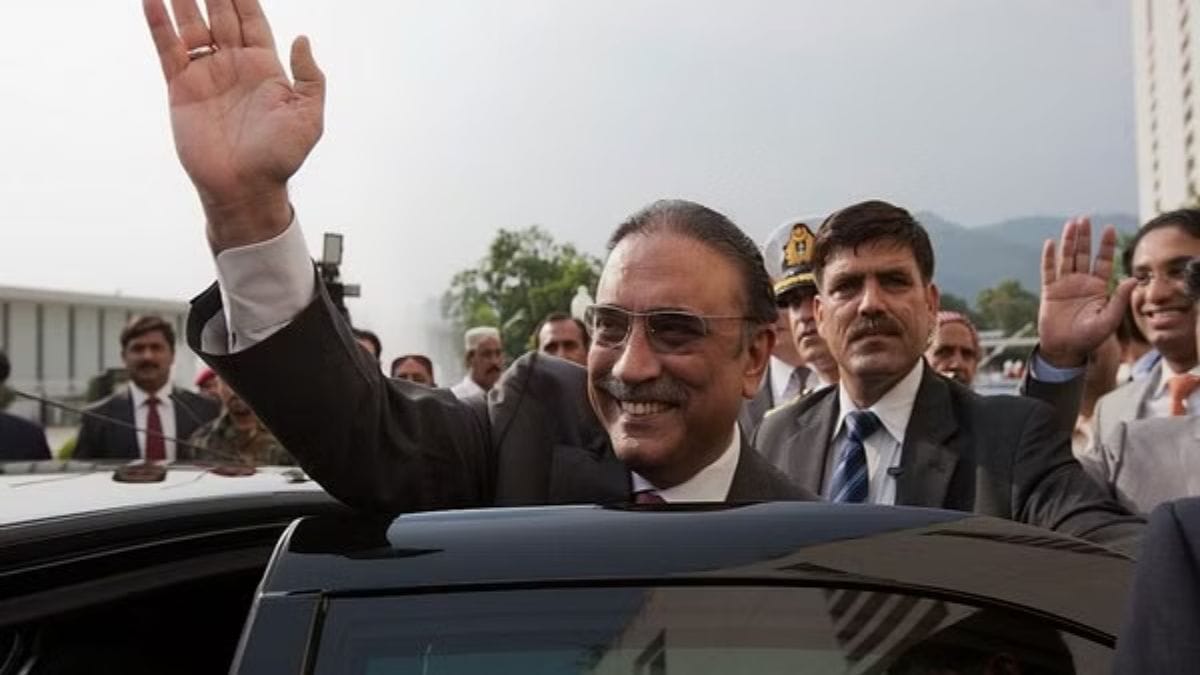
In his address, Altaf also claimed a “silent war” has begun between Pakistan’s military establishment and the President, Asif Ali Zardari, who co-shares PPP’s leadership along with son Bilawal Bhutto Zardari. Altaf alleged that political parties including the PPP had engaged in “joint horse-trading” to pass the 26th and 27th amendments.
If President Zardari won’t accept it, the Pakistani Establishment could still push through the 28th Amendment by imposing martial law and setting up a caretaker government, which can pass any amendments and then get those validated by the Supreme Court, said Altaf.
On the possibility of martial law being imposed, Haqqani told ThePrint, “Pakistan has had multiple experiments in its governance and has had various forms of hybrid governance. One should not rule out anything in Pakistan, as the rules of the game are not firmly established in the country.”
‘In Pakistan, there is no debate’
Although PPP leaders fear Sindh’s division, in particular Karachi being a separate unit, they have in the past paid lip service towards the creation of a South Punjab province.
Siddiqa points to resolutions passed in 2012, when the PPP was heading the federal government, in support of carving out separate South Punjab and Bahawalpur provinces from the existing Punjab province. “These resolutions were not implemented. Two new provinces did not come out. A South Punjab Secretariat was formed, but it all kind of unravelled. Still, Sindh did not push too hard for a South Punjab province, because the Punjabis would say, ‘let’s divide Sindh as well—divide interior Sindh from urban Sindh’.”
She explained that Bahawalpur, a separate province in 1947, was merged with Punjab under the One Unit scheme in the early 1950s.
“It is not that Pakistan does not need new provinces today. Residents of Dera Ghazi Khan, Bahawalpur and Multan have to come all the way to Lahore because the Secretariat is there. The problem is that there isn’t much of a debate. India debated for years, formed a committee when it was reorganising states. In Pakistan, there is no debate. It is very top-down. The only thing which is happening is people saying that new provinces are a popular formula, but they are problematic since it will require new bureaucracies, new Chief Ministers and so on,” said Siddiqa.
Haqqani echoed a similar view.
“The Sindhis and Baloch are very particular about guarding their identity. They are not just ethnic groups, but nationalities in themselves that came together to form Pakistan and their identity precedes their new Pakistani identity. So, they feel if there is any division of their traditional homelands, then it would completely dilute their identities.
Sindh was an independent kingdom until 1843 when the Britishers annexed it. Sindhis have a distinct culture, language and history. They were also among the first ones to support the creation of Pakistan.
— Husain Haqqani
Haqqani underlined that resistance to the idea of a divided Sindh also stems from the economic advantage derived from Karachi. “Karachi is the single largest contributor of tax revenue to Pakistan’s federal government as well as the provincial Sindh government,” he said. He pointed out that Karachi was Pakistan’s first capital, too, and that there have been “many attempts to take Karachi out of Sindh’s hands”.
“It will be a rough ride getting it passed,” Haqqani said of the 28th Amendment, adding, “Pakistan usually ends up with a lot of political noise and noise is seen as turmoil, but right now the establishment has firm control. I don’t think turmoil is the real fear. The real fear is the absence of national consensus for constitutional amendment.”
(Edited by Amrtansh Arora)
Also Read: Bilawal Bhutto denies Austrian princess wedding rumours, calls them ‘social media tamasha’