







In a cramped third-floor room in Tardeo, Mumbai, Prithviraj Kapoor lay ill, too weak to step out for food and too new to the city for anyone to notice his absence. Then, one afternoon, there was a knock at his door. The young woman, who belonged to Kamathipura’s old Bazaar-e-Husn and worked at the dhaba downstairs, brought him food after noticing he had not come by for two days.
Kapoor invited her in, but she froze at the doorway, afraid he would turn her away if he learned who she was. So Kapoor picked up a simple thread and handed it to her.
“Tie this on my wrist. From today, this is a rakhi,” he said.
That moment was a glimpse of the man who would later define Indian theatre and cinema.
“Even before he became a figure of stature, there was a moral instinct that set him apart,” said playwright, writer, and dastangoi Sibtain Shahidi, known for scripting the dastangoi performance Dastan-e-Raj-Kapoor. “It wasn’t cultivated or performative. He didn’t help to be seen helping; he could not respond any other way.”
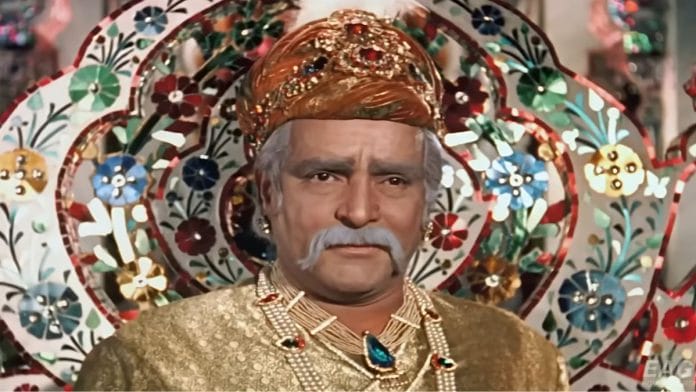
Kapoor was a towering figure whose voice, stage, and screen presence came to define an era. He was among the first to move from theatre to silent cinema to talkies to colour film, and perhaps the only one who could do it with such ease. His work in films such as Sikandar (1941), Awaara (1951), Mughal-e-Azam (1960), alongside his commitment to theatre, made him foundational to Indian storytelling. Admired by contemporaries, respected by political leaders, and loved by audiences, Kapoor was an icon whose influence went far beyond performance and shaped the cultural imagination of a newly forming nation.
“Prithviraj Kapoor did not just act—he expanded what acting meant in India,” Shahidi said. “He brought a theatrical gravitas to cinema and a cinematic accessibility to theatre.”
Prithviraj Kapoor built something larger than himself, which remained in place long after his death in 1972 due to cancer—not just films and theatre, but a way of working, of living, and of seeing people.
It all started with Desdemona
Kapoor’s journey began as a lonely child in Samundari, near Lyallpur, now Faisalabad, Pakistan. He grew up in a world layered with languages and cultures. His mother died when he was three.
“When he was growing up, he had little guidance from his father, who was a police officer in the Indian Imperial Police posted in the city of Peshawar. His father was a philanderer,” said Shahidi, who has spent hours rifling through archives from the 1930s and 1940s.
As a child, Kapoor moved between two homes—his strict grandfather’s house and the wealthy household of his father’s cousin, Kaushalya Khanna. There, he saw silver utensils and grand living, but remained aware that he was both inside and outside that world.
“His grandfather kept him strictly, taught him languages like Pashto, Punjabi, and Hindko, and raised him with discipline. His grandfather even encouraged him toward wrestling, believing it built character and respect,” said Shahidi.
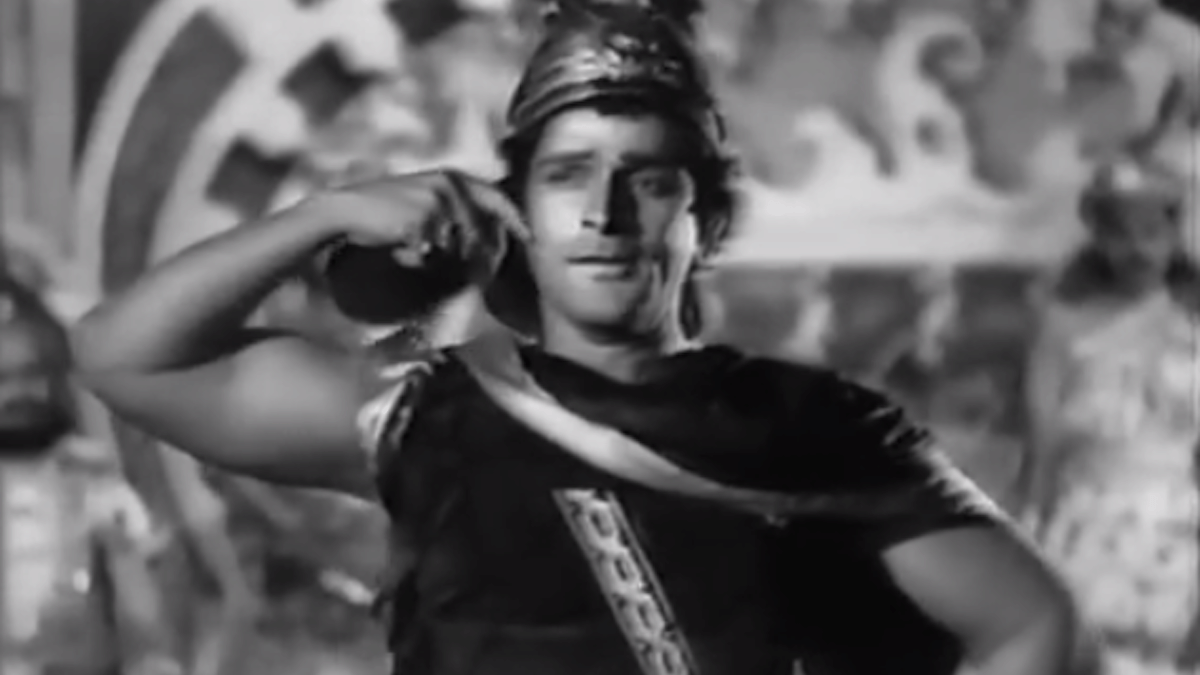
The turning point came in Lahore at Edwards College, where a teacher, Nora Richards, introduced him to theatre. Watching her play Desdemona in Othello altered something in Kapoor. He soon became obsessed with theatre.
“He would keep two big photographs of Nora Richards beside his mother’s picture in his office, and every morning, after bathing and lighting incense, he would bow before both. He used to keep the teacher and the mother together,” said Shahidi.
At 17, he married 15-year-old Ramsarni Mehra. At 18, with just Rs 200 in hand, he left his pregnant wife behind and boarded a train to Bombay (Mumbai). The city was overwhelming. His first instinct upon arrival was simple: to see the sea.
Standing before the Arabian Sea, he is said to have told himself: This city is as vast as this water.
And he knew he’d have to earn his place in it.
Also read: Bashir Badr’s poetry survived riots and politics. Modi to Bhutto, leaders quoted his shayaris
When Kapoor’s Shylock stunned Russian artists
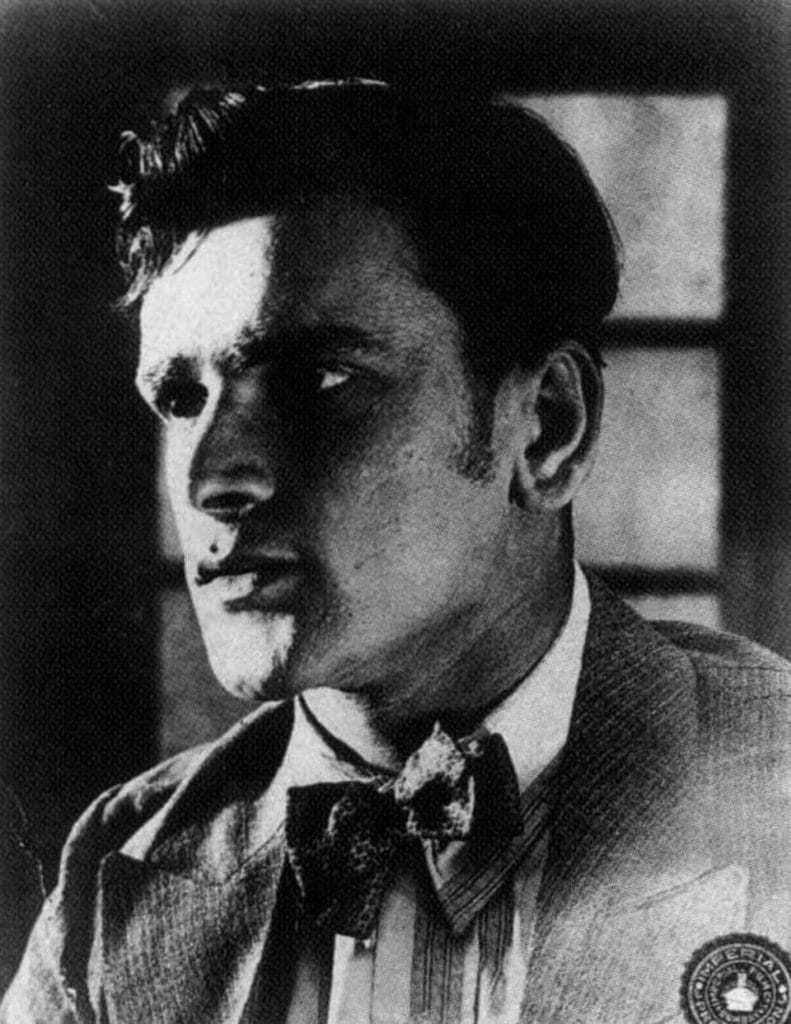
Kapoor started as a junior artist in Mumbai. In mythological and war films, he appeared in crowd scenes as a soldier, devotee, or villager, earning only a few rupees a day.
But one day, a Jewish actress named Ermeline spotted him during a shoot. He was hard to miss, with a muscular build, sharp features, and commanding eyes. She called him over and asked whether he dared to become a hero. He immediately said yes.
“Ermeline was associated with the Imperial Film Company, one of the biggest studios of that era. Convinced that she had discovered a future star, she recommended him to the studio heads. Soon, the struggling extra artist was cast opposite her as the lead hero,” said Shahidi.
For the first time, Kapoor stepped out of the crowd and into the spotlight. The film was Cinema Girl (1930). Kapoor never returned to background roles again.
A year later, he appeared in Alam Ara (1931), India’s first talkie—a film with sound and dialogue. The same year, he played Arjuna in Draupadi (1931).
In the early 1930s, Kapoor moved to Calcutta (Kolkata), a hub of intellectual and artistic energy. Theatre, literature, and politics intertwined. He entered a world where serious art mattered.
He joined the Grant Anderson Theatrical Company, a travelling troupe that moved across cities—tents, actors, jewellery trunks, bullock carts, entire productions in motion. It was a life of constant movement, where the stage was assembled and dismantled night after night.
Around him were legends such as Durga Khote. The works of William Shakespeare and George Bernard Shaw were being performed with intensity—Hamlet, Romeo and Juliet, Julius Caesar. Backstage, a young Raj Kapoor wandered through rehearsals, lights, and costumes, absorbing a world he would later recreate in his own films.
But the romance of theatre came with hunger.
Travelling companies survived on almost nothing. There were days when actors lived on roasted chickpeas because there was no money left. At the same time, the political climate was shifting. The nationalist movement was gaining strength, feudal structures were weakening, and British theatre companies were beginning to withdraw from India.
The Grant Anderson company eventually collapsed in the early 1930s and returned to England.
But Kapoor stayed back and found his way to New Theatres, a film production company. Around him were dancers such as Sitara Devi and Lachhu Maharaj, alongside musicians, writers, and actors who believed that art had to speak to the moment it existed in.
On stage, he became something rare. His performances, especially as Shylock in The Merchant of Venice, left audiences stunned.
“Once, Russian filmmaker Vsevolod Pudovkin and actor Nikolai Cherkasov watched him perform. After the performance, they walked up to him and embraced him. They were overwhelmed by the power he carried on stage,” said Shahidi.
Also read: Bob Dylan is a favourite of every generation. The times are always a-changing
The rise of Prithvi Theatre
By the early 1940s, India was in flux. The freedom movement was intensifying, the Second World War was nearing its end, and communal tensions were beginning to strain the social fabric.
Kapoor believed that theatre was not just an escape; it had to respond. So he decided to build something of his own.
“He gathered friends—actors, writers, musicians, technicians—and made his intention clear,” Shahidi said. “The British are breaking India. We have to save it from breaking. That sentence became the soul of Prithvi Theatre.”
On 15 January 1944, the office of Prithvi Theatre opened near Bombay’s Opera House. From there, actors boarded trains and travelled across the country, performing in towns and cities, speaking directly to ordinary Indians about unity and shared humanity.
“One of the strongest pillars of the group was Zohra Sehgal, along with her sister Uzra Mumtaz. Prithviraj Kapoor wanted a theatre that could heal the division. His plays were not shallow entertainment. They carried messages,” said Shahidi.
Some plays moved audiences deeply, while a few left a lasting imprint. Deewar is one of the four plays—along with Pathan, Ghaddar, and Ahooti—from Prithvi Theatres’ Partition Quartet.
It told the story of two brothers divided by ideology, a conflict that felt uncomfortably close to reality. Audiences wept.
In August 1945, amid growing political unrest, Bombay audiences looking for entertainment gathered at the Royal Opera House as Prithvi Theatres staged its new production, Deewar. The audience was confronted with a powerful allusion to Partition.
Kapoor’s post-performance speeches, urging communal harmony and national unity, only heightened the play’s political resonance.
“The agitation led to anxiety about law-and-order, and the play was even shut down for a few days. I have seen an advertisement saying that Deewar is coming back again after a gap,” said Sangeet Natak Akademi and National Award-winner Sunil Shanbag in an interview with The Quint.
Another play, Pathan, became larger than the theatre, carrying a powerful anti-colonial and humanist charge.
Leaders, intellectuals, and workers filled the halls. Even Jawaharlal Nehru attended performances. At a time when the country was inching toward Partition, the play’s insistence on Hindu-Muslim unity struck a powerful chord.
“After every show, he would stand with a towel and ask people for money, for donations. ‘The fire that has broken out in the country must be put out,’ he would say,” Shahidi said.
At the end of each performance, a final line filled the hall before the curtain fell: We were one, we are one, we will remain one.
When Partition tore through cities, Prithvi Theatre staged plays that spoke against communal division. The troupe also stepped in to help those affected by the violence. Kapoor tried, with all his might, to hold together a ruptured society.
“For Prithviraj Kapoor, there was no alienation between art and society,” Shahidi said.
(Edited by Prasanna Bachchhav)