



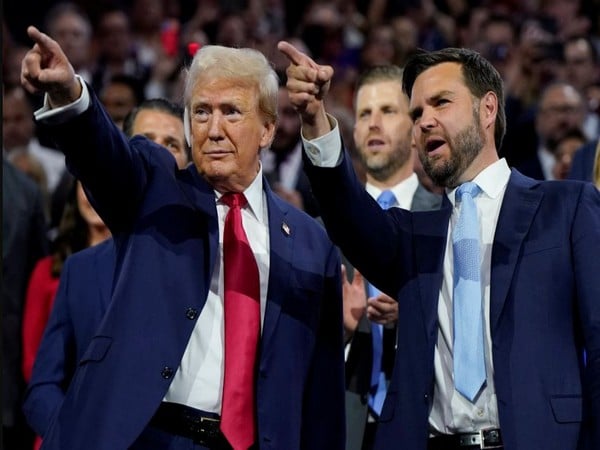
The US has suspended several major Indian IT companies from a programme used to sponsor foreign employees for permanent residency, putting another obstacle in the path of Indian professionals hoping to settle in America.
Announced on 8 October by Vice-President JD Vance and Labour Secretary Keith Sonderling, the move targets Tata Consultancy Services, Infosys, Wipro, HCLTech, Cognizant and French IT services firm Capgemini, along with US technology companies Microsoft and Adobe. The US Department of Labour has halted new applications and the processing of pending cases under the Permanent Labour Certification programme, known as PERM, for the affected companies.
The administration alleges that employers misused employment-based immigration programmes to replace American workers with cheaper foreign labour. But the suspension does not amount to a blanket ban on Indian IT companies operating in the US, nor does it automatically cancel the visas of their existing employees.
For Indian professionals, the consequences depend on where they are in the immigration process.
What is PERM, and why does it matter?
PERM is generally the first major step in the employer-sponsored route to an employment-based green card. An employer must demonstrate that there are not enough qualified and available American workers for the position and that hiring a foreign worker will not adversely affect the wages and working conditions of similarly employed US workers.
Once the Labour Department certifies the application, the employer can generally proceed to the next stage, filing an immigrant petition with US Citizenship and Immigration Services. A green card grants permanent residency, unlike the H-1B, which allows eligible foreign professionals to work temporarily in the US.
The suspension prevents affected companies from starting new PERM applications and stalls pending cases. Employees who have not reached this stage could therefore face delays in beginning the standard employer-sponsored green-card process.
Will Indian workers lose their visas?
Not automatically. The suspension concerns PERM, not the H-1B programme itself. Employees whose H-1B status remains valid are not automatically stripped of their right to work in the US because their employer has been barred from PERM filings.
The more serious problem could emerge for workers approaching the usual six-year H-1B limit. US rules allow certain employees to extend their stay beyond six years when specified green-card milestones have been reached. A stalled labour-certification process could make it harder for some workers to qualify for extensions, depending on their individual circumstances.
The impact will also differ between workers whose PERM applications are pending, those who have already progressed to later stages and those whose employers have yet to start the process. The administration has not fully clarified how every category of pending case will be handled.
The consequences are particularly significant for Indians, who face lengthy employment-based green-card queues. Even after an employer completes the required paperwork, a worker may have to wait years for an immigrant visa to become available.
What do Indian IT firms and Nasscom say?
India’s IT industry body Nasscom has sought to distinguish immigration from skilled-worker mobility. It said Indian technology companies have reduced their dependence on H-1B visas over recent years while expanding local hiring and building larger workforces in the US. It also argued that relatively few employees transition from H-1B status to permanent residency through PERM.
TCS has similarly said it does not expect the suspension to materially affect its workforce strategy or client engagements. The company said its PERM applications had been in single digits over the preceding two years and reiterated its plan to hire 15,000 additional employees in the US over the next five years.
Those responses suggest that the operational impact could vary considerably between companies. But a limited number of filings by one employer does not mean the disruption is insignificant for an individual whose long-term residency plans depend on that route.
Trump honours Nadella as administration tightens immigration rules
The suspension has also highlighted a tension in US President Donald Trump’s approach to immigration. While his administration is tightening scrutiny of routes used by skilled foreign workers, Trump has continued to recognise immigrant leaders for their contributions to American technology and innovation.
The contrast was evident on Thursday, when Trump presented Microsoft chief executive Satya Nadella with the National Medal of Technology and Innovation, hours after Vice-President JD Vance announced that Microsoft and other technology companies had been suspended from the PERM programme.
Vance accused Microsoft of abusing the foreign-worker system, while Trump praised Nadella’s role in transforming the company, particularly in cloud computing and artificial intelligence. Nadella, who was born in India before moving to the US, thanked Trump on X, saying he was “humbled to stand alongside so many giants of American innovation”.
Nadella was among six technology leaders honoured at the ceremony. The recipients also included Elon Musk, Google co-founder Sergey Brin, Nvidia chief executive Jensen Huang, AMD chief executive Lisa Su and Dell Technologies chief executive Michael Dell. Five of the six were born outside the US.
Immigrant talent remains prominent in the leadership of major American technology companies, even as the government increases scrutiny of immigration pathways used by skilled foreign professionals.
Why is the Trump administration doing this?
The administration says the action is part of a wider effort to prevent fraud and protect American workers. Vance has accused Microsoft of replacing American employees with foreign workers, while officials have alleged broader misuse of employment-based visa programmes. The government has not publicly established that every affected company committed the same violations.
Microsoft, meanwhile, pushed back against allegations that it had misused the H-1B visa system. The company said 80 per cent of the approximately 6,000 H-1B applications it filed in the previous fiscal year were to extend or change the status of existing employees, rather than recruit new workers.
The remaining applications were for people already legally present in the US who chose to join Microsoft, the company said. They represented about 1 per cent of its US workforce and were not new arrivals to the country. Microsoft added that most of its US employees were American and said it was prepared to provide the administration with further information.
The move fits into a broader tightening of US employment-based immigration rules, including increased scrutiny of H-1B hiring. Supporters argue that employers should demonstrate that foreign recruitment does not undermine opportunities for American workers. Critics warn that making permanent residency less accessible could deter skilled professionals from choosing the US and leave existing foreign employees more dependent on their employers.
What options do affected workers have?
For now, workers should establish whether their employer has filed PERM, whether a labour certification has been approved and whether an immigrant petition has already been filed. These distinctions matter because the suspension does not affect every employee in the same way.
Some workers may have alternative immigration routes, depending on their qualifications and circumstances. These can include certain self-petition categories, such as the EB-1A for individuals with extraordinary ability or the EB-2 National Interest Waiver. Neither is a general substitute available to every IT professional, and eligibility requirements remain strict.
The immediate message is therefore not that Indian IT workers have lost their US jobs or visas. It is that some have lost access, for now, to a crucial route towards permanent residency. For professionals already navigating years-long queues, the uncertainty could be almost as consequential as the delay itself.
Can Trump legally suspend the programme, and will the move last?
The suspension could face legal challenges, with its durability likely to depend on the legal authority the US Department of Labour is relying on and the evidence it has against the affected companies.
The department has said it will stop accepting new PERM applications and processing pending cases involving the eight companies while scrutiny of their employment practices continues. However, the precise scope and duration of the action remain unclear, and immigration lawyers have said the affected employers could challenge it. The administration has not publicly established that every company named in the order committed the same violations.
There is a recent precedent for courts scrutinising the administration’s immigration measures. In June, a US federal judge struck down Trump’s $100,000 fee on certain new H-1B visa petitions, ruling that the president had exceeded his authority by imposing what the court considered an unauthorised tax. The administration has challenged that ruling. The case shows that immigration restrictions introduced by the executive branch can face legal setbacks, although the H-1B fee dispute involved a different policy and does not determine whether the PERM suspensions are lawful.
For now, it would be premature to conclude that the latest move will be overturned. A legal challenge could test whether the Labour Department has sufficient grounds to suspend the companies and halt cases already in progress. Until the department provides clearer guidance or a court intervenes, affected workers face uncertainty over how long the restrictions will remain in place.