







New Delhi: A clarificatory statement from Ministry of External Affairs (MEA) that said passports are not legal standalone proof of citizenship, but only an official document issued to facilitate international travel and verify identity has stirred debate and confusion. The big question stands out: What exactly is legal proof of citizenship?
Coming with announcements regarding modernised chip-based e-passports, the ministry’s clarification on the occasion of Passport Seva Divas, observed on 24 June to commemorate the enactment of the Passports Act in 1967, also said that a two-day Human Resource Mobility Forum will be organised next week to highlight legal pathways for migration and facilitate networking between foreign employers and Indians seeking jobs abroad.
This MEA statement becomes more granular—and paradoxical—in the light of the government’s Press Information Bureau release on a National Register of Citizens (NRC) query on 20 December, 2019. “Citizenship can be proved by submitting any documents related to date of birth and place of birth. However, a decision is yet to be taken on such acceptable documents,” it said.
This brings Indians to the question: Which document can conclusively prove Indian citizenship? ThePrint explains.
Indian citizenship isn’t from any singular document or guaranteed by a particular one. For this answer, let’s turn to the Constitution of India and the Citizenship Act 1955.
Importantly, under the citizenship law, a person is an Indian by birth if born in the country on or after January 26, 1950, but before July 1, 1987.
A person born after July 1987 can claim citizenship if at least one parent is or was a citizen. A person born on or after 3 December, 2004, can claim citizenship by birth only if both parents are Indians, or if one parent is a citizen and the other is not an illegal immigrant at the time of birth.
The 1955 Act defines exactly how an individual acquires or proves their status through five distinct pathways: birth, descent, registration, naturalisation, or the incorporation of territory.
Based on the date of birth, a person can claim citizenship on the basis of ‘jus soli’ (right of the soil), though this rule has been progressively tightened to prevent illegal migration. The descent pathway applies to individuals born outside of India to Indian parents (‘jus sanguinis’, or right of blood). For example, a child born abroad on or after December 3, 2004, must have its birth registered at an Indian consulate within a year. Registration is available to persons of Indian origin (PIO) or individuals married to Indian citizens who meet specific residency and application requirements.
Naturalisation allows foreign nationals who meet residency requirements (like residing in India for 12 years) and fulfill the qualifications of the Third Schedule to become citizens. If a new territory becomes part of India, the Central government specifies which of its residents will be recognised as Indian citizens.
What documents are not conclusive proof of citizenship?
AADHAR Card: During the challenge of Special Intensive Revision (SIR) of electoral rolls in Bihar, the Supreme Court ruled that an Aadhaar card was just proof of identity, and not conclusive proof of citizenship. A bench of Chief Justice Surya Kant and Justice Joymalya Bagchi also said that “the use of Aadhaar while filing claims and objections would strictly be as proof of identity and not as evidence of Indian citizenship”. Moreover, any individual who has resided in India for a period or periods amounting to 182 days or more in the 12 months immediately preceding the application date is eligible for an Aadhaar, thus negating its being criteria for citizenship.
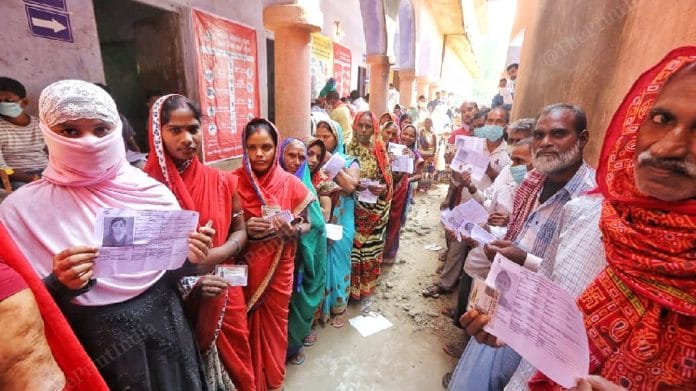
Voter ID Card: Primarily an identity and residence document, with a specific defined purpose of exercising one’s right to vote, the Voter ID Card has long been out of the race to prove citizenship.
PAN Card: Similar to the Voter ID card, the Permanent Account Number card is a financial and tax identifier document issued by the Income Tax Department to any entity paying taxes in India, including foreign nationals, non-resident individuals, and foreign corporations.
Multiple judgements by various judicial courts have ruled that mere possession of documents like a Voter ID, Aadhaar, or PAN card does not automatically confer Indian citizenship and that they hold zero legal weight regarding nationality. Yes, these are identity documents for availing services but cannot override the foundational rules of the Citizenship Act 1955.
What does a passport do?
Passports are issued only to Indians, but aren’t conclusive proof of Indian citizenship. Then what can a passport do?
In India, passports are issued only after rigorous verification by the police. The government relies heavily on local police checks to ensure national security, verify the applicant’s physical identity and address, and check for any disqualifying criminal records.
The compounded question now is between identity and citizenship. Under the Passports Act 1967, a passport authority, under Section 5, issues a passport only after considering the application and making such inquiry as it deems necessary. Section 6(2)(a) also requires the authority to refuse a passport if the applicant is not a citizen of India: making passport issuance subject to state’s satisfaction about the citizenship of the applicant.
Therefore, if a person has received a passport it means that the Indian government is satisfied with their citizenship in India. However, this person cannot use the passport to prove their citizenship, making the situation paradoxical. A passport now evidences citizenship yet isn’t conclusive proof of it.
Importantly, the MEA and its subordinate Passport Issuing Authorities (PIAs) have the legal authority to cancel, impound, or revoke Indian passports. However, they cannot do so arbitrarily; this authority is strictly governed by the Passports Act, 1967.
(Edited by Nardeep Singh Dahiya)
Also Read: India’s case against dual citizenship—Constituent Assembly debate to plea over Rahul’s nationality
It seems we are the only country in the world which has confused the hell out of its citizens. In nearly 80 years of independence we have not been able to decide the conclusive document to prove citizenship. The GoI is fully responsible for this utter failure.