





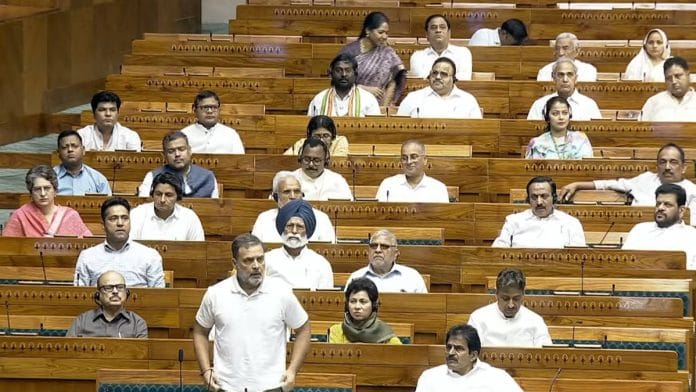

New Delhi: The Allahabad High Court on 17 April directed the registration of an FIR against senior Congress leader Rahul Gandhi, also the Leader of the Opposition in the Lok Sabha, in response to a petition claiming that he held dual citizenship, of the UK as well as India, which is against the law. The court later stayed the order to give Gandhi a chance to respond, and the judge recused himself from the case days later.
The proceedings have reopened the larger question of why, at a time when many nations embrace dual nationality, the world’s largest democracy still insists on exclusive allegiance.
ThePrint explains the law in India and the reasoning behind its bar on dual citizenship.
The Representation of the People Act, 1951, the specific regulation for elected officials, does not reference citizenship at all; it requires a candidate for legislative office to be an “elector” (name in the electoral roll) in the contested constituency, which implies they must be a citizen as well.
Article 84 of the Constitution, meanwhile, requires that contesting candidates should hold Indian citizenship. It outlines the essential qualifications for membership in Parliament and does not specifically refer to dual citizenship or bar it.
However, Article 9 spells out directly that nobody can be a citizen of India if they have “voluntarily acquired the citizenship of any foreign State”.
This has generally been interpreted to mean that on acquiring a foreign nationality, one’s Indian citizenship terminates automatically.
To give effect to Article 9, The Citizenship Act of 1955 spelled out a requirement for Indians to formally renounce their citizenship if they acquired a different one. As the 1955 Act puts it, the person “shall upon such acquisition… cease to be a citizen of India”.
India’s tough position on dual citizenship is not uncommon and has remained unchanged since 1950.
Around 30-40 countries either prohibit or tightly restrict dual citizenship—many of them in Asia, West Asia and parts of Africa—with prominent examples including Singapore, Saudi Arabia and Ethiopia.
Singapore allowed dual citizenship until 1957 and China began limiting dual citizenship in the 1950s. Today, countries like the Philippines are loosening regulations on the same. Japan technically bans dual citizenship but the policy is not enforced strictly, leading to a grey zone, according to a report in Japan Times.
Constituent Assembly debate
In India, citizenship was debated by the Constituent Assembly over several days in August 1949.
The original draft clause by B.R. Ambedkar, Chairman of the Drafting Committee of the Constitution, included a right of jus soli that would confer citizenship on anyone born in India regardless of their parents’ citizenship.
The draft came under fierce criticism; P. Deshmukh, who later became agriculture minister, famously complained that it made Indian citizenship “the cheapest on Earth”.
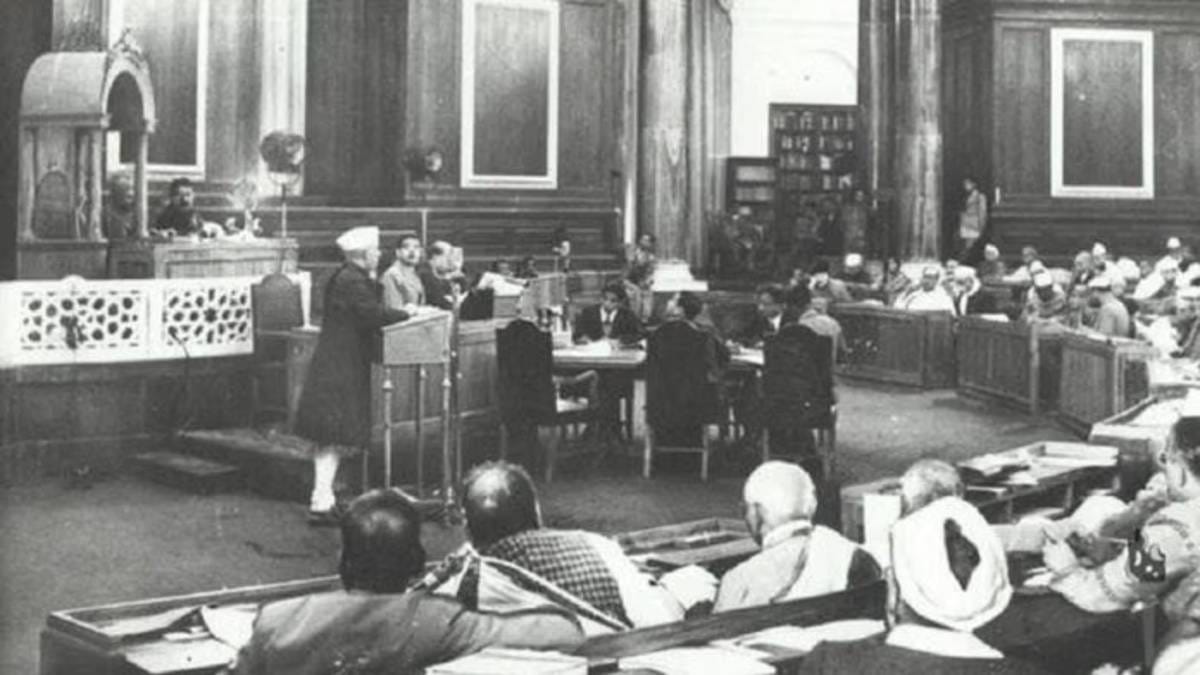
Freedom fighter Hriday Nath Kunzru, another member, pointed out that nations like America made citizenship difficult to attain; at the time, only about 100 Indians a year could become US citizens. Surely India, too, had the right to restrict it, he said. Economist K.T Shah also referred to Indian citizenship as a “great privilege”.
While jus soli made it to law, the right was restricted in 1986 through the Citizenship (Amendment) Act which mandated that those born in India on or after 1 July, 1987, needed at least one parent to be an Indian citizen at the time of birth to acquire citizenship by birth.
The arguments over grant of citizenship in the Constituent Assembly revealed the sentiments of members, that it was vital to make Indian citizenship feel weighty, carrying both rights and responsibilities. The members were conscious of the fact that they were trying to build a national identity, to make Indians see themselves as Indians first and foremost.
The same themes spilled over into the arguments around dual citizenship and whether it should be allowed.
K.T. Shah proposed that India adopt a reciprocal policy, recognising dual citizenship for countries that granted naturalised Indians the same rights and privileges as their own citizens without requiring them to relinquish their Indian nationality.
But the suggestion of dual citizenship was met with fierce opposition. Given the large population flows to and from the new nation of Pakistan, many were concerned about the prospect of divided allegiances.
P. Deshmukh and lawyer Jaspat Roy Kapoor were concerned about “spies and adventurers” acquiring Indian citizenship while maintaining allegiance to foreign nations. More concerns were raised by advocate Sir Alladi Ayyar, who remarked that dual citizenship has “international consequences”.
What it came down to, in the end, was choice. To be Indian had to be a conscious commitment that meant something.
In the final decision, the Constituent Assembly preserved Draft Article 5, which became Article 9. Single citizenship was enshrined in the Constitution, where it remains to this day.
So, too, is the principle that citizenship brings full rights to participate in India’s body politic.
A number of countries restrict the political posts that can be held by naturalised citizens (foreign-born individuals who voluntarily acquire citizenship of a country based on criteria other than birth), including the US, most Latin American countries, and even some Asian nations like the Philippines.
In India, there is no such bar; a naturalised citizen can be elected Prime Minister.
Testing the law
In the 76 years since the Constitution was adopted in India, the laws around citizenship have been tested on only a handful of occasions.
In 2007, Bihar MLA Nagina Devi was accused of being a citizen of Nepal. While the Ministry of Home Affairs (MHA) concluded that she had never been Indian, the Patna High Court ruled she had not been given a fair hearing by the government. The matter was sent back to the MHA for reconsideration, where it stalled in favour of the status quo. Devi remains in politics today.
The occasional case has surfaced in local government too. In 2015, the sarpanch of Jassiyan village in Punjab was disqualified by the high court after enquiries revealed his Canadian citizenship.
A more recent case is that of former Telangana MLA Chennamaneni Ramesh. After spending years in Germany, he acquired citizenship and surrendered his Indian passport. He returned to India in 2008 and followed the procedures to regain his Indian citizenship, claiming he had relinquished his German one.
Ramesh then won the assembly election in 2009, after which his chief opponent, Aadi Srinivas, accused him of retaining German nationality and lying about it to regain his Indian citizenship.
The central government issued a show-cause notice to Ramesh, who approached the Andhra Pradesh High Court for a stay in 2010. When the court finally decided the matter in 2013, it ruled against Ramesh–who was still the MLA after switching parties and winning a by-election.
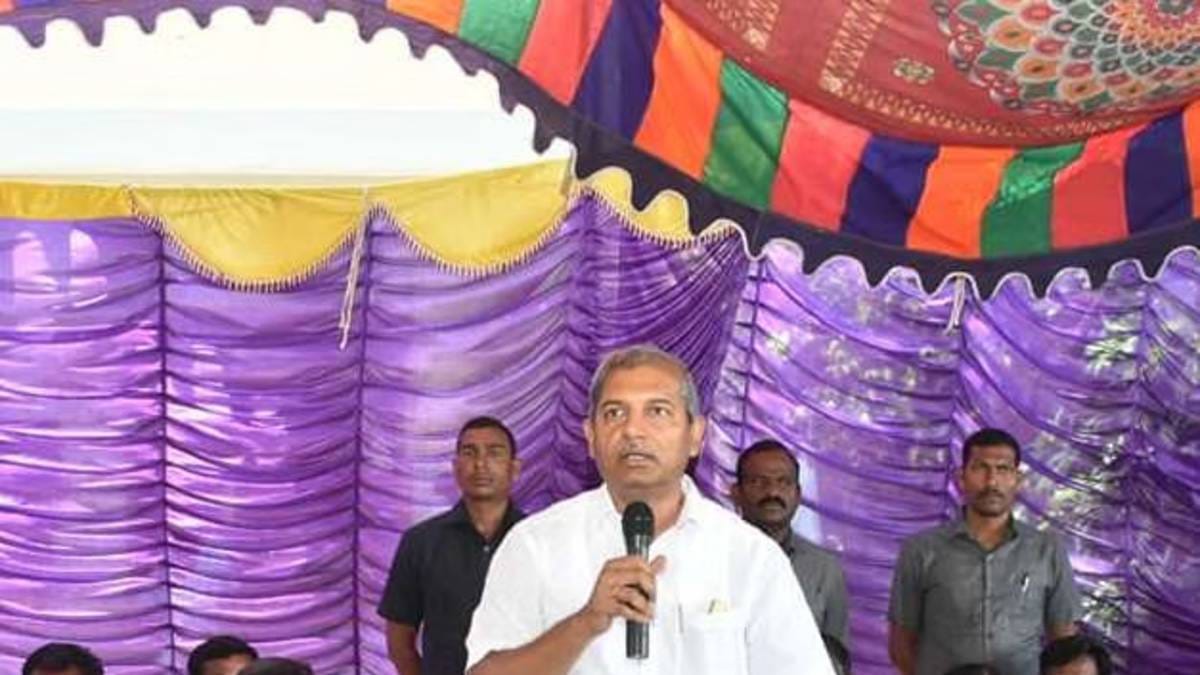
The legal tussle didn’t end there. Ramesh approached the Supreme Court for a stay, under which he contested the 2014 elections and won again. The home ministry subsequently cancelled his Indian citizenship while Ramesh appealed to court again.
The matter only concluded in 2024, after 15 years of litigation and multiple elections, when the high court decisively ruled against Ramesh. It upheld the government’s order stripping him of his citizenship, and fined him for his actions.
Ramesh had already been denied a ticket to run in 2023 due to the ongoing controversy; he remains in India, but holds no office and is no longer allowed to contest elections.
A key factor in the end was the evidence that Ramesh had travelled on a German passport even after he had reacquired Indian citizenship.
The matter of Rahul Gandhi
The petitioner against Gandhi has alleged that he incorporated a company, M/s Backops Ltd, in 2003, declaring his nationality as British. He claims that Gandhi submitted the company’s annual returns in 2005 and 2006 listing his nationality as British, and that the firm was dissolved in February 2009.
If it is decided that Gandhi is a British national, it would mean he ceased to be an Indian citizen the moment he accepted a British passport. Yet he has a record of winning elections, holding office, and voting on legislation in the Lok Sabha.
Would his actions have to be declared retroactively void if he is not a citizen of India? Should he be considered a former MP, or should his closest opponents be retroactively declared the winners of his elections? The matter remains a grey area.
Ramesh, for one, still draws his pension from the government, according to reports in the media. His opponent had complained to the Speaker of the Telangana Assembly last December that he was not entitled to such benefits after cancellation of citizenship, and recoveries should be made from him, but was informed that there is no provision under existing rules to make such recoveries.
Sahaj Sankaran is an alum of ThePrint School of Journalism, currently interning with ThePrint.
(Edited by Nida Fatima Siddiqui)
Also Read: Indian citizenship ought not to be made so very easy and cheap–PS Deshmukh