




New Delhi: US artificial intelligence company Anthropic on Wednesday released its most capable publicly available AI model to date, Claude Fable 5, with safeguards to limit its use in risky areas such as cybersecurity.
A preview version was not released publicly as it was deemed too risky because of fears about the threat to traditional software security.
Alongside Claude Fable 5 came a separate version called Claude Mythos 5, which will remain restricted to a small group of government-vetted organisations.
Both are the same underlying model. The difference is a layer of safety classifiers, separate AI systems that run alongside Fable 5 and intercept certain kinds of queries, sitting on top of it.
These classifiers watch for requests related to cybersecurity, biology, chemistry, and what Anthropic calls “distillation”, or meaning attempts to extract the model’s capabilities in order to train competing AI systems.
When a query gets flagged, the response is handled instead by Claude Opus 4.8, an older and less capable Claude model. Users are notified when this happens. Anthropic says this fallback triggers in fewer than 5 percent of sessions.
Mythos 5 is effectively the same model as Fable 5 but without the safety filters applied in certain areas. Where Fable 5 hands off a cybersecurity-related query to an older model, Mythos 5 responds to it directly with its full capability. For vetted partners such as government cyber defenders, this means access to the model’s most powerful features in precisely the areas that are blocked for general users.
It is currently available only to partners in Project Glasswing, a programme Anthropic runs in collaboration with the US government for cyber defenders and critical software infrastructure providers.
That group now spans roughly 150 organisations across 15 countries, up from a smaller initial cohort when the programmw launched in April with an earlier model, Claude Mythos Preview.
Also Read: Can AI write and edit? Delhi conclave examines its growing role in publishing
What the tests show
Fable 5 scores at or near the top on most standard AI benchmarks, which are structured tests designed to measure reasoning, coding, and analytical ability across different kinds of tasks.
Stripe, the American online payments company used by businesses worldwide to process transactions, reported that Fable 5 completed a migration across 50 million lines of code written in Ruby, a programming language, in a single day.
Stripe estimated the same task would have taken a full engineering team more than two months. A codebase migration involves moving or restructuring large volumes of existing code, the kind of work that requires understanding how thousands of interconnected parts of a software system relate to each other.
IMC, a Dutch trading and market-making firm, said Fable 5 performed well across its internal evaluations covering factual lookup, conceptual reasoning, root-cause analysis, and expected-value calculations, the kinds of analytical tasks common in financial decision-making.
According to Hebbia’s Finance Benchmark, a test developed by Hebbia, an American AI company focused on financial and legal research, which measures senior-level analytical reasoning, Fable 5 ranked highest among all models tested.
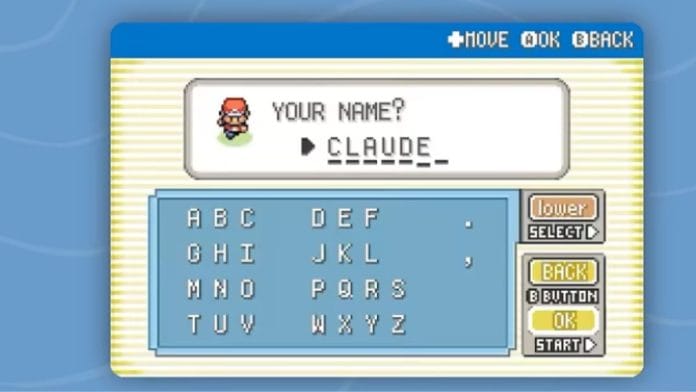
On vision tasks, the model completed Pokemon FireRed, a 2004 Nintendo role-playing game often used by AI researchers as a test of planning and navigation ability, from start to finish using only raw screenshots of the game. It had no access to maps, guides, or game-state information.
Earlier Claude models needed additional software tools built around them to attempt the same task.
On drug design, Anthropic’s internal protein design team used Mythos 5 on 14 protein targets, specific molecular structures relevant to developing new medicines. Nine of those yielded drug candidates now under active investigation.
The model handled the full workflow, choosing where on a protein to target, running specialised protein design software, and recovering from errors, without human input at each step.
Anthropic also ran Mythos 5 on a genomics research task over more than a week, working largely on its own.
The model assembled single-cell biological data spanning 138 animal species, designed and trained a custom machine learning model to identify cells performing the same biological role across distantly related organisms.
It produced results that Anthropic says outperformed a model recently published in Science, one of the world’s leading peer-reviewed scientific journals, despite being one hundred times smaller in size.
Why the filters exist
Anthropic’s explanation for the classifier system centres on what it calls “uplift”, meaning the risk that an AI model provides information that meaningfully helps someone cause harm they could not have caused without it.
On cybersecurity, the concern is that Mythos-class models can conduct multi-step offensive operations autonomously, finding vulnerabilities in software, moving through connected systems, and executing attacks in sequence, without a human guiding each step.
Fable 5’s classifiers block the model from making progress on these tasks.
An external red team, a group hired specifically to try to break the safeguards, tested the model against 30 known jailbreak techniques, methods used to trick AI models into ignoring their safety rules, on offensive cyber queries.
They found no successes.
The UK’s AI Safety Institute (AISI), a government body set up to evaluate frontier AI models, made partial progress toward what is called a universal jailbreak, a method that would allow a user to interact with the model as if its safeguards were not there at all, during an initial testing window. Anthropic disclosed this in the announcement.
On biology, Anthropic tested whether Mythos 5 could predict properties of adeno-associated viruses (AAVs), which are small viruses used in medicine to deliver gene therapies into the human body.
The same capability that makes a model useful for designing therapies could theoretically be used to design harmful pathogens.
Mythos 5 outperformed dedicated protein-language models, AI systems built and trained specifically for biological research, on this task despite no specific training for it.
Anthropic says this led them to broaden their biology classifiers beyond the narrow list of blocked queries they had previously maintained.
The distillation classifiers target large-scale systematic querying of the model, which Anthropic says it has previously identified as attempts by actors in what it describes as “authoritarian” countries to replicate the model’s capabilities in competing systems, potentially without safety measures built in.
India’s position in the access structure
India was not part of Glasswing’s first cycle. The programme’s initial group of partners was concentrated among US-aligned Western nations and did not include Indian government agencies or research institutions, despite India being one of the larger markets for AI tools globally and home to a substantial base of cybersecurity and life sciences research capacity.
Anthropic has now announced plans to open a formal application process for cybersecurity organisations to join the trusted access program.
A parallel track for biology researchers is also in the works, giving access to Fable 5 with its biology and chemistry classifiers removed, though the cyber classifiers remain active even on that track. Neither has published eligibility criteria yet.
For Indian institutions, including Indian Computer Emergency Response Team (CERT-In), the country’s nodal agency for cybersecurity, defence research bodies under the Defence Research and Development Organisation (DRDO), and university-based research labs, this is the first structured pathway to capabilities that have so far been available only to Western partners.
Whether Indian organisations apply, and whether the government pursues a formal engagement with Anthropic as some other governments have begun to do, remains to be seen.
Pricing and availability
Both Fable 5 and Mythos 5 are priced at $10 per million input tokens and $50 per million output tokens. Tokens are the units AI models use to process text, roughly three-quarters of a word each, so a million tokens is roughly 750,000 words.
This pricing is less than half the cost of Mythos Preview, the model both are replacing.
Fable 5 is available at no extra cost to subscribers on Anthropic’s Pro, Max, Team, and Enterprise plans through 22 June after which using it will require purchasing additional usage credits.
Anthropic says it plans to return the model to standard subscription plans once it has enough server capacity to handle demand reliably.
(Edited by Sugita Katyal)
Also Read: Law professors prefer AI over colleagues’ answers 75% of the time, says Stanford study