


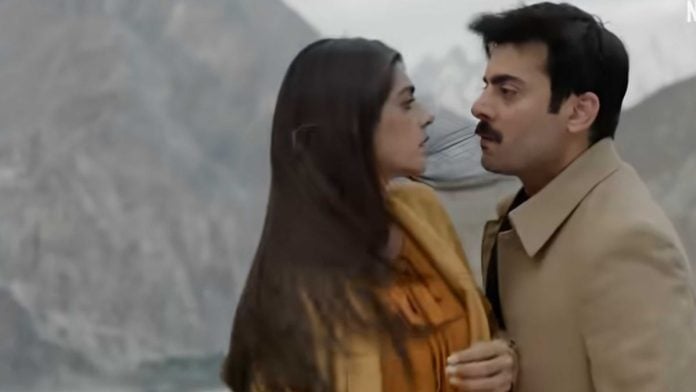
The All India Cine Workers Association has written to Prime Minister Narendra Modi, seeking a ban on Netflix’s upcoming Pakistani series Jo Bachay Hain Sang Samait Lo. The advisory has also demanded a permanent ban on Pakistani entertainment content in India.
ThePrint asks: Will a ban on Pakistani show ‘Jo Bachay Hain Sang Samait Lo’ stop Indian fans from watching it?
Calls to ban Pakistani content in India are always politically motivated. The broader agenda seems to be to keep the political atmosphere boiling, with Pakistan constantly projected as the “enemy state”. It is strange that a country aspiring to have a seat at the global high table continues to expend so much energy on controversies such as preventing a television series from reaching its audiences.
Realistically, you cannot stop people from consuming content in today’s digital age. The older generation, which may not be as technologically savvy, could face some restrictions, but younger audiences will find ways to watch what they want. If a show is available on Netflix, people will find a way to access it. In fact, attempts to prohibit something can make it even more appealing. When you tell people not to watch something, you often end up drawing more attention to it. The ban can then become counterproductive.
Look at the way people consume international content, whether it is Chinese dramas or programming from other countries. If audiences find something interesting, they will seek it out on YouTube, social media, or other streaming platforms, regardless of the political circumstances.
These non-entities just want the spotlight. I have never heard of this cine body; I might be ignorant, but of all the issues to raise, you choose this? Why not raise your voices on the regularisation of cine workers’ wages? This is like the foregone conclusion. This is just the right-wing constituency trying to score a win — days later, this show will be available on Telegram, and the same people calling for a ban will end up watching it themselves.
I also question why an organisation would choose to approach the Prime Minister over an issue such as this when there are far more pressing matters confronting the country. It seems to be an attempt to generate publicity and reinforce the anti-Pakistan narrative rather than address any substantive concern.
Ultimately, this is a largely meaningless exercise. Will you stop the Indian diaspora in the UK, US—who thrive on Pakistani dramas—from watching it? Moreover, Pakistani dramas and their actors have a considerable fan following in India.
Artists such as Fawad Khan and Mahira Khan are loved by Indian audiences. When you try to prevent people from watching content featuring artists they admire, you are also targeting something audiences have genuinely come to appreciate. You cannot legislate away that affection or curiosity.
Suparna Sharma is a journalist, former film critic, and Pulitzer winner. Views are personal
(By Debdutta Chakraborty)
Also read: Ban on ‘Jo Bachay’ is infantile. Not the first time a Pakistani show has streamed on Netflix
Also read: India banning Pakistani show is futile. Entertainment transcends political boundaries
> If audiences find something interesting, they will seek it out on YouTube, social media, or other streaming platforms, regardless of the political circumstances.
Point very well taken.
But the parallel with CJK or Euro-American content is deeply flawed. Because Pakistani content doesn’t just come as foreign content, a lot of it has a real impact on the minds of people because it packages explicit religious messaging (Khuda aur Mohabbat, Alif, …) or political overtones (Ehd-e-Wafa, Jahannam baRasta Jannat, …). While we can debate their cultural influence on our society, we have nothing comparable to the threat posed by the content pouring in from one particular unfriendly neighbour.
And what effect does that have on the viewer? You are psychologically eased into the Pakistani perspective. That is precisely what they want – the enemy to hesitate and see their enemy (i.e. Pakistan) as a friendly neighbour… While all they will see when they meet you on the battlefield is a kafir, an infidel, the basest of creation.
One of the most fatal flaws is thinking that jihad is ‘war’. No, it is a ‘struggle’, and it is waged on the social, political, cultural, artistic, financial, psychological, religious, and so many other fronts. The military aspect is just the tip of the iceberg.
This – and the fact that Pakistani artists and intelligentsia routinely side with Kashmiri ‘azadi’, political Islam, and anti-Bharat narratives – is why I am emphatically in favour of blanket bans until this cancer of Islamism and jihadism is dealt with permanently.
And if anyone wants to circumvent the bans, they are subverting the nation and should be viewed as potential threats prone to radicalisation or committing acts of treason.