





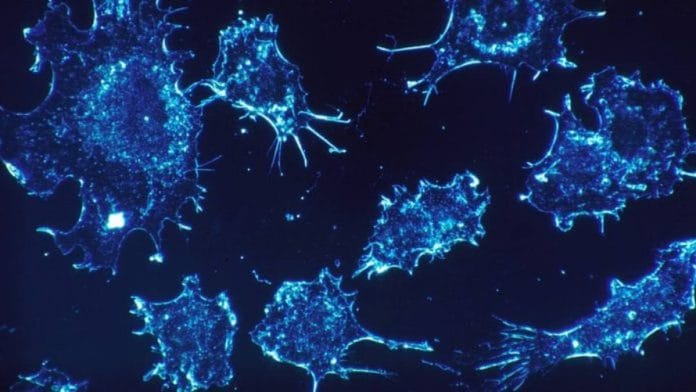

New Delhi: If the medical ammunition to fight cancer was lacking so far, scientists from the University of Southern California have now found a way to create a larger supply of immune-cell precursors that can be programmed to fight cancer. In animal trials, the new immune cells were able to fight off tumours and even restore immune function.
The study, titled ‘Expansion and CAR engineering of granulocyte-monocyte progenitors (GMP) for cellular immunotherapy’ was published in the journal Cell. It takes inspiration from stem-cell research and opens the door to a new generation of cancer therapies based on GMPs.
So far scientists may have relied on creating immune cells to fight off cancer, but this study has hinted to researchers that they may be better off looking into the precursors of white cells. That way they can create mini factories for cancer fighting cells and improve immunotherapy.
“The study establishes a scalable and engineerable GMP platform for cellular immunotherapy and introduces concepts that we believe could have broad implications for both cancer immunotherapy and stem cell biology,” said the paper’s corresponding author Qi-Long Ying, MD, PhD, professor of stem cell biology and regenerative medicine at the Keck School of Medicine of USC.
The power of a macrophage
Among existing treatments for cancer, T-Cell therapies have been great for treating blood cancer but they have not been particularly effective against solid tumours. Instead, macrophages, the body’s white blood cells, manage to infiltrate cancer cells making them ideal candidates for potential treatments.
However, mature macrophages are not ideal because they are hard to reproduce outside the body, they are difficult to genetically modify, and they tend to accumulate around the lungs and liver instead of spreading throughout the body. Once they are infused into the blood, they also tend to disappear quickly. To solve these problems, scientists decided to look at the precursors of macrophages, also known as granulocyte-monocyte progenitors (GMPs).
Inspired by stem cell research, scientists found a way for GMPs to remain in their ‘precursor’ state and continue producing macrophages and other immune cells even after they were transplanted into a diseased person’s body.
“We found that, under the right conditions, GMPs can also self-renew, dividing extensively while keeping their identity and ability to produce functional immune cells. That gives us a scalable starting point for engineering cell therapies for cancer, infectious disease and potentially many other conditions,” said Ying.
Researchers genetically engineered the GMPs to recognise tumour cells and better stimulate the immune response. Unlike existing cancer treatments, these GMPs are injected into the patient’s bone marrow where they are capable of continuously generating immune cells to battle cancer.
When these GMPs were tried out in mice, they managed to suppress CD19-positive leukaemia, HER2-positive solid tumours, and significantly improve survival chances. Beyond just cancer therapy, the GMPs also managed to improve immunity to bacteria and infectious diseases.