






New Delhi: A cancer diagnosis for 45-year-old Sudesh Kumari from Rohtak in 2024 was only the beginning of her battles. Her family abandoned her. At a government hospital, she waited nearly three months for a chemotherapy slot as her condition worsened.
“I wasn’t asking for free medicines,” she said. “I just wanted treatment that families like mine could afford.”
Sudesh Kumari’s story reflects what oncologists and researchers say is India’s biggest cancer-care challenge today. While the country has made significant advances in diagnosing and treating cancer, those breakthroughs remain beyond the reach of millions because of high costs, delayed diagnosis, inadequate insurance coverage and uneven healthcare infrastructure.
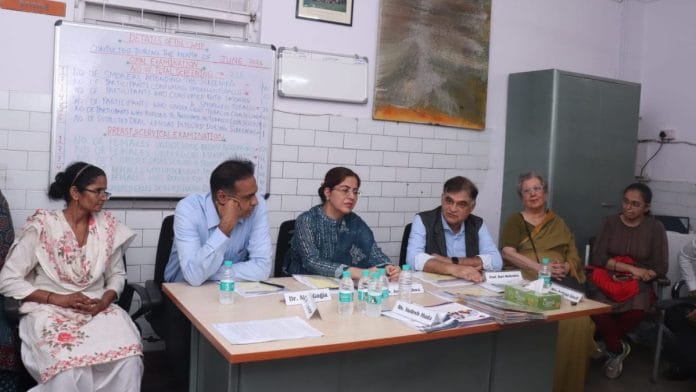
At a media roundtable organised by the Indian Cancer Society (ICS) to mark Cancer Survivor Month, Dr Ajay Gogia, Professor of Medical Oncology at Dr B.R.A. Institute Rotary Cancer Hospital (IRCH), AIIMS New Delhi, said that there is a rapid evolution of cancer treatment. However, he added, innovation achieves its true value only when patients can access it.
Cancer remains a major public health challenge in India, with an estimated 2.5 million people living with the disease. Every year, more than 700,000 new cases are registered and over 556,000 people die from cancer. Nearly 71 percent of these deaths occur among people aged 30 to 69 years.
At the same time, cancer treatment has changed significantly. Newer approaches, such as immunotherapy, targeted therapy, precision oncology, antibody-drug conjugates (ADCs) and CAR-T cell therapy have improved outcomes for some patients by targeting cancer more precisely than conventional chemotherapy. However, these treatments remain expensive and are available only at a limited number of centres in India.
Dr Gogia also said that the future of oncology lies in giving every patient the most appropriate treatment rather than simply the newest treatment. “Precision medicine, supported by scientific evidence and appropriate patient selection, enables us to improve outcomes while making better use of healthcare resources. Evidence-based optimisation of treatment can also help improve affordability,” he added.
Also Read: India saw yearly jump of 28,000 cancer cases and 15,000 deaths since 2021, govt tells Parliament
Early diagnosis the biggest gap
Oncologists argued that while public conversations often focus on expensive new cancer medicines, India’s biggest challenge is diagnosing patients before the disease advances.
According to the National Family Health Survey (NFHS-5), conducted between 2019 and 2021, only 1.2 per cent of women aged 15–49 years have ever undergone screening for cervical cancer, while just 0.6 per cent have had a breast examination, and 0.7 per cent have been screened for oral cancer. All three cancers can often be detected early through relatively simple screening.
India already has government-recommended screening programmes for cervical, breast and oral cancers, but participation remains low.
“This is because of limited awareness, stigma and the persistent belief that a cancer diagnosis inevitably means death,” said Dr Jyoti Wadhwa, Principal Lead of Medical and Precision Oncology at Apollo Athenaa Women’s Cancer Centre & Apollo Hospital, Delhi.
Oncologists said that in the US, health insurers effectively force screening compliance — a claim won’t be processed unless a patient has had age-appropriate screening. “In India, there’s no equivalent enforcement mechanism tied to insurance, so screening uptake depends almost entirely on individual awareness and willingness,” said Dr Wadhwa.
Doctors also said that some common cancers, including lung, pancreatic, gall bladder and ovarian cancer, cannot be detected through routine population-wide screening. As a result, they are usually diagnosed only after symptoms appear, when the disease has often reached an advanced stage.
Innovation and affordability
Experts said that improving access does not mean avoiding newer cancer treatments. Instead, they said the government spending should focus on therapies that have been proven to work and offer the greatest benefit to patients. “India does not have to choose between innovation and affordability,” said Dr Ravi Mehrotra, Management Committee Member, Indian Cancer Society, and former Director of the ICMR- National Institute of Cancer Prevention and Research.
“Evidence-based prioritisation, supported by scientific evaluation and real-world evidence, can help ensure that scientific advances translate into meaningful health gains for the largest number of patients,” he added.
Oncologists also called for stronger use of Health Technology Assessment to evaluate which therapies should be included under publicly financed programmes such as Ayushman Bharat, reducing out-of-pocket expenditure for patients.
(Edited by Nardeep Singh Dahiya)
Also Read: Cancer therapy may soon skip the lab step — and cut costs