



New Delhi: CRISPR is a powerful tool that allows scientists to edit DNA sequences in living organisms, but a team of researchers has found an ancient version of the technology in viruses.
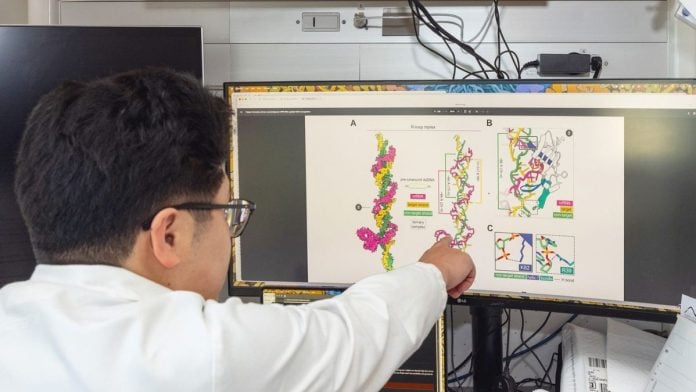
Jennifer Doudna and her team at UC Berkeley’s Innovative Genomics Institute published two papers in Science on 17 September identifying this precursor of the CRISPR system — Viral Interference Programmable Repeat (VIPR). So far, it had gone unnoticed among the scientific community because it uses an unusual way of binding itself to DNA.
While scientists today use Clustered Regularly Interspaced Short Palindromic Repeats (CRISPR) technology to edit DNA sequences, in nature it is a type of immune system that bacteria use to fight off viruses. But the latest studies suggest that bacteria might have learnt the technology from viruses before using it against them.
“These findings suggest that CRISPR-like immunity evolved from ancient conflicts between competing viruses and introduce a new programmable tool for controlling gene expression,” the study read.
Also read: Earth’s life-support systems are collapsing. 7 out of 9 planetary safety limits breached
From CRISPR to VIPR
For years scientists had been studying DNA, but it was only in 2012 that they eventually found repeating DNA sequences that could be harnessed as a programmable gene-editing tool. The discovery of CRISPR-Cas9, also known as a “Class 2” CRISPR system, made up of one large protein, turned out to be particularly useful for life science research. In comparison, Class 1 CRISPR systems, composed of multiple proteins are much more common in nature but far less studied.
Having built an AI tool to find related proteins with a similar structure, Doudna’s team was essentially analysing about 2.3 million structures to find those which might be related to the CRISPR system. While they found about 100 candidates, one particular protein stood out. It had the same shape as CRIPR proteins but DNA sequencing revealed that it was paired not with CRIPR RNA, but a different type of RNA.
“We were scratching our heads. It didn’t look like any RNA we had ever seen before. That’s where the project was stuck for months,” Doudna said in a university statement.
The team eventually realised that VIPR was found in viruses and bacteriophages as well as the bacterial genome. They predict that viruses might have used VIPR as a weapon against other viruses inside the same bacterial host. Eventually, the bacteria could have co-opted the VIPR system and turned into a defence mechanism against viruses.
“We’ve been calling it the ultimate anime betrayal. These viruses are fighting each other, and the host just goes, ‘Oh, boop, let me take that gun from you guys’. It’s crazy to think that this one act could be the origins of adaptive immune systems broadly for life on planet Earth,” said co-author Kenneth Loi in the statement.
Unlike CRISPR which uses matching DNA and RNA sequences to find its target, VIPR uses a small piece of RNA, acting like a guide, to find its target DNA. Researchers found that they could change this ‘guide’ and therefore make the VIPR target different pieces of DNA.
Not only have researchers now identified VIPR, they have proven that its small size could make it easier to deliver into cells than the larger CRISPR systems. They suggest it could also be used to silence problematic genes.