



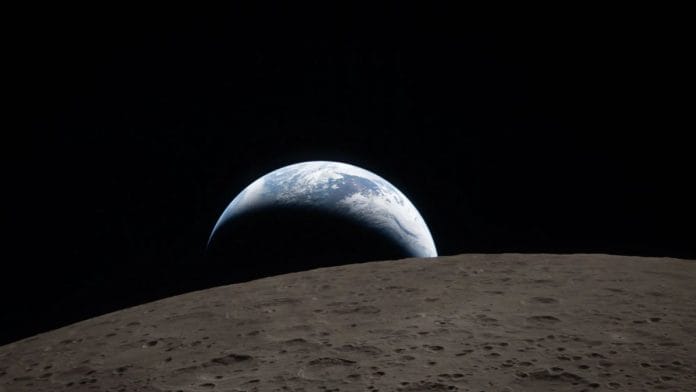
New Delhi: Human activities have pushed Earth beyond its “safe operating space,” with seven of the nine “planetary boundaries” that determine whether life can flourish on the planet being breached at the highest ever levels of transgression, warns a new report by Planetary Health Check.
The seven indicators, which are in the danger zone, include climate change, change in biosphere integrity, land system change, freshwater change, modification of biogeochemical flows, introduction of novel entities and, in 2025 for the first time, ocean acidification.
The report, an annual assessment of the state of the planet, highlighted that in only two areas, stratospheric ozone depletion and atmospheric aerosol loading, there has been an improvement over the last decade. However, the researchers warned that atmospheric aerosols, which add to air pollution, continue to be a major issue in many parts of the world.
“Since the Industrial Revolution, and especially since the mid-20th century, human activity has expanded at a scale and speed unlike anything in earlier human history,” the report read.
The Planetary Health Check further explained that the health planet depended on three main qualities: stability, the ability to hold relatively constant conditions over long periods, such as a stable climate; resilience, the ability to absorb shocks and
recover from them, similar to how a forest recovers from a wildfire; and life-support functions, the processes that keep the planet habitable, including climate regulation, freshwater cycling, fertile soils, nutrient flows, ocean chemistry, and functioning ecosystems.
Human pressures on the planet are, however, eroding all three.
“The further these pressures intensify, the greater the risk that Earth becomes less predictable, less resilient, and less able to support the societies built within the Holocene (the current geological epoch, starting approximately 11,700 years ago after the last major ice age),” the report read.
Findings and methodology
The report identifies nine critical systems and processes that are essential for planetary stability, resilience, and life-support functions. For each of these systems, scientists defined a “boundary” that marks the edge of a safe operating space. This means that staying within this space gives humanity a high chance of maintaining an Earth system similar to the one in which civilisations developed.
Moving beyond a boundary means entering a zone of rising risk, where damage becomes more likely and irreversible.
The report added that in most of the critical parameters, the breaches over the last few years have been jarring. For instance, between 2016 and 2025, global temperature increased at an observed rate of about 0.30 degrees Celsius per decade–nearly 60 per cent faster than the average rate of 0.19 degrees Celsius per decade over 1980-2020.
Earth’s energy imbalance has also more than doubled between 1976 and 1995, and the number of marine heatwave days has more than tripled since 1991.
“The warning signs are no longer abstract, and the risks ahead are no longer remote. The further we transgress the Planetary Boundaries beyond the Space Operating Space, the harder it becomes to preserve a stable and resilient planet and avoid dangerous and hard-to-reverse change,” the report added.
(Edited by Insha Jalil Waziri)