





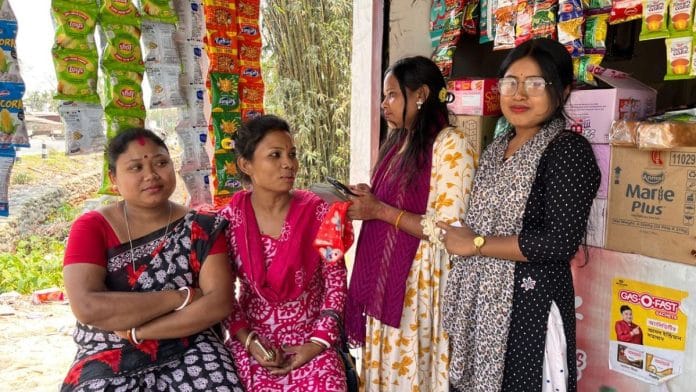



Cooch Behar/Alipurduar/Siliguri/Malda: Every day at noon, Monika Barman puts on her helmet, rides her scooty a few kilometres to her son’s school in Changrabandha —a quiet provincial town in Cooch Behar’s Mekliganj subdivision—and waits outside the gate with three other mothers who have become her friends.
On this day, one of them was talking about how the market had filled up with a sea of small triangular saffron flags for Ram Navami. Nobody needed to say what that meant in an election season.
Asked about which way the political wind was blowing, the women clammed up. “We don’t know much about politics,” said Sapna Rai, 27.
But Barman, 33, a homemaker, had one pressing question–will Lakshmir Bhandar survive the election?
Mekliganj assembly constituency, which votes in the first phase of West Bengal elections on 23 April, sits in the state’s north, a BJP stronghold. Of the region’s 54 assembly seats, the BJP won 30 in the 2021 state elections; Trinamool Congress (TMC) took the rest.
Soon after leading the TMC to a third consecutive term in 2021, Mamata Banerjee’s government launched the Lakshmir Bhandar scheme—a monthly cash transfer of Rs 1,000 directly into women’s bank accounts. In February this year, just an hour before election dates were announced, this amount was raised to Rs 1,500 for women in general category and Rs 1,700 for those from Scheduled Castes.
The sum, Barman conceded, was not large. But the autonomy it confers is real. “I can meet my small expenses. If I have to buy a packet of sanitary pads, I don’t need to ask for money from my husband,” she said.
Pinki Das Pal (31), a beautician from Bagdogra in north Bengal who stopped working after the birth of her third son—now one-and-a-half years old—echoed the sentiment. She has not yet decided how she will vote. “But isn’t it natural that when I go to vote, the fact that Didi gives me Rs 1,500 every month will be there in the back of my mind,” she said.
By Didi, the elder sister, Pal meant Banerjee.
Welfare competition
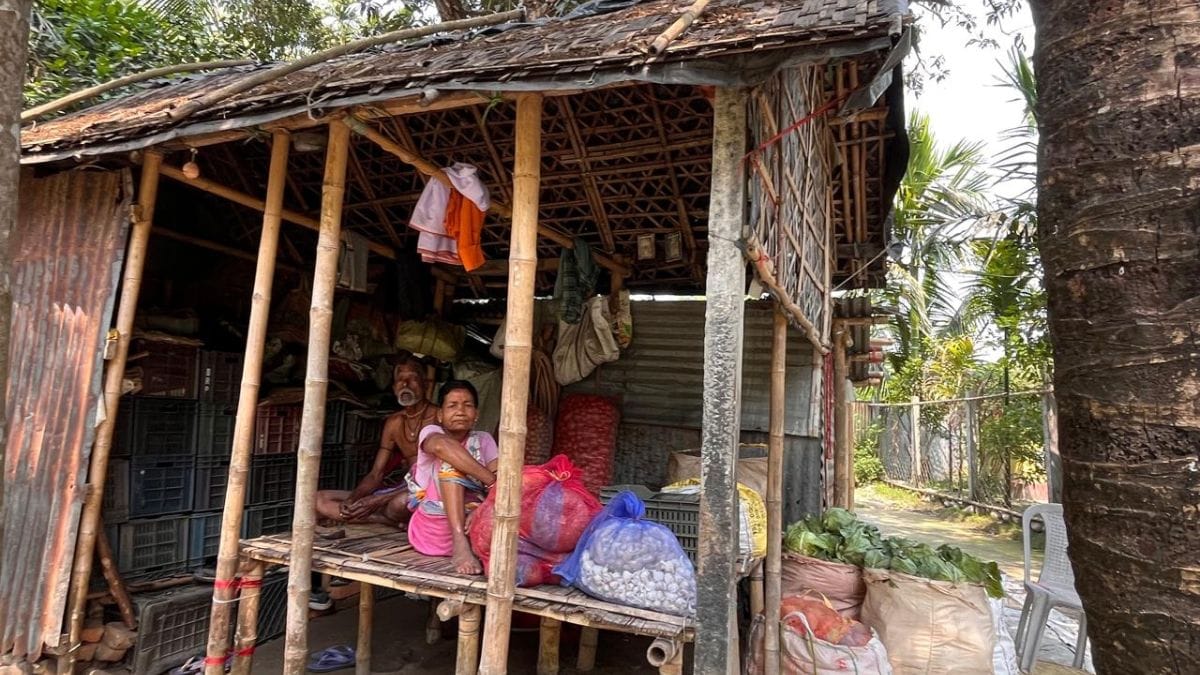
Women across the state have a similar conversation: how Lakshmir Bhandar, Kanyashree (for education) and Rupashree (marriage grant for lower income families) have made Mamata Banerjee the dominant political force in millions of women’s lives.
West Bengal has 4.4 crore women, according to the 2011 Census. In the 2024 Lok Sabha polls, women won 11 of the state’s 42 parliamentary seats—the highest women’s tally from any state in that election.
Even BJP leaders privately acknowledge how deeply Banerjee has embedded herself. “It is like she has bought their loyalty with Lakshmir Bhandar,” one state BJP leader said on the condition of anonymity.
To counter this backing, BJP has already signalled its move though it is yet to release its election manifesto. BJP state president Shamik Bhattacharya has publicly promised that if elected, the party will launch Annapurna Yojana, under which women across Bengal will receive Rs 3,000 a month—double the current Lakshmir Bhandar grant.
Women are already factoring in the amount. “It will make a big difference to our lives,” said Saraswati Das, 32, a nursery school teacher at a private school in Natabari assembly seat in Cooch Behar. Her husband works as a guard in Delhi; she lives in Natabari with her young son and mother-in-law.
Political analysts describe this as competitive welfarism—and argue that it is, alongside other concerns, beginning to erode Mamata’s lead among women voters.
TMC’s Rajya Sabha MP Dola Sen dismissed the view. “Mamata Banerjee’s schemes for women are not doles. Through these schemes, Didi is establishing a women’s fundamental right to dignity and empowerment. Nobody has done this before. She made it a reality,” the MP said.
Sen pointed to Kanyashree, launched in 2013, as among the most consequential of the schemes. Under it, girls studying in classes 8 to 12 receive Rs 1,500 annually; on turning 18, they are eligible for a Rs 25,000 grant if they continue their education.
“This led to the dropout rate among girls going down in Bengal. Also, the Rs 25,000 that girls get after 18 is very empowering. It’s a kind of additional income for them,” Sen said, adding: “If other parties emulate the schemes, it’s proof of their success.”
The cracks
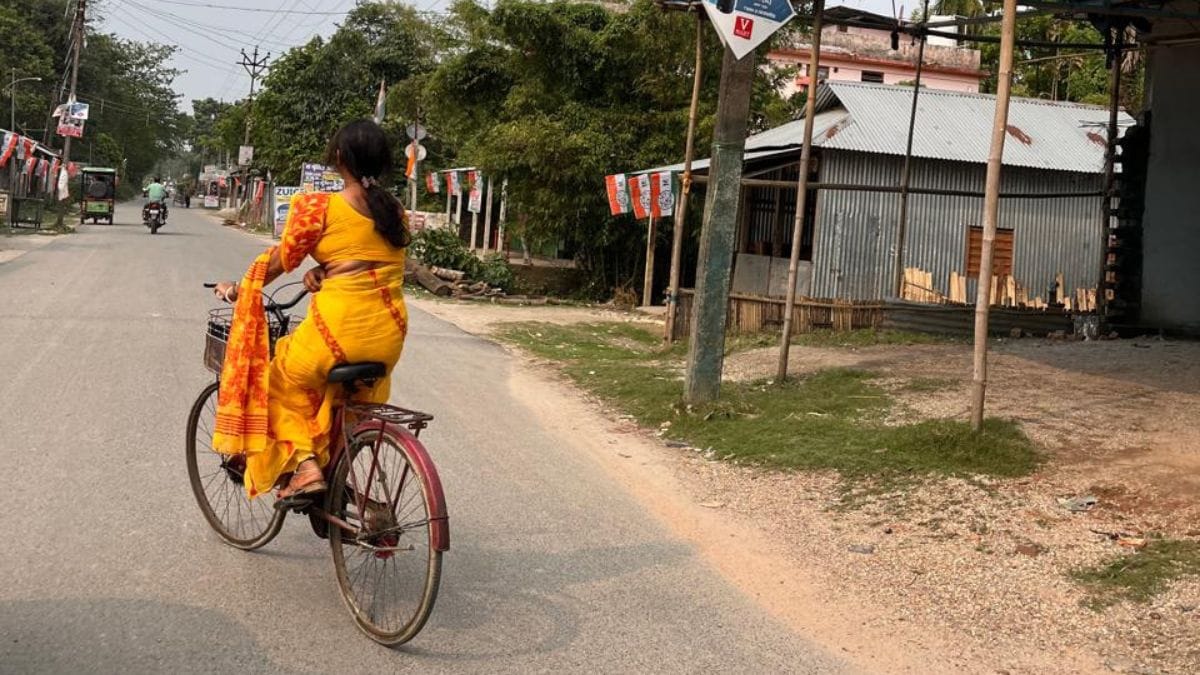
Nearly 15 years after coming to power, Banerjee remains a powerful figure, but there appear to be chinks in the armour. An-oft repeated phrase in the countryside goes, “Didi kharap na kintu didir lokera theek na ( Mamata Banerjee is not bad, but the people around her are).”
It isn’t a new perception, but it appears more and more are talking about it openly. The complaints that follow are specific: corruption at municipality and panchayat level, and money going missing from the Banglar Awas Yojana (state housing scheme).
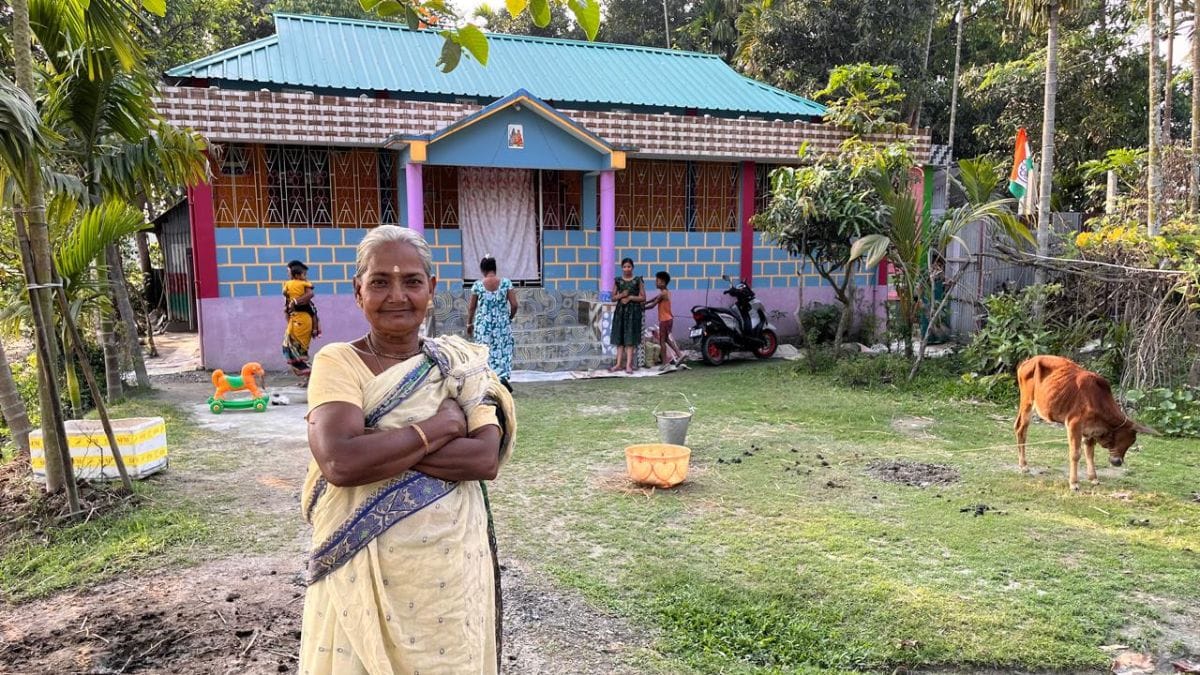
“Didi promised us that she will help us build our house. The money was sanctioned also but I did not get the full amount—a part of it went to other hands,” said Mamuni Dutta Pal, a resident of Gaybari village in Cooch Behar’s Mathabahanga.
Mamuni said she has voted Trinamool for years, but is having second thoughts this time. “For getting anything done, you have to pay the party men. The party is full of middlemen, who don’t pass on the full benefits to the people. They keep aside 10-20 percent for themselves,” she said.
References to “cut money”—a local phrase for political kickbacks—aren’t uncommon in the state, but these too appear to be a regular topic of discussion ahead of this election cycle.
Saugata Roy, Trinamool Congress MP from Dum Dum, brushed off the criticism. “People may have some complaints here and there. But let me tell you that the overall mood is to vote for Mamata Banerjee as CM again,” he told ThePrint.
Safety is the other fault line. Saraswati Das, the nursery school teacher, said she heard from neighbours about women being harassed by Trinamool Congress functionaries in Bengal’s Sandeshkhali.
“I saw on TV how girls came out on the roads at midnight in many parts of the state to protest against the RG Kar incident. I live alone. When I hear such things, I also think twice before venturing out alone,” she said.
Sandeshkhali made it to news in 2024, after sexual assault and corruption allegations were raised against a local TMC leader. The RG Kar Medical College and Hospital incident relates to widespread protests after a junior resident doctor at the Kolkata institute was raped and killed. The state government’s response to outrage over the case was widely criticised as inadequate and insensitive.
The electoral rolls
While it is yet to be seen if TMC’s popularity among women will take a hit, the Chief Minister is well aware that the opposition BJP is closely eyeing her core voter base.
At a rally last week in Jalpaiguri’s Mynaguri in north Bengal, Banerjee alleged that the Election Commission of India, acting in concert with BJP, had intentionally deleted women voters’ names from electoral rolls during the Special Intensive Revision (SIR) drive.
The numbers lend the allegation weight worth examining. According to the revised electoral roll published on 28 February, there are 3.16 crore registered women voters in Bengal—a figure Union Law Minister Arjun Ram Meghwal placed on parliamentary record on 27 March, in reply to a question from TMC MP Rachna Banerjee. It was the lowest count since 2016, when the total number of registered women voters in the state was 3.24 crore.
West Bengal votes in two phases—23 April and 29 April. Votes will be counted on 4 May.
(Edited by Prerna Madan)
Also Read: Mamata says ECI transferred officers by breaking convention. What former ECs say on the norm