





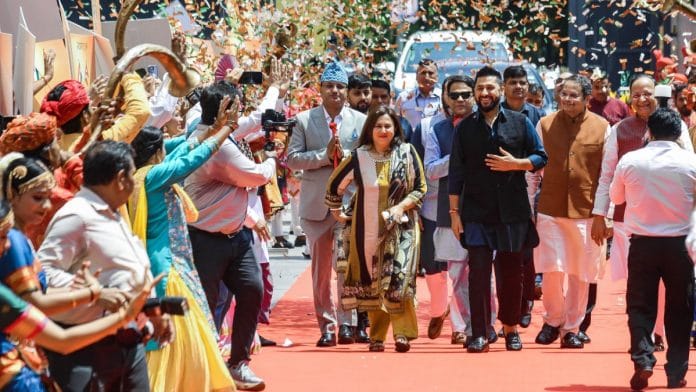


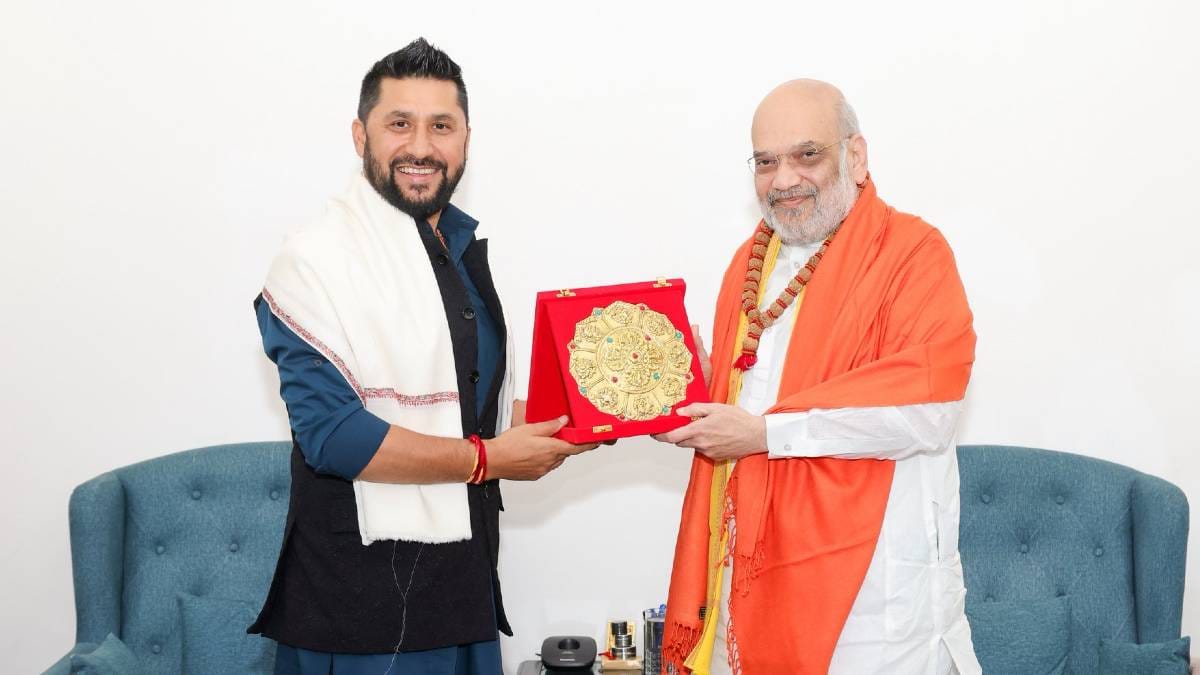
New Delhi: When Union Home Minister Amit Shah met a Nepalese delegation led by Rabi Lamichhane, chairman of the Rastriya Swatantra Party (RSP), in New Delhi Tuesday, it made for a rare sight.
While Shah in his previous capacity as BJP president has met a few ambassadors one-to-one, he usually does not meet foreign delegations, a party insider told ThePrint, pointing out that in the case of Nepal, the BJP is keen to “rekindle” and “strengthen” the “shared civilisational heritage and strong people-to-people relations.
Soon after meeting Lamichhane, Shah took to X to emphasise that “both sides expressed their firm resolve to work together for enhancing the special ties between India and Nepal”.
According to a senior BJP leader, the party is looking beyond bilateral ties and is keen to lay emphasis on the cultural and civilisational history that the two countries share.
Speaking to ThePrint, Lok Sabha MP from Chandni Chowk, Praveen Khandelwal, who attended a lunch interaction with the delegation, said a lot of emphasis was laid on strengthening the friendship between the two countries. “One of the Members of Parliament emphasised how India and Nepal share similar culture and tradition. He highlighted the relation between the Pashupatinath temple in Nepal, and Varanasi and pointed out that it is rooted in religious, cultural and historical ties,” he added.
Lamichhane, reflecting on his visit, wrote an article in an Indian daily stating: “Nepal and India are not just two countries, we are stakeholders of a proud, ancient civilization. The saga of Ram is complete only when Janakpur and Ayodhya are connected. Faith is fulfilled only when Pashupatinath and Kedarnath are brought together. The foundational womb of a great civilisation is realised only by linking Lumbini and Bodhgaya.”
The BJP has been quite conscious of the shared-civilisational history between India and Nepal and in late 2023, an invitation was even extended to the Mahant of Nepal’s Janaki temple, dedicated to the Hindu goddess Sita, for the consecration of the Ayodhya Ram Mandir.
Much before the newly formed RSP swept to power in Nepal this year, in 2022, Prem Ale—then minister for tourism and culture and a leader of the Communist Party of Nepal (Unified Socialist)—had said the demand to make Nepal a Hindu state can be considered.
Ale, speaking at the opening of the two-day executive council meeting of the World Hindu Federation in Kathmandu, had stated that should such a demand arise, he “will play a constructive role”.
Lamichanne further wrote in his article: “Instead of looking solely at what our relationship has achieved, we want to make a fresh start by focusing on what it could have achieved—and what it can become.”
Tuesday’s interaction between the two parties took place under the ‘Know BJP’ initiative.
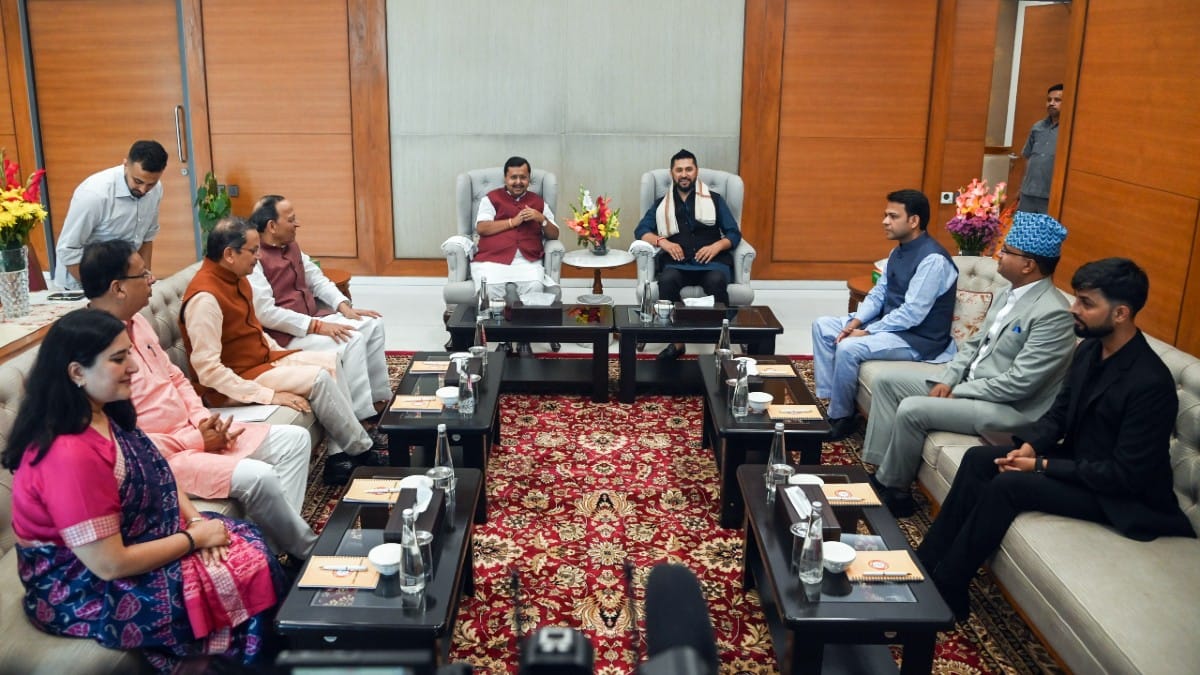
The RSP delegation visited the BJP headquarters in New Delhi Tuesday and also attended a lunch interaction with Delhi Chief Minister Rekha Gupta and MPs Manoj Tiwari, Bansuri Swaraj, Harsh Malhotra, as also a Minister of State, and Ramvir Singh Bidhuri, among others. An informal dinner was also organised at the residence of Delhi minister Ashish Sood which was attended by politicians as well as academicians.
A BJP functionary told ThePrint: “The delegation was served litti-chokha and other Bihari fare. They really enjoyed the dishes and even mentioned that while they generally like to keep lunch light, since it was so delicious they ended up having it.”
The BJP functionary also said that “both countries have ancient heritage and civilisational links, whether it is Pashupati Paras, Buddha or several religious sites—both countries have a deep connection. We share similar food, attire, linguistic and historical ties”.
The fresh efforts to strengthen ties are also necessitated by the occasional friction in diplomatic ties between India and Nepal in recent years.
Also Read: ‘Same as BJP’ in ideology, Nepal Janata Party works to expand — ‘will make Nepal Hindu Rashtra’
‘Party-to-party better than govt-to-govt’
Explaining the significance of the visit, especially in terms of party-to-party emphasis, former law minister of Nepal, Govinda Bandi, told ThePrint that in terms of building relations between the two countries, Rabi and his party RSP don’t have any baggage.
This, according to him, presents an opportunity for both countries to pursue India-Nepal relations from a different perspective.
“Rabi (Lamichhane) also mentioned this when he visited Prime Minister (Narendra) Modi. He spoke very frankly about how they want to build India-Nepal relations from a different perspective. I think that’s one important point. Also, it is important to note that it was a party-to-party visit. Although he met PM Modi, he was invited by the BJP, the ruling party of India, as the president of a ruling party in Nepal. I think this works better than a government-to-government approach,” said Bandi.
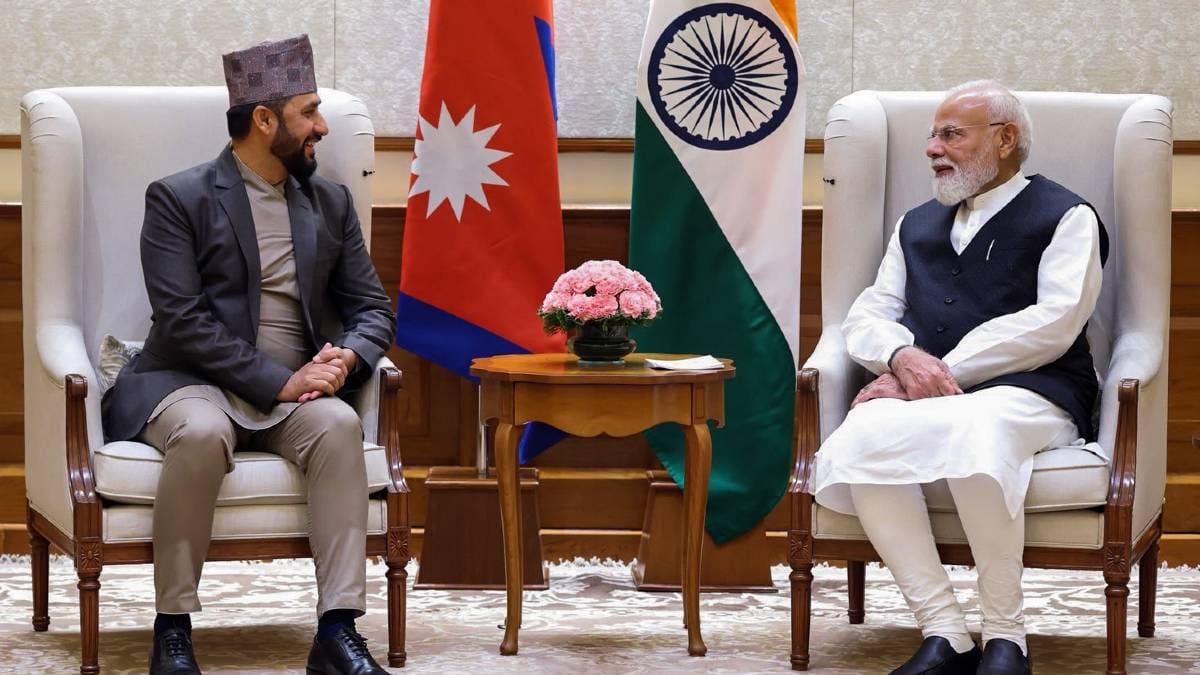
“If you look at history, when the Nepali Congress had a very good relationship with the Indian National Congress, Indira Gandhi’s party, ties between the two countries were also strong. If parties have a good relationship, then relations between governments tend to improve. If you deal directly at the government-to-government level, there are many other issues involved, because governments have their own obligations and limitations,” he added.
According to Bandi, political parties have space to work on a broader level. Given that India and Nepal share culture, language, food, among other things, the fact that they have started strengthening party-to-party relations, something that was not done for several decades now, is a step in the right direction, he added.
“Since (former Nepal PM) Girija Prasad Koirala took over, there were strong relationships with Indian leaders. He had good ties with leaders like Ram Manohar Lohia, Chandra Shekhar ji, Vajpayee ji, and others. If you look at the democratic movement of the 1990s, Subramanian Swamy and Chandra Shekhar ji came to Nepal and spoke about why democracy was important for the country,” said Bandi.
Adding, “At that time too, there were strong party-to-party relations. Once those relationships are strong, government relations also improve.”
Speaking to ThePrint, a senior BJP leader termed the Shah-Lamichhane meeting a “jump-start”.
“An invitation was sent by us and the fact that he (Lamichhane) was keen to come shows in the way it was accepted readily. It is definitely a jump-start as far as relations between the two nations are concerned. During the visit, both sides focused on the civilisational, people-to-people ties and apart from stressing on the cultural and civilisational aspects, we can then move on to other aspects in, say, hydro, water conservation, greater connectivity,” he said.
Vijay Chauthaiwale, in-charge, BJP foreign affairs department, too, said the meeting was a positive one and that party president Nitin Nabin highlighted the close and historic ties between India and Nepal, rooted in shared civilisational heritage, cultural bonds and strong people-to-people relations. “He said that such interactions help strengthen democratic dialogue and deepen party-to-party engagement between the BJP and RSP.”
Looking forward
The BJP appears keen to improve ties with Nepal, especially in the aftermath of a report by the US Department of State that alleged interference by Indian Right-wing groups in Nepal’s politics. The 2022 report, published the next year, claimed groups associated with the BJP had been providing funding to influential politicians in the Himalayan country with the intention of persuading them to abandon secularism.
The Hindu Swayamsevak Sangh (HSS), which describes itself as a “social, educational, and cultural organisation for Hindus living outside India” is also active in Nepal.
In February 2023, Nepal’s former king, Gyanendra Shah, reportedly joined a campaign to restore Nepal’s status as a Hindu state, like it had been before the pro-democracy movement in 2006 led to the abolition of monarchy two years later.
According to Bandi, “there has always been a religious tint in bilateral India-Nepal relations, and the BJP is hoping to use that”.
In 2018, when Modi visited Janakpur, he emphasised that he was visiting not as a Prime Minister, but as a pilgrim. He also announced a Rs 100 crore package to develop Janakpur, believed to be the birthplace of Sita, and laid stress on the route’s deep cultural connection to Ayodhya.
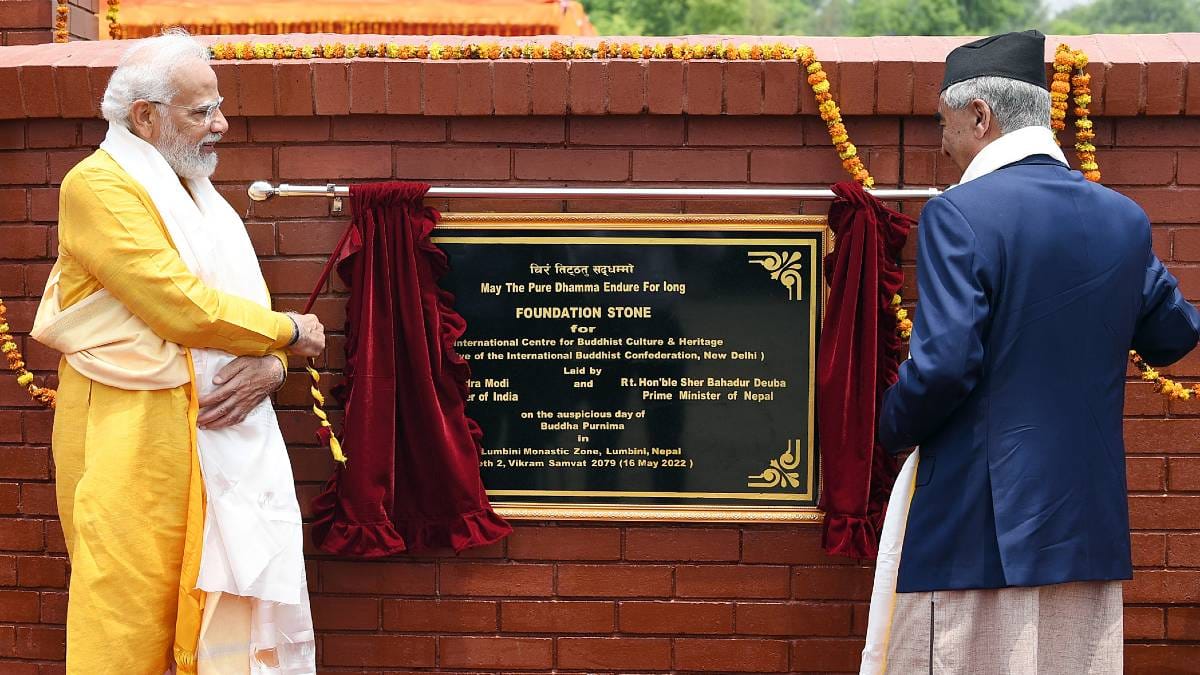
Explaining that strengthening cultural and civilisational bonds can pave the way for better bilateral ties, a second BJP leader said that in 2022, Modi had also visited Lumbini, the birthplace of Lord Buddha, where he laid the foundation stone for the India International Centre for Buddhist Culture and Heritage in the Lumbini Monastic Zone.
Khimlal Devkota, lawyer and former member of Nepal’s Constituent Assembly and Constitutional Committee, however, had a word of caution.
While asserting that India and Nepal always had warm ties despite border-related disputes, he told ThePrint: “But without resolving the political and border issues, that could not be instrumentalised in our countries. That will also create some problems. Without resolving political issues, people-to-people relations and other issues will not go forward smoothly. That’s why both things have to be taken in a balance.”
(Inputs by Debdutta Chakraborty)
(Edited by Nida Fatima Siddiqui)