








When you visit a new country, the last thing that will impress you is what happens at the airport departure lounge minutes before you board a flight. By then you have made up your mind about the country and the things you hated and loved. And yet something happened at the Paro International Airport that left me a fan of all-things-Bhutan.
All they did was ask me a question. In that question lies the story of Bhutan government’s seminal achievement, cultural confidence and humility.
As my friend and I settled in the lounge, two young women walked up to us with tablets in hand. They introduced themselves as employees of the Department of Tourism and asked if we were willing to answer some of their questions.
In their survey with over a dozen questions, the one that blew my mind was this: Did you find the public toilets in Bhutan clean?
You really need to be a confident country and society to ask this to a tourist who’s departing. India can’t even imagine asking such a question, that too to a foreign tourist, let alone its own residents. We already know what the answer would be.
Also read: Swachh Bharat Mission’s next chapter must be about unlocking the economic value of sanitation
Questions we can’t ask
This is the kind of question that tourism cultures are made of. Let’s not confuse ‘tourism culture’ with ‘cultural tourism’. Tourism culture is not about thousands of years of history or monuments or nature trails and reserves. It is about having a tourist-friendly social, moral ethic and infrastructure, ease-of-travel, and being open and thick-skinned about criticism and suggestions from foreign travellers. It hinges on us not instantly disintegrating and being offended if we hear things we don’t like.
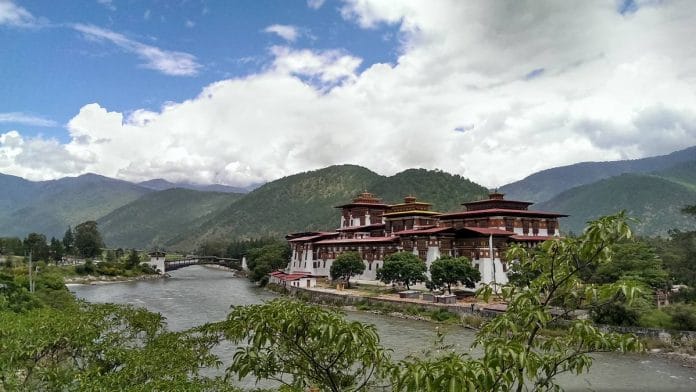
Bhutan is a spotlessly clean country. That is the first thing that strikes you. They are taught from childhood that each individual is responsible for the waste they generate, nobody else is. It is so deeply ingrained that our guide flinched when he saw a black plastic wrapper floating on the Paro Chhu River. That’s how trained his eyes were. It was jarring to him that the wrapper was where it should not be. I looked around and saw a bunch of Indian tourists playing on the riverbank. They had littered.
There were other non-toilet questions in the survey too. Did you find trash in public places? Did you find the people courteous? Have we done a good job of preserving our environment? Were the guides helpful? Did the hotel check you in smoothly and quickly? Was the country safe?
You can argue that exit interviews usually sound like this. And that it does not guarantee genuine openness and remedial action. Fair.
But one thought crossed my mind. With 5,000 years of prideful history, the Taj Mahal and a dizzying diversity of cultures—and 12 years after the government’s flagship Swachh Bharat Abhiyan—an Indian can never dream of asking if the toilets in the country were clean. First, we do not even have enough public toilets. Second, the ones that are there are in a shameful condition. And third, if Indians were to ask this question, the foreign tourist may just ask for extra answer sheets and end up missing their flight. They would just roll their eyes and go: Where do I start?
After some politicians picked up the broom and got photographed for a day of cleaning streets, the government’s cleanliness drive turned into a toilet construction drive. And even that hasn’t really been a roaring success, though the data is an improvement on the Nirmal Bharat Mission of the previous government.
We can’t ask foreign tourists about our environment—just look at the air quality. We can’t ask if tourists felt safe in India. Seriously? Or if the streets were clean, if guides were courteous and helpful.
Bhutan asks these questions because it has worked toward achieving these goals. We can’t because we know we haven’t. And we are thin-skinned about criticism. How dare anyone find fault with the self-certified Vishwaguru?
It’s time we stop flexing our tourism potential and start building a genuine tourism culture. One that goes beyond the platitudinous slogan of atithi devo bhava.
Views are personal.
(Edited by Theres Sudeep)