







Yo, let’s talk straight. There was this ‘Dismantling Global Hindutva’ conference some time ago. It wasn’t some academic tea-spilling session-based conference—it was a straight-up hit job. A masterclass in twisting facts, cherry-picking narratives, and serving piping-hot ignorance to demonize a 5,000-year-old civilization. The objective wasn’t critique; it was a calculated move to paint Hindu Dharma as the villain in a low-budget propaganda flick. Warning: The plot is flawed, and the facts don’t support it. Buckle up as we unpack this mess with real-world cases, names, and a vibe that’s equal parts woke and wise, calling out Hindumisia for what it is—a global campaign to cancel Hindu identity.
Hindumisia vs Hinduphobia: Know the Difference, Fam
First, let’s clear the fog. Hinduphobia and Hindumisia aren’t the same, though the West loves lumping them together like they’re interchangeable slang. Hinduphobia is that low-key shade—stereotypes, lazy tropes, and misrepresentations that make Hindu Dharma look like some backward, cow-worshipping relic. Think of media calling Diwali ‘noisy’ or yoga ‘exotic’ while ignoring their spiritual depth. It’s annoying, sure, but it’s mostly agenda dressed up as critique.
Hindumisia? That’s the real venom. It’s not just cussing and dissing the religion; it’s targeting Hindus as a people with hate so raw it spills into apartheid, expletives, and violence. We’re talking hate crimes, vandalism, and systemic erasure of Hindu identity. Hindumisia doesn’t just stereotype; it dehumanizes, painting Hindus as some fascist, oppressive blob that needs to be ‘dismantled’. The difference? Hinduphobia’s a vibe check that fails; Hindumisia’s a full-on frontal assault. And trust me, this hypothesis is not just a theory—it is now a lived reality, and we have instances happening on a global scale to support it.
Also read: Christianity and Islam collapse under the weight of free speech. Hinduism endures
The Colonial Roots: Where the Hate Began
Hindumisia didn’t pop up overnight. It’s got roots deeper than a banyan tree, stretching back to the colonial era when European powers rolled into Bharat with their Bibles and inflated superiority complexes. To justify the exploitation and the loot of the subcontinent, they needed to make the Hindu Dharma look like the reprehensible guy. Cue the OG fake news: British scholars and missionaries branded Hinduism as ‘crude’ and ‘superstitious’. They zoomed in on issues like caste or sati, blowing them out of proportion while ghosting the wisdom of the Vedas, the philosophy of the Upanishads, or the ethical flex of the Mahabharata.
Take Max Müller, the German Indologist who’s still a big name in Western academia. Dude loved Sanskrit but framed Hinduism through a Christian lens, calling it a ‘chaotic’ religion that needed Western ‘order’. Monier Monier-Williams, known for his extensive Sanskrit dictionary, subtly advanced the notion that Hinduism was inferior to monotheism in his writings. These people weren’t just smart scholars; they were Westerners who concocted a story that made Bharat’s culture seem inferior to justify colonial rule. In 2025, that colonial shade still persists in how the West talks about Hindu Dharma.
The Failed Show of Dismantling Global Hindutva
The ‘Dismantling Global Hindutva’ conference of 2021 was a virtual circus that more than forty North American universities, including Harvard and Rutgers, supported. Billed as an academic takedown of ‘Hindutva’, it was less about scholarship and more about slandering Hindu Dharma. The speakers—many with zero lived experience of Hindu culture—threw around terms like ‘fascist’, ‘supremacist’, and ‘oppressive’ like they were handing out flyers. They equated Hindutva with Nazism, ignoring its actual meaning: a philosophy of inclusivity, not a political hit list.
The conference wasn’t just sloppy; it was malicious. Organizers like Audrey Truschke, a self-professed Aurangzeb fan and a Rutgers professor known for her unpalatable takes on Hindu texts, pushed a narrative that flattened Hindu society into a caricature of violence and casteism. No mention of ‘Vasudhaiva Kutumbakam’ (‘the world is one household’) or the Rig Veda’s ‘Ekam sat vipra bahudha vadanti’ (‘truth is one, sages call it by many names’). Instead, they served a buffet of half-truths, like claiming Hindutva fuels all of India’s social woes while sidestepping Hindu Dharma’s history of pluralism and non-violence. It was the pinnacle of Hindumisia—disguised as scholarship but slobbering with contempt.
Also read: India’s new labour safety code promises more jobs and safer workplaces
Real-World Receipts: Hindumisia in Real Life
This isn’t just an academic beef; Hindumisia hits hard IRL. Let’s talk names and cases that expose the hate for what it is.
- Rashmi Samant, Oxford’s Fallen Star (2021): Rashmi, a 22-year-old sharp girl from Karnataka, made history by becoming the first Indian woman to be president of the Oxford University Students’ Union. But five days after she was elected, she was forced to resign. Why? Critics called old tweets ‘racist’ and ‘insensitive’, but they didn’t bother to look at the context. Rashmi said it out loud: Hindumisia was the real cause. People used her Hindu identity against her, and online mobs and Oxford societies piled on until she quit. Of course, the university denied it, but the pattern is clear: being proud of being Hindu gets you cancelled.
- Shubh Patel, Australia’s Soccer Snub (2022): Because he wouldn’t take off his Tulsi Mala, a sacred Hindu necklace, Shubh, a 12-year-old Hindu boy in Melbourne, was kicked out of a soccer game. It wasn’t a problem that he had worn it before. But this time, the referee wouldn’t let it happen because of ‘safety’ rules that seemed more like bias. Rajesh Patel, Shubh’s dad, told News18, ‘It felt like they were punishing my son for being Hindu.’ The incident isn’t the only time this has happened; it’s part of a pattern in Australia where Hindu symbols are becoming more and more common.
- Mississauga Park Attack, Canada (2023): A 44-year-old Hindu man named Anil Kumar was doing a puja with his wife and two kids in Streetsville Park when two teens started throwing rocks and yelling anti-Hindu slurs. Anil was hurt, and the family had to run away. Peel Regional Police said the attack was a hate crime, according to CBC reports. But what was the attackers’ reason? Pure Hindumisia, based on stereotypes about people who worship idols. Canada’s Hindu diaspora, which is more than 8,00,000 strong, has to deal with this vibe check way too often.
- Pratima Roy, NASA’s Targeted Intern (2024): Pratima, a 21-year-old NASA intern from Kolkata, posted a pic of her desk with a Ganesha idol and a small puja setup. The X backlash was instant—trolls called her ‘superstitious’ and ‘unfit for science’. One viral post racked up 10K likes, sneering, ‘NASA’s hiring cow worshippers now?’ Pratima clapped back, saying, ‘My faith doesn’t clash with my work.’ But the hate kept coming, proving Hindumisia’s alive and well in the digital age.
- Leicester Riots, UK (2022): Post an India–Pakistan cricket match, Leicester saw anti-Hindu violence flare up. Hindu homes and businesses were vandalized, with reports of mobs chanting anti-Hindu slurs. The Hindu American Foundation noted fifteen arrests, but the UK media framed it as ‘clashes between communities’, downplaying the targeted Hindumisia. Local Hindu leader Mihir Shah told the BBC, ‘Our temples were attacked, but the narrative blames us equally.’ These aren’t isolated Ls. From Australia to Canada to the UK, Hindumisia’s going global, and it’s not just random—it’s systemic, fuelled by a mix of colonial baggage and modern misinformation.
Hindutva: The Most Misunderstood Vibe
So, what’s Hindutva, and why does it trigger so many? The West slaps labels like ‘Hindu nationalism’ or ‘Hindu supremacy’ on it, but that’s like calling chai a latte—close, but no cigar. Hindutva, derived from the words ‘Hindu’ and ‘tattva’ (essence), is neither a religion nor a political manifesto. It’s a way of life, rooted in Bharat’s ancient philosophy of inclusivity, tolerance, and spiritual flex. Unlike ‘isms’ that box you in with dogmas, Hindutva is about freedom—question the Vedas, reject a guru, or vibe with Jainism, and you’re still Hindu. No gatekeeping here.
J. Nandakumar, RSS thinker and author, nails it: ‘Hindutva’s only dogma is that it doesn’t permit dogmas.’ It’s why Hindus have coexisted with Jains, Buddhists, and Sikhs for centuries— no beef (pun intended). Compare that to the Abrahamic lens the West uses, where religion’s a rulebook from god. Hindutva? It’s more like a playlist—diverse tracks, same vibe. The Rig Veda’s ‘Ekam sat vipra bahudha vadanti’ (truth is one, call it what you want) or the Maha Upanishad’s ‘vasudhaiva kutumbakam’ (world’s one fam) aren’t just quotes—they’re the OG flex of Hindu pluralism.
But the West’s got no vocab for this. They call Hinduism a ‘religion’ like it’s Christianity’s cousin, missing the point that it’s dharma—a cosmic framework for life, not a rulebook. Water’s dharma is to flow; a soldier’s is to protect. Attempt to incorporate that into a Western dictionary. Spoiler: you can’t.
Also read: Indian women start with 50% representation in law school. It dips below 6% at Supreme Court
The Colonial Hangover in Academia and Media
The ‘Dismantling Global Hindutva’ conference is just the latest episode in a long-running series of academic Hindumisia. Scholars like Audrey Truschke or Wendy Doniger often lean on colonial frameworks, building careers with their egregious takes on Hindu texts and portraying Hinduism as a chaotic mess of caste and cow fetishism. Their work gets amplified in Ivy League halls and journals like Journal of Asian Studies, while Hindu scholars like Rajiv Malhotra or Koenraad Elst are sidelined as ‘fringe’. It reflects a form of academic gatekeeping.
The media’s no better. Media outlets such as New York Times and Guardian often portray Hindu nationalism in a monolithic manner, disregarding the diversity of Hindu thought. When they cover India’s BJP or RSS, they portray ‘Hindu extremism’ without any nuance, portraying 1 billion Hindus as a monolithic group. Such coverage fuels real-world hate—like the 2023 vandalism of a Hindu temple in Cary, North Carolina, where swastikas (not the Hindu svastika, mind you) were spray-painted on a Ganesha statue. The local Hindu community, per a WRAL News report, was left shaken, with temple president Anil Bedi saying, ‘This isn’t just vandalism; it’s an attack on our identity.’
Fighting Back: A Call to Slay the Hate
Hindumisia’s not just a vibe—it’s a virus, and we need an antidote ASAP. Here’s the game plan:
- Educate, Don’t Hate: Hindus have to own the narrative. Host workshops, drop X threads, and make reels that break down dharma’s depth—its philosophy, art, and science. Schools like Chinmaya Mission are already doing this, teaching kids about the Upanishads’ wisdom. Scale it up; make it viral.
- Link Up with Allies: This battle isn’t just a Hindu fight. Team up with other faith groups—Sikhs, Jains, even progressive Christians—who vibe with pluralism. Interfaith dialogues, like those hosted by the Hindu American Foundation, can build bridges and dunk on prejudice.
- Call Out the BS: When you see Hindumisia—whether it’s a shady conference or a biased BBC article—clap back. Write op-eds, flood X with facts, and hold academics and journalists accountable. Hashtags like #HindumisiaExposed can trend if we move as a squad.
- Amplify Hindu Voices: Scholars like Ankur Barua or activists like Suhag Shukla deserve more mic time. Platforms like Swarajya or OpIndia are already pushing back against Hindumisia—support them, share them, and make them go viral.
- Legal Flex: Hate crimes like the Mississauga attack or Leicester riots need justice. Push for stronger hate crime laws, like Canada’s Bill C-63 (2024), which targets online hate but needs teeth to protect Hindus specifically. Swami Vivekananda dropped the ultimate bar: ‘Arise, awake, and stop not until the goal is reached.’ That’s the energy we need. Hindumisia thrives because we’ve not been unnerved. We have rather been calm and unruffled, letting colonial narratives and academic clowns define us. No more. It’s time to flex Bharat’s truth—dharma’s not just a religion; it’s a blueprint for a better world.
Also read: Fiscal discipline needs a new formula. Expenditure pressures to rise in FY27
The Bigger Picture: Why This Matters
Hindumisia isn’t just about Hindus; it’s about what happens when ignorance and tribalism win. If we let this hate slide, it sets a precedent for any community to be targeted—Sikhs, Jews, Muslims, Jains, you name it. Hindu Dharma’s been about coexistence since forever, from sheltering Parsis in the 8th century to inspiring Gandhi’s non-violence. Letting Hindumisia fester betrays that legacy and hands bigots a win.
The ‘Dismantling Global Hindutva’ conference served as a crucial awakening. It showed how far some will go to erase a civilization’s truth. But it also sparked a fire under internet-savvy Hindus, from X warriors to Gen Z creators, who are out here dropping truth bombs. A report by the Hindu American Foundation in 2023 noted a 30 per cent spike in anti-Hindu hate crimes in the US alone—proof the fight’s real, but so is our resolve. Hindumisia’s got no place in 2025. We are not only fighting for Hindu Dharma but also for a world where truth, tolerance, and respect are paramount. Let’s make it happen, fam.

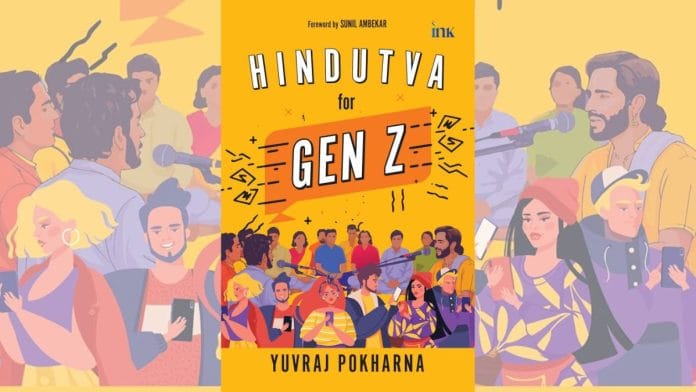
This excerpt from ‘Hindutva for Gen Z’ by Yuvraj Pokharna has been published with permission from BlueOne Ink.