








It’s the Cockroach Janata Party season. Everything good or bad is attributed to this fledgling party—from bringing Gen Z, Gen Alpha and even a year-old Beta to the political centre stage to exposing the Modi government’s vulnerabilities. Kangana Ranaut’s new avatar as a cultural anthropologist. ‘Urban naxals’ getting a new name, and whatnot.
What the cockroaches haven’t been credited with is how they have filled politicians of all hues with self-doubt. So much so that they look unsure about what they once thought was Ram Baan or Lord Rama’s arrow in social engineering—that is, the caste census.
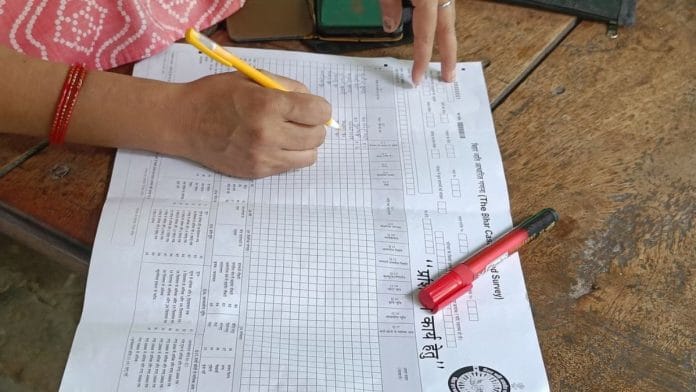
On Friday, the Registrar General of India notified 40 questions for Census 2027, including one on caste. The government finally came good on its April 2025 decision to enumerate caste in the census, silencing those who had raised doubts about it. Surprisingly, nobody in the government or the Bharatiya Janata Party (BJP) was shouting from the rooftops, telling the world about Prime Minister Narendra Modi’s commitment to social justice.
Two days before the RGI notified the questions, academic-turned-politician Yogendra Yadav had lambasted the government in an article in The Indian Express titled “Caste Census is dead. Don’t expect a formal announcement or funeral.”
Yadav’s objection was to reports that it would be an open-ended question on caste—Schedule Caste/Schedule Tribe/Caste—rather than a drop-down menu of castes. He would rather have the enumerator ask the respondent his or her caste category—SC/ST/OBC/General—and then choose from a menu of caste names in that category.
For instance, a person could first indicate his category as, say, OBC and then in the drop-down menu choose to identify himself or herself as, say, Yadav or Ahir or Gwala.
The Socio-Economic and Caste Census (SECC) conducted during the Manmohan Singh government had also kept the caste question open-ended, instead of giving a drop-down menu. The result was that the exercise threw up 46.7 lakh caste, sub-caste and clan names, making their classification practically impossible.
The SECC data was, therefore, never published. With the current caste census also keeping the question open-ended, as in the SECC, Yadav predicted its funeral.
Government officials claim that unlike the SECC, digital census and AI tools would make caste classification from the voluminous data possible. That could very well be the case, but nobody from the government or the BJP has come forward yet to counter the sceptics and put the record straight.
Anyway, Yogendra Yadav is one of the most prominent intellectual faces of the Opposition. Why did the Opposition not jump to its feet even after his ‘prompt’?
The Congress’ response was almost perfunctory. Jairam Ramesh, Congress general secretary in charge of communications, posted a letter written by party chief Mallikarjun Kharge to the PM in May 2025, in which the Congress President had recommended the Telangana model of caste survey questionnaire.
“His very first and fundamental suggestion has been completely ignored. There has also been no discussion with political parties as demanded by Khargeji,” wrote Ramesh. That’s all.
The Congress moved on. Rahul Gandhi didn’t even react to the notification. Samajwadi Party’s Akhilesh Yadav, another strong caste census advocate, didn’t seem to have noticed it either.
So, why is it that both the ruling and the opposition parties seem to be unenthusiastic about the caste census now?
Silent walkbacks
They are reacting like a batter who has committed himself to the front foot on a swinging pitch in overcast political conditions.
But before I come to why, let me explain as Amit Shah would say, ‘aap chronology samajhiya.”
After the OBCs rallied behind Narendra Modi in 2014 and non-dominant, marginalised OBC communities started veering toward the BJP in subsequent Assembly elections, the party thought of consolidating that vote bank.
In October 2017, the Modi government set up the Rohini Commission for sub-categorisation of the OBCs for equitable distribution of quota benefits.
The Commission was entrusted to submit the report by December. The three months became six years. Look at the reasons cited to give one extension after the other to the commission.
In March 2018, the Cabinet approved the second and “final extension” by 12 weeks because the commission had “requisitioned” data regarding admissions and jobs, and needed time for their “scientific analysis”.
In June 2018, the Cabinet approved the third and “final extension” up to 31 July 2018 to enable the commission to have a “detailed look” at the data that it had obtained from state governments and other stakeholders.
The Commission was given several more extensions ostensibly to discuss with stakeholders. The eighth extension up to 31 July 2020 added the following to the commission’s terms of reference: “to study the various entries in the Central List of OBCs and recommend correction of any repetitions, ambiguities, inconsistencies and errors of spelling or transcription.” Covid became the reason for further extensions.
The government went on giving 14 extensions to the Rohini Commission. It finally submitted its report to President Droupadi Murmu in August 2023. One hasn’t heard anything about it since then.
As the BJP kept winning elections, it obviously realised that it would be a blunder to open the Pandora’s Box. In the meantime, the Congress was getting desperate after successive electoral losses.
Ahead of the Karnataka Assembly election in 2023, Rahul Gandhi decided to go for broke and demanded the release of the raw SECC data. The Congress defeated the BJP in Karnataka. An emboldened Gandhi decided to double down, making caste census and removal of the 50 per cent quota cap the Congress’ principal poll plank. It didn’t work in Madhya Pradesh, Chhattisgarh and Rajasthan Assembly elections that year, although the Congress won in Telangana.
Also read: Why one PM Modi-Nitin Nabin photo may worry BJP leaders and karyakartas
Churn of the political ocean
The BJP’s setback in the 2024 Lok Sabha elections seemed to have reinvigorated Gandhi’s belief in the electoral potency of the caste census plank. By then, most of the INDIA bloc partners had climbed on to the social justice bandwagon.
Subsequent Assembly elections, however, put a big question mark over the electoral appeal of the Opposition’s caste census plank. That’s why the Modi government’s announcement in April 2025 to enumerate caste in Census 2027 came as a big surprise. It was possibly driven by the BJP’s electoral calculations in Bihar. However, for a party that dithered so long over the Rohini Commission’s report on the sub-categorisation of the OBCs, the rationale behind the sudden decision to conduct a caste census has remained a puzzle.
Much water has flown under the bridge since the April 2025 decision. The OBC politics in the name of social justice hasn’t done much good to the Congress’ or INDIA bloc’s fortune. The Congress recently won in the Kerala Assembly election but caste census wasn’t an issue there. Its government in Telangana conducted the caste survey but it can make no material change in people’s lives. The Congress-led government in Karnataka has been finding excuses not to make such data public. Meanwhile, INDIA bloc partners such as the Samajwadi Party have been seeking to expand their support base beyond the OBCs.
No wonder, Rahul Gandhi has stopped talking much about the caste census, of late. There may be a rhetorical reference to it in his speeches here and there but it doesn’t seem to form the core of his politics any more.
Recent Gen Z protests and seeming frustration among the middle class have given as much hope to the Opposition as it has alarmed the ruling BJP. Gandhi is making an extensive outreach to students and youth. There are signs of upper castes getting restless, as was evident from the way they abandoned the BJP in the recent Bankipur Assembly bypoll. These factors have given enough reasons to both the ruling and the opposition parties to do a rethink about their social engineering strategies.
Caste census today is like triggering a churn in the political ocean. Parties may hope to get the nectar of immortality or electoral invincibility from this churning, but would they know what to do with the Halahala or poison? There is no Lord Shiva here to consume it and save them. That should explain why they seem to be okay with the caste census producing SECC-like results, which may render the entire exercise ineffective. It will be good for the country.
DK Singh is Political Editor at ThePrint. He tweets @dksingh73. Views are personal.
(Edited by Ratan Priya)