







Four days ahead of the 31 March deadline, the Union Home Minister Amit Shah announced the success of the counter-insurgency operations against Left-Wing Extremists (LWE), also called Naxalists.
In his communication to the Home Secretaries and DGPs of nine states—Andhra Pradesh, Bihar, Chhattisgarh, Jharkhand, Madhya Pradesh, Maharashtra, Odisha, Telangana, and West Bengal—he confirmed that, except for Bijapur and Kanker in Chhattisgarh and West Singhbhum in Jharkhand, Naxalism had been practically wiped out. However, there were 35 ‘legacy districts’ across these states, which would continue to remain under observation.
This was indeed a transformative moment in India’s war against LWE, which at its peak in 2005 affected nearly 180 districts in the so-called ‘Red Corridor’—a geographically contiguous area across the nine states.
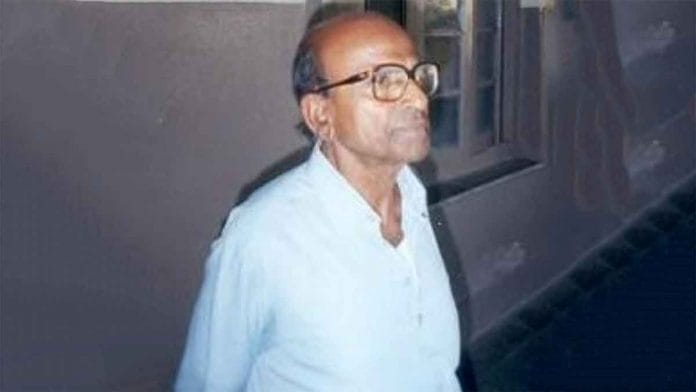
In this series, I will share some of my personal encounters with individuals and situations involving the LWE. Let’s begin with Kanu Sanyal—‘the first Naxal’.
Four decades ago, when I joined the government of West Bengal as an Assistant Magistrate in 1986, the Naxalite movement was on the wane. It had been effectively dismembered by the former Chief Minister SS Ray’s regime—especially during the Emergency years.
When the CPM-led Left Front came to power in 1977, it launched Operation Barga, a land reform initiative to legally register sharecroppers (bargadars). It granted tenants permanent, heritable cultivation rights, security against eviction, and a fair 75 per cent share of the produce, significantly boosting rural livelihoods and agricultural productivity. This effectively knocked off the rationale of the Naxal movement, as 1.5 million farmers were conferred land rights. However, there were some pockets—the Jhargram region of Midnapore and the Naxalbari block in Siliguri, where some supporters were still active.
In early 1987, I volunteered for a posting in the Darjeeling district, which was facing the brunt of the Gorkha National Liberation Front (GNLF) agitation. The Siliguri base camp for the district administration was the Himalayan Milk Union Ltd ( HIMUL) campus at Matigara, the block adjacent to the (in)famous Naxalbari.
However, the GNLF and the Naxal agitations were not aligned; rather, the Naxals under Kanu Sanyal held the GNLF leadership, especially Subhash Ghising and his minions, as petty bourgeois reactionaries. But our main concern then was with the GNLF and the Gorkhaland agitation rather than the Naxals.
After the GNLF signed the Darjeeling Gorkha Hill Council accord in 1988, there was some resurgence of Naxal activity in the tea garden areas around Siliguri, especially in the Naxalbari block. In 1992, I was posted as the CEO of HIMUL and the Siliguri Jalpaiguri Development Authority (SJDA), and was often called for protocol duties at the Bagdogra airport, which was part of the Naxalbari. Naturally, the administration was always on the alert to prevent disruption of the VVIP movement on the national highway.
The first Naxal
This was the time when I received a written message that Kanu Sanyal wanted to present a ‘deputation’ to me. For those unaware of the political activism in West Bengal, a deputation is not as harmless as its dictionary meaning. It was actually a euphemism for a ‘gherao’, which often led to a confrontation, as the resolution to some of the demands was clearly not within the competence of the authority to whom the representation was being made.
After discussions with the District Magistrate, who also happened to be the Chairman of HIMUL (as elections to the milk union had been disrupted on account of the GNLF agitation), a date was fixed for this meeting, and as a matter of abundant precaution, the local police station was duly informed, and some policemen in civilian clothes were asked to remain present in the campus.
Meeting Sanyal was quite an anticlimax. One was expecting a fiery encounter with a ‘lean, mean, angry old man’ accompanied by fierce supporters. However, the person who came was frail and bespectacled and read out his eight-point charter without any emotion. He was well aware of his labour laws, understood the financial condition of HIMUL, and appeared to be reasonable in his approach. Grudgingly, he accepted ‘all cha’ (liquor tea without milk /sugar) only when I told him that I had been a student at JNU.
I had the occasion of meeting him on two other occasions at the Naxalbari Block Development Officer’s (BDO) office. By this time, he had understood the futility of violence, and though he retained his ideological convictions, the abandonment of Maoist principles in China was something he could never reconcile with. The CPI-M attitude toward him was ambivalent: while the top leadership was comfortable with him—Jyoti Basu had in 1977 to secure Sanyal’s release from an Andhra prison—the local party satraps were indifferent, especially as they could not match his knowledge of the communist canon.
But when Sanyal died, leaders from across the political spectrum were there for a photo-opportunity, and the irony of ironies is that Alamy, a British stock photography agency, is now selling the picture of his funeral at $39.
Jyoti Basu was succeeded by Buddhadeb Bhattacharya, who was keen to catapult West Bengal into the industrial age. However, rather than strengthening MSMEs—sectors like textiles, light engineering, leather, Agric processing, and pharma in which the state had a comparative advantage—the focus was on highly capital-intensive projects such as mining and steel, which involved large-scale displacement of people from their habitations. This met with tough resistance both from urban intelligentsia like Mahasweta Devi on the one hand, and the LWE on the other, who had by then become entrenched in the tribal belt of Jhargram.
Also read: Andhra is the intellectual home of Naxalism. How fire was lit in schools, farms & songs
The Lalgarh blast
This tribal belt was separated from Jharkhand by the Subarnarekha River. On 2 November 2008, the convoy of the CM Budhadev Bhattacharya, Ram Vilas Paswan, the Union Steel Minister, Jitin Prasada, the Union Minister of State for Steel, and industrialist Sajjan Jindal narrowly escaped a series of road mine blasts in Lalgarh. LWE claimed responsibility for it. Nobody died, but it unnerved people in the state; road journeys to the interior became rather unsafe.
Immediately thereafter, the state launched a two-pronged response: the presence of West Bengal Police and Eastern Frontier Rifles (EFR) became more visible and pronounced, while senior secretaries looking after development departments were heli-lifted to reach affected villages, take stock of the situation, ensure that all projects were on track, and all vacant positions were filled. This also indicated that the party cadres had become ineffective in carrying forward the political discourse, as they were vulnerable to violent repercussions from the LWE.
This was the background against which some of us—secretaries of departments such as agriculture, co-operation, rural development, sericulture, fisheries, forest and environment, education, and health—were assigned specific gram panchayats and asked to camp in the villages of Binpur I and Binpur II blocks. Our task was to talk to the elected officials, school teachers, Anganwadi workers, gram panchayat secretaries, and elected members of LAMPS, and to instill a sense of confidence.
Thus, the response of the ‘state’ was not limited to police action alone. The main task was to change the narrative from that of ‘law and order’ alone to one of development interventions. Those of us who had faced a similar challenge in the GNLF-affected areas were aware that effective state intervention had to be multi-pronged. A weak state cannot deliver development—the teacher and the health worker, the postman and the forest guard must never feel ‘threatened’ or coerced, either by the GNLF or the LWE. This requires the magistracy, the police, and the development functionary to work in unison, rather than pull in different directions.
This is the first article in a series on Left-Wing Extremist regions.
Sanjeev Chopra is a former IAS officer and Festival Director of Valley of Words. Until recently, he was director, Lal Bahadur Shastri National Academy of Administration. He tweets @ChopraSanjeev. Views are personal.
(Edited by Ratan Priya)