






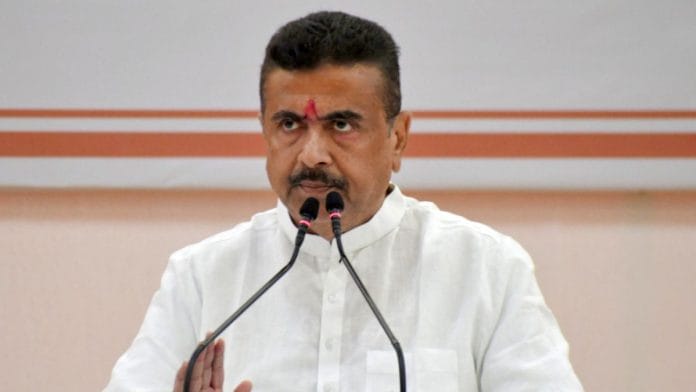


All eyes remain on West Bengal after the Bharatiya Janata Party came to power. And one of its first major policy shifts has already triggered intense debate. The state government has decided to discontinue welfare funding for imams and purohits.
The issue has quickly turned into a wider political and social debate—ranging from arguments around the “end of appeasement politics” to questions of welfare misuse, identity politics, and the meaning of secularism itself.
The West Bengal government’s decision has revived India’s oldest and perhaps most uncomfortable political question: What does secularism mean in practice?
For decades, Indian governments across political parties have had a complicated relationship with religion. Unlike the Western idea of secularism—where the state and religion are meant to be separate, distant entities—India’s version has often meant active involvement with all religious communities. Governments subsidised pilgrimages, regulated temples, and introduced welfare schemes for religious clergy.
Some defended such policies in the name of inclusion, welfare, or historical balance reparations. But many saw them as selective appeasement of a vote bank through tokens.
The problem arises when governments start attaching welfare to religious identity. Once the state selectively starts funding clergy, politics naturally enters the picture. What may begin as social support slowly turns into political signalling. One subsidy creates another demand. State support for one community leads another to ask why they don’t get the same benefits. Welfare thus turns into a game of religious balancing. India has seen the pattern unfold many times before. It is a dangerous direction for a republic built on equal citizenship.
A step in the right direction
The Mamata Banerjee government frequently faced accusations of “minority appeasement”, especially around its support schemes for imams.
The scheme was launched in 2012, when the government announced a monthly honorarium for imams across West Bengal. Registered imams were given Rs 2,500 per month, with the argument that many religious leaders came from economically weaker backgrounds. Soon after, a similar assistance programme was also extended to muezzins through the minority welfare department.
Then in 2020, the state government introduced a similar allowance for Hindu priests. The move was widely seen as a response to the criticism that only Muslim religious figures were receiving state support. Under this scheme, registered purohits were initially given around Rs 1,000 per month, which was later revised to Rs 2,000 ahead of the 2026 Assembly elections.
But why should governments fund religious functionaries at all? Why should the state be involved in religion?
A secular democratic state cannot permanently sustain the role of religious patron without undermining its own neutrality. Whether the beneficiaries are imams, purohits, pastors, monks, or any other clergy, the principle remains the same. Public funds are meant to serve citizens as citizens—not as members of religious constituencies.
This is not an argument against religion. Nor is it about ignoring the economic struggles of people working in religious institutions. Many imams and priests, especially in rural areas, live very modest lives and often survive on unstable donations. Their financial difficulties are real and deserve empathy.
But that support should come through broader welfare systems based on economic need rather than religion-specific state patronage.
Religion already shapes a lot of political discourse in India. That is why this decision in West Bengal feels like a step in the right direction. It could also mean that political parties are slowly realising that openly religion-linked welfare schemes are becoming harder to justify now.
More importantly, voters themselves seem to be changing. Especially among younger and urban Indians, there is a growing focus on issues such as jobs, infrastructure, inflation, healthcare, and education rather than symbolic religious politics.
Also read: Sarma in Assam, Adhikari in Bengal—BJP reliance on borrowed leaders brings risks
What does secularism mean for India?
The West Bengal government’s policy shift should not become an excuse for selective outrage from either side. Celebrating the removal of funding for imams while remaining silent about state support toward other religious institutions would be a dishonest position. Either the state supports all religious groups equally, or it steps away from this space altogether.
The second option is much healthier for democracy.
India’s secularism has always been complicated because of the country’s diversity and historical realities. In the past, a complete separation between religion and the state may not have seemed possible.
But India must now rethink what secularism means.
A secular democracy does not become anti-religion by stepping away from religious patronage. If anything, it allows both governance and faith to exist in their own space without either invading the other.
And perhaps that is the real significance of the policy shift in West Bengal. It is not just the ending of one welfare scheme, but the beginning of a larger conversation India has avoided for a long time.
Amana Begam Ansari is a columnist, writer, and TV news panellist. She runs a weekly YouTube show called ‘India This Week by Amana and Khalid’. She tweets @Amana_Ansari. Views are personal.
(Edited by Prasanna Bachchhav)