






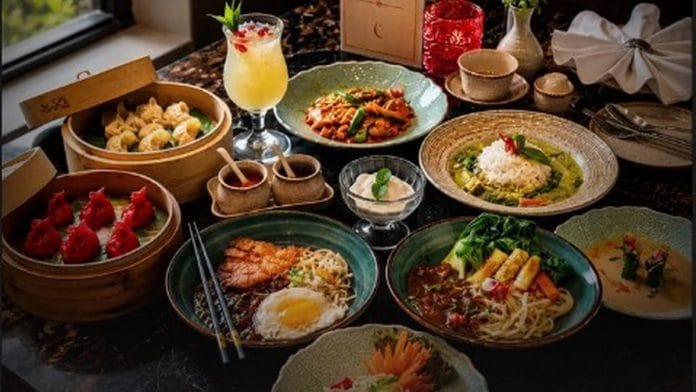


What happens when you take three cuisines and try to create a forced concept to sell them all on one menu? You get an ‘identity crisis’. That is precisely how I would sum up ‘Oriental Express’, the new gimmick at OKO, the Pan-Asian restaurant at The LaLiT New Delhi.
Oriental Express is the restaurant’s new lunch menu, aimed at business diners and food enthusiasts seeking a premium yet time-efficient meal. Available daily from noon to 3 pm since 1 July, it promises a curated Pan-Asian journey through vegetarian and non-vegetarian dishes inspired by Japan, Thailand, and China. Or so it claims.
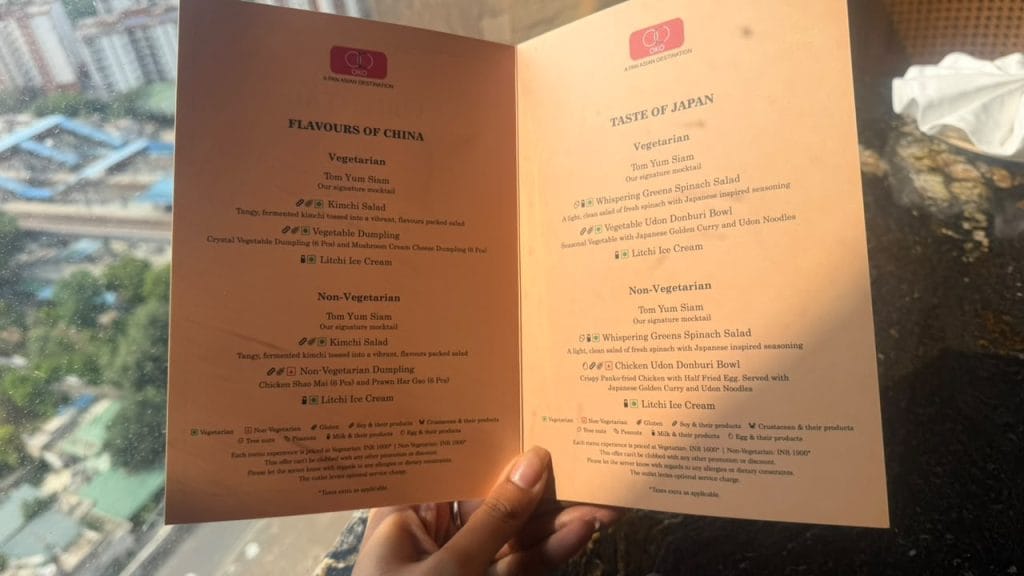
In my humble opinion, Oriental Express is a perfect example of why some ideas and concepts should be dismissed right away. The vegetarian option (priced at Rs 1,600) and its non-vegetarian counterpart (Rs 1,800) feature dishes that taste nothing like the cuisines they are trying to represent.
Delhi’s restaurant scene is increasingly littered with these high-concept menus that read beautifully in a press release and collapse the moment they hit the table.
Also Read: The Leela Palace has reinvented its cocktails. The Library Bar is inspired by novels
‘Oriental’ confusion
Restaurants are getting rather good at selling the sizzle — the evocative names and the ‘curated journeys’ — while the actual cooking settles for whatever is easiest to replicate. Not every menu needs to promise the whole of Asia on a plate. If your ‘Pan-Asian’ ambitions begin and end with dumplings and Thai green curry, perhaps it is better you don’t overpromise and then underdeliver.
At OKO’s Oriental Express, the menu includes som tam salad, green curry with jasmine rice, kimchi salad, vegetable dumplings, and udon donburi bowls, among other dishes.
Now, to be fair, the flavours themselves are not the problem. Most of the dishes, taken on their own, are decently executed.
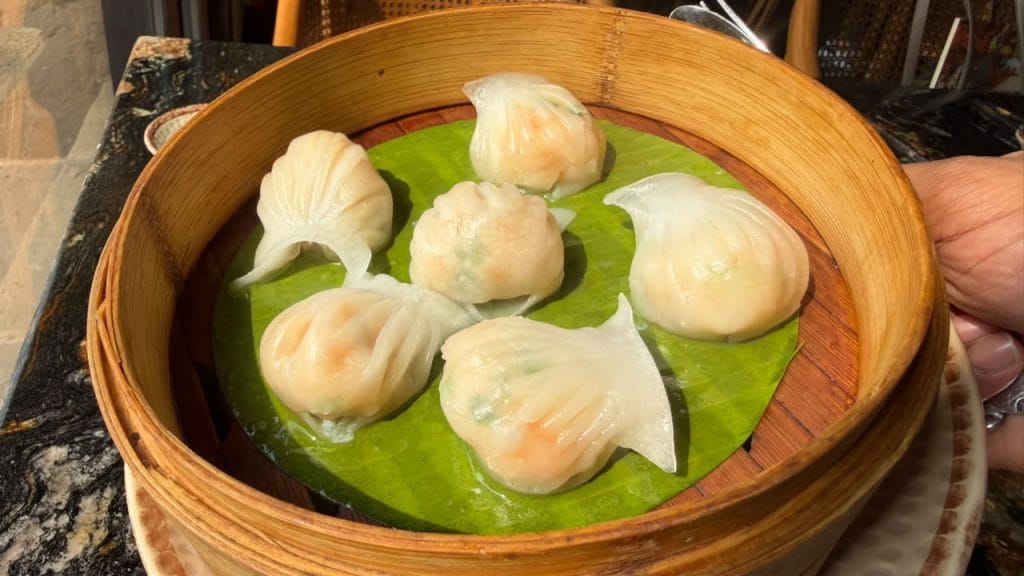
The problem is the concept itself. If you promise your diners Chinese flavours, why would you serve them just regular chicken dumplings?
Whoever conceived this menu clearly didn’t spend much time in China, because chicken and prawn dumplings are among the most replicated and least distinctive items on any Pan-Asian menu in the city.
Then there is the Tom Yum Siam, a savoury, spicy cocktail that recreates the Thai soup with alcohol. It was served as the accompanying drink not just for the Thai course, but for the Chinese and Japanese ones too. And to close out all three cuisines, you get the same litchi ice cream.
If you are building a menu around the idea of a journey through three distinct culinary traditions, the drink and dessert are precisely where those distinctions should be sharpest. A Tom Yum cocktail belongs with Thai food, not as a one-size-fits-all pairing for udon bowls and dumplings.
This also suggests that the menu was not designed dish by dish with intention, but assembled as an afterthought.
The management’s defence is that the real selling point is speed and, to be fair, the turnaround was quick. But if speed is the pitch, why market the whole culinary-journey shebang?
OKO set out to represent everything, but its Oriental Express derails and ends up representing nothing in particular.
Views are personal.
(Edited by Asavari Singh)