





In her foundational 2016 essay ‘On Democratic Backsliding’, political scientist Nancy Bermeo argued that contemporary threats to democracy have fundamentally mutated. The era of the “classic” coup d’état—marked by sudden military takeovers, suspended constitutions, and blatant, open violence—has largely been replaced by more insidious, gradual, and ambiguous forms of democratic erosion.
Among the six modalities of backsliding Bermeo identifies, strategic election manipulation stands out as the most sophisticated tool of modern autocratisation. Unlike traditional election-day fraud, such as ballot-box stuffing or the physical intimidation of voters at polling stations, strategic manipulation involves long-term, incremental actions that tilt the electoral playing field in favour of incumbents well before any votes are cast. Importantly, these actions are deliberately designed to lack the transparent lawlessness of old-school fraud, appearing instead ambiguous, technical, and ostensibly legal.
The ongoing nationwide controversy surrounding the Election Commission of India’s Special Intensive Revision (SIR) process provides a textbook case study for Bermeo’s framework, while echoing the warnings of Steven Levitsky and Daniel Ziblatt in their seminal 2018 work, How Democracies Die.
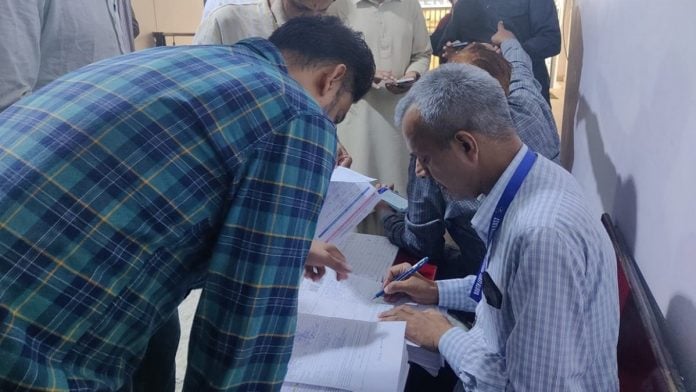
A massive operation aimed at updating and purifying electoral rolls, the SIR exercise resulted in the deletion of more than 13 crore names from draft rolls across 30 states and Union Territories. Coupled with unprecedented internal dissent among Election Commissioners, recent ECI directives scrambling to undo widespread exclusions, and mounting public protests demanding institutional accountability, the SIR crisis illustrates how administrative procedures in the world’s largest democracy can become primary battlegrounds for electoral integrity.
By weaponising technological centralisation and using media dominance to insulate these structural shifts, the state demonstrates how the quiet mechanics of backsliding operate in the modern era.
Also Read: Indians want democracy but also a strong leader. What this paradox does
SIR and ‘constitutional hardball’
A core tenet of Bermeo’s concept of strategic election manipulation is that it occurs long before election day through structural engineering. By the time voters arrive at the booths, the outcome has already been subtly shaped by rules promulgated months or years earlier.
In the context of India’s SIR process, this tilting operates under the guise of institutional “purification”—the routine and legally mandated cleaning of voter lists to remove deceased, relocated, or duplicate voters.
This dynamic reflects Levitsky and Ziblatt’s argument about “constitutional hardball”—the practice of exploiting the exact letter of the law to violate its democratic spirit. While updating a voter list is entirely legal, the massive scale of the deletions highlights how standard bureaucratic maintenance can be transformed into a mechanism of mass exclusion.
Under conditions of backsliding, the burden of proof is effectively reversed: legitimate citizens are suddenly tasked with proving their right to vote to a complex, intimidating bureaucratic apparatus.
Technological aggrandisement
The contemporary manifestation of India’s SIR crisis introduces a new frontier to Bermeo’s framework: technological aggrandisement. Historically, the maintenance of Indian voter rolls was a highly decentralised process managed by local Booth Level Officers (BLOs), who possessed deep contextual knowledge of their neighbourhoods. They knew who had passed away, who had moved, and who was merely away for seasonal work.
The SIR, however, fundamentally upended this democratic safeguard by hyper-centralising access in New Delhi through the ECI’s massive digital platform, ECINet. This structural shift replaced local human oversight with a “delete first, verify later” algorithmic approach. When automated data-matching software flags what it deems “logical discrepancies”, it operates as an unaccountable black box. The software frequently misinterprets the fluid dynamics of working-class migration, complex regional naming conventions, and informal addresses common in various parts of the country.
This algorithmic bias creates an asymmetric filter. Marginalised groups, migrant labourers, and minority communities—who often lack pristine, digitally verifiable documentation—are disproportionately flagged and purged by the central software.
The systemic nature of this vulnerability is illustrated by administrative breakdowns at the state level. In Goa, for instance, chief electoral officials flagged nearly a hundred voters mistakenly purged by the central algorithm. Because editing access was strictly restricted to New Delhi, regional officials sent eight urgent emails within a week pleading for rectification, only to be met with bureaucratic silence as the deadline passed.
Changing the structural rules of database access effectively strips local authorities of oversight, using flawed algorithms to manufacture administrative exclusion under the banner of modernisation.
The referees and internal subversion
Perhaps the most profound insight shared by these political theorists is that, as Bermeo puts it, modern democratic backsliding is frequently “legitimated through the very institutions that democracy promoters have prioritized”.
Levitsky and Ziblatt use a sports metaphor to describe how aspiring autocrats capture independent watchdogs: to tilt the playing field, political actors must first “referee the referees”. Rather than destroying an election commission or a court, the executive branch pressures or reshapes these bodies until the referees begin calling the game in favour of the incumbent.
The Election Commission of India has historically been recognised globally for its independence, competence and role in upholding democratic processes. However, the SIR crisis exposed profound internal fractures that align precisely with this institutional capture. The revelation that two Election Commissioners filed 14 written objections regarding database control, form modifications, and decisions made without full commission consensus demonstrates that the assault on democratic norms plays out inside the machinery itself.
When the internal checks and balances of an independent watchdog are bypassed or strained, the institution’s external credibility is leveraged to validate controversial outcomes. If the public is told that a massive voter deletion drive was conducted by an autonomous constitutional body, the process gains an immediate stamp of legitimacy, making public dissent appear partisan rather than principled.
Media manipulation as the protective shield of consent
For strategic electoral manipulation and technological aggrandisement to succeed without triggering mass public revolt, the broader information ecosystem must be strictly managed. This dynamic highlights the second critical tool in the democratic backsliding process identified by Levitsky and Ziblatt: media manipulation. In the modern landscape of democratic erosion, the ruling party’s arsenal relies heavily on dominating the narrative to insulate the executive branch from accountability.
When the initial draft rolls of the SIR were published, revealing millions of systemic exclusions, mainstream television networks and major print outlets largely bypassed the crisis, choosing instead to adopt the state’s narrative. The entire process was framed almost exclusively as a triumphant leap towards a “Digital India” and a necessary national security measure to eliminate fraudulent voters and illegal immigrants. By dominating the prime-time narrative, corporate media successfully manufactured public consent, masking a massive crisis of administrative disenfranchisement as a technical and patriotic success.
Mainstream media largely buried reports of widespread software failures, unmapped voters, and mounting backlogs in local tribunals. This narrative control serves as a protective shield for backsliding. By keeping the public blind to the structural flaws of ECINet and the internal dissent within the ECI, the legal and administrative changes to the “rules of the game” are normalised in the public consciousness, neutralising widespread outrage before it can crystallise.
Also Read: Losing Gyanesh Kumar and winning UP is the best option before Modi-BJP to silence critics
Breaking the information monopoly
While mainstream media manipulation successfully shielded the SIR from widespread scrutiny, a significant shift in the backsliding dynamic has emerged through the rise of alternative digital spaces. Platforms like YouTube and Instagram have become critical battlegrounds, breaking the traditional corporate and state monopoly on information.
As mainstream news channels ignored the systemic disenfranchisement, independent journalists, digital creators, and civil society organisations used social media platforms to bypass the gatekeepers. Viral videos showed ground-level interviews with working-class citizens who discovered their names had been deleted despite living at the same address for decades. On Instagram, highly shareable infographics translated complex algorithmic biases and the ECI’s internal dissent into simple, accessible language, providing step-by-step guides on how citizens could check their registration status and file appeals.
This alternative digital ecosystem democratised the counter-narrative. It forced the ECI into a corner, making it impossible to hide the mounting public panic behind technical jargon. The rapid, viral spread of these independent reports directly contributed to the political pressure that eventually forced the ECI to announce extensive course corrections—such as extending deadlines for claims, halting mandatory in-person hearings for unmapped voters, and directing BLOs to conduct door-to-door physical verification.
In the modern framework of democratic backsliding, the internet is a double-edged sword: while centralised digital infrastructure can be weaponised to exclude voters, decentralised digital media platforms can be leveraged to reclaim democratic accountability.
The challenge of strategic ambiguity
Whether the Special Intensive Revision is ultimately judged as a calculated manoeuvre of pre-election engineering or a catastrophic blunder born of technocratic hubris and diminished state capacity, the ambiguity itself deserves attention. Bermeo, Levitsky, and Ziblatt collectively warn that the modern assault on the franchise lives in the grey zones of administrative law, database management, and institutional pressure.
This strategic ambiguity can leave citizens and international observers guessing whether a crisis is the result of genuine bureaucratic incompetence, aggressive policy implementation, or a deliberate attempt to engineer an electoral outcome.
While mainstream media manipulation serves as a vital second line of defence in normalising these changes, the emergence of alternative digital spaces proves that the monopoly on information is cracking.
The Indian experience serves as a powerful reminder that the survival of modern democracy depends not just on protecting the ballot box on election day, but on defending the integrity of the databases and information ecosystems that precede it.
Taberez Ahmed Neyazi is Associate Professor and Principal Investigator at the Centre for Trusted Internet & Community, and Director of Digital Campaigns and Propaganda Lab, National University of Singapore. Views are personal.
(Edited by Asavari Singh)