




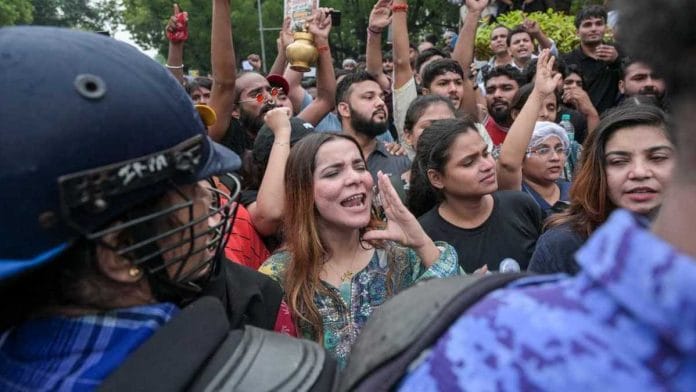

Now that we are into what is probably a pause in the autumn of protests — at least until the next Congress demonstration due on 1 November — this may be a good time to sit back and take stock of where we are.
The thing to remember about the protests is that there are two different groups protesting. And while their motives often overlap, they have different end objectives. For the Congress, the primary purpose is to get rid of Chief Election Commissioner Gyanesh Kumar.
The Congress believes that Kumar is a willing stooge of the BJP, which even changed the composition of the committee that appoints the CEC so that it could squeeze Gyanesh, a long–standing acolyte of Amit Shah, into the job.
It believes that it is vital to get Gyanesh out of his post if Indian democracy is to survive. It says that Gyanesh has done many things to ensure BJP victories at elections, including removing those likely to vote for other parties from the rolls and centralising control of the EC’s computer system to make it easier to interfere with the democratic process.
For the Congress, the objective is to remove Gyanesh. Otherwise, it says, the BJP will never lose power at the centre because it will rig the election.
The Cockroach Janta Party protests, on the other hand, do not have a single specific purpose. They started out as an agitation about exams and paper leaks and have now become a more generalised agitation against the Narendra Modi government. The CJP protesters added the removal of Gyanesh to their agenda when the CEC’s bias became an issue and they will probably add other issues as they emerge.
Modi and the Gyanesh question
The CJP has become a rallying point for young people who are disillusioned and dissatisfied with the way Modi is running India. Though these have not become the primary issues so far, unemployment, corruption, oligarchy, and inflation are all on the agenda and will probably be the focus of future agitations.
The Congress agrees with most of what the CJP says and is pleased with the specific targeting of the Prime Minister who may have come to represent everything young people are complaining about.
Consequently, Modi is more comfortable dealing with the Congress’ protests than with the youth movement. He believes he cannot afford to let Gyanesh go either because it would come across as weakness or because he needs Gyanesh to win elections — which reason sounds more likely to you probably has to do with your view of this government than with any evidence.
So, Modi will not give in to the Congress’s demands to force Gyanesh out and is convinced that if he holds firm, there is nothing the Congress can do. Nearly everything that the Supreme Court has said or done so far suggests that it will also back Gyanesh. So, that’s not a worry. Nor is there any danger of Gyanesh having an attack of conscience. Some people in Gyanesh’s position might say, “I have become so controversial that the best thing for Indian democracy might be for me to step down. I have done nothing wrong but I will do the honourable thing and end this constitutionally damaging crisis.”
Rest assured Gyanesh won’t do that. The only way he will leave the Election Commission is if they drag him out of his office kicking and screaming.
Also read: Neha Bora, Ratna Singh and a new summer of women’s discontent
Carrot and stick approach
Even if the Prime Minister can stare the Congress down by keeping his nerve about Gyanesh, the youth protests are more difficult to handle. So far, Modi’s government has hit the protesters with a stick that has a carrot tied to it. The stick is the unprecedented violence that was directed at the young demonstrators by police, paramilitary forces and goondas-for-hire. The government believed that these were kids who had got carried away and would be scared off after they were assaulted and locked up.
The carrot was the government’s attempts to talk directly to the youth through awkward nostril-forward selfie videos and an increased focus on Instagram. The government genuinely believed that if it chided protesters in the manner of a social media uncle scolding errant neighbourhood children, the demonstrators would abandon their protests and chant “Sorry Uncle” in unison.
So far at least, there is no indication that this strategy has worked. That should worry the Prime Minister. His most vocal supporters have traditionally been WhatsApp uncles who admire his strength and decisiveness. But it’s becoming increasingly clear that the children of these uncles neither love WhatsApp nor Narendra Modi. They certainly do not admire his strength, especially since it has been used against them. Many of these young people will vote at the next election and their protests will help shape the public mood around the election campaign. The government cannot afford to alienate them.
And while it is too early to look for ultimate outcomes (will Gyanesh survive? Who will win the next election?), the protests have had short term outcomes that could linger. They suggest that the view that Modi is invulnerable and that when it comes to the crunch people will always back him is misguided. No government that is so loved needs to assault children and mistreat women protesters.
Till now, the government has worked on the assumption that no matter what the protesters say the BJP will win the 2027 UP Assembly elections and silence its critics.
It might still win the UP elections. But will that silence its critics? Or will it just be seen as more evidence that it keeps Gyanesh in his job because he can deliver victories?
Vir Sanghvi is a print and television journalist and talk show host. He tweets @virsanghvi. Views are personal.
(Edited by Aamaan Alam Khan)