








Even mad dogs and Englishmen had hidden in the shade: Turki bin Abdullah al-Otaishan, the new Emir of Ras Tanura, had chosen the hottest month of the year, when the burning light merged sky with earth, to drive through the desert with his band of 40 armed men. The group was headed to al-Buraimi, an oasis of uncertain sovereignty in eastern Saudi Arabia, at the crossroads between the desert and the ports of the Persian Gulf. Turki threw a grand feast on the day after he arrived—31 August 1952—to mark the Eid al-Adha festival, serving camel shank, lamb, and rice to the villagers. Like a politician seeking votes, he promised a doctor, a primary school, and more feasts. Local clans, he knew, were poor and willing to be seduced.
Two weeks later, the Empire that served as protector of the Persian Gulf Emirates responded. As Royal Air Force combat jets flew low over al-Buraimi, soldiers of the Trucial Oman Levies were deployed in nearby al-Ain. The operation achieved little, with Britain’s Air Staff calling it “protracted and ineffective”; American journalists cruelly referred to the operation as a “comic-opera blockade”.
Last week, the United Arab Emirates—born from mini-states created by Imperial Britain to fight pirates in the Persian Gulf—announced it would be leaving the Organisation of Petroleum Exporting Countries (OPEC) and other regional bodies. The decision has been widely interpreted as driven by the UAE’s desire to pump more oil, and thus lower prices.
That is the lesser part of the truth. The Iran War is leading the Persian Gulf’s rich but weak Arab states to seek new guardians and new arrangements for their protection, just as they did when the sun set on the British Empire. The UAE knows it has to survive—or die—alone, in a landscape darkened by the shadow of monsters.
Lines in the sand
Lines had been drawn across the map in a bewildering number of hues—to be closely examined, so the wry story went, by a colour-blind diplomat. There was the Blue Line, negotiated between Imperial Britain and the Turkish Empire in 1913, which ran from the Gulf of Adaid to the great emptiness of the Rub al-Khali desert. Then, moving eastward, a Green Line, a Brown Line, and a Yellow Line. The region’s tribes had long asserted loose territorial claims over oases, wells, and pasture lands—but their strength and influence changed over time, as did their physical location and loyalty to particular chieftains.
Then, in 1934, the legendary desert guide Khamis bin Rimthan led Max Steineke, an American petroleum geologist for Standard Oil of California (SoCal), and his team to survey a geological feature on the shores of the Persian Gulf. Early drilling failed, leading SoCal to consider calling off exploration—but in March 1938, Dammam well No 7 began showering oil into the air. Two years later, this led SoCal to discover what is today known as the Abqaiq field, among the largest in the world.
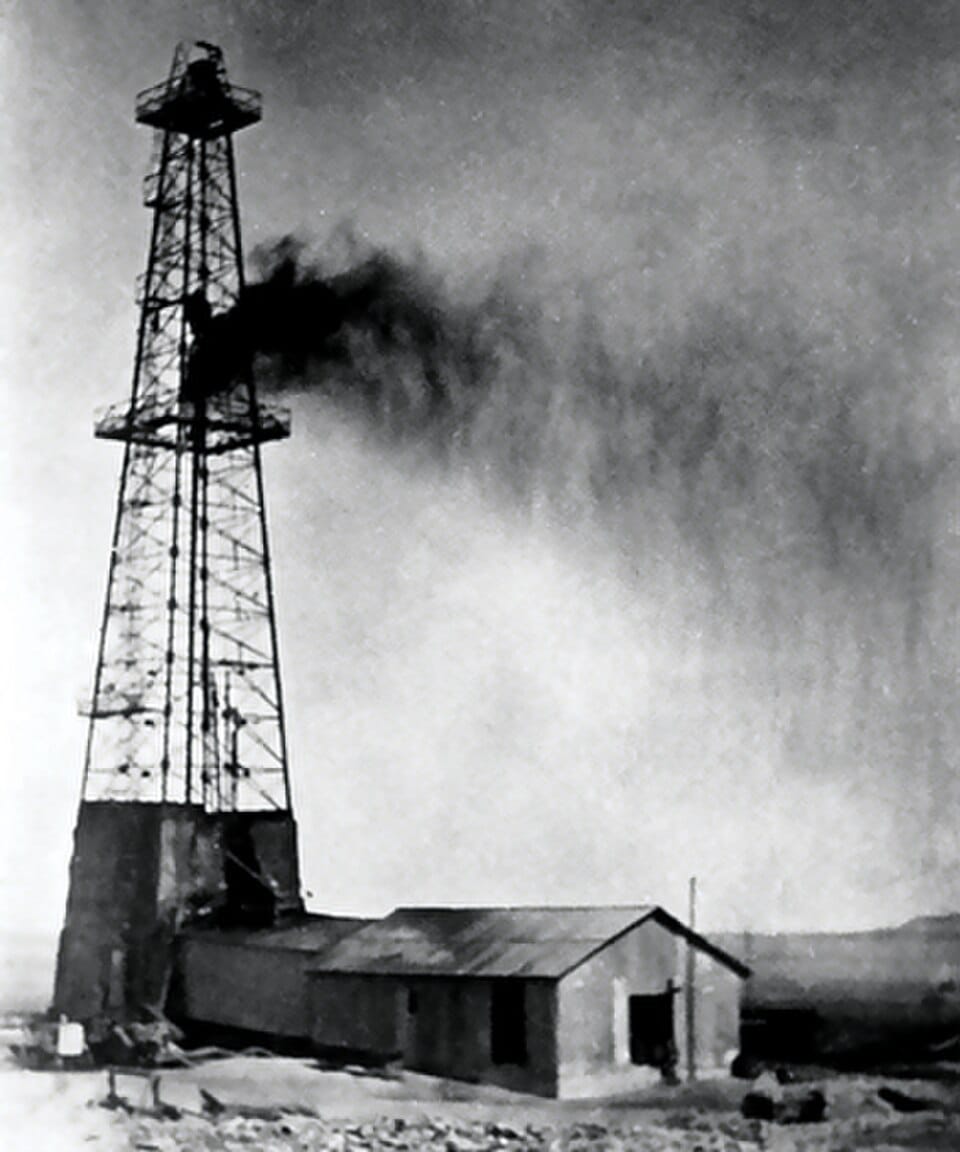
Abqaiq is now home to the largest oil processing plant in the world, which was subjected to a crippling drone strike in 2019. The attack marked a new Iranian strategy to retaliate against sanctions by imposing damage on the oil industries of America’s regional allies.
The American oil concession in Saudi Arabia brought enormous wealth to the cash-strapped monarchy. In 1939, when King Abdulaziz bin Abdul Rahman al-Saud, known in the West as Ibn Saud, visited Ras Tanura to inaugurate oil shipments overseas, he travelled in a gargantuan column of brand-new black cars, with oil-company trucks positioned to pull out vehicles that ended up trapped in the sand.
Also read: UAE’s exit from OPEC means a Gulf energy system that’s more responsive to Asian demand
Empires, vassals, oil
The East India Company had arrived in the Persian Gulf in 1804, seeking to stamp out pirate raids on its shipping. Led by the Saudi Qawasim clan, which operated from Ras al-Khaimah and the creeks near it, the pirates posed a significant threat to merchant traffic headed for India. The company soon found local allies. From the late 18th century, Emir Muhammad bin Saud al-Muqrin had allied with the cleric Sheikh Muhammad ibn Abdul al-Wahhab, who preached an austere version of Islam. Elaborate mosque decorations, the veneration of saints, and the smoking of tobacco were banned; adulterous women and criminals were subjected to death by stoning or beheading.
For a time, Turkey’s Ottoman rulers gave as good as they got: General Ibrahim Pasha infamously forced a Wahhabi cleric to dig his own grave, and then listen to music as he awaited decapitation.
The East India Company arrived in the region as Turkish power was on the decline. The British were content to let the Saudis become the principal power in the interiors of the resource-poor Arabian Peninsula. But to defend the jewel in the crown, Britain needed to control the Persian Gulf. The chieftains of the Gulf, long tormented by the Saudis, were only too willing to help. There followed a web of interlocking treaties between the Emirates and the East India Company—hence the description of the Persian Gulf’s small monarchies as Trucial States.
In 1938, the Anglo-Persian Oil Company and its part-owned subsidiary, the Iraq Petroleum Company, were concerned by the news from Dammam. The discovery of oil on the Arabian Peninsula meant Persian oil had competition. Even more importantly, Anglo-Persian had struggled to carve out its monopoly. The millionaire London socialite William D’Arcy had negotiated an oil concession with Iran’s monarch in 1901. The conditions were brutal: Temperatures soared past 50 degrees Celsius, smallpox epidemics tore through communities, and bandits and warlords ruled, not the king.
To shore up their position on the Arabian Peninsula, the British secured rights to prospect in the Emirates. Anglo-Persian soon found oil—but also began bumping into SoCal prospectors on the contested borders of the Emirates. Fights made by SoCal over the Gulf islands also raised fears of Saudi land-grabs. Each nation understood the potential for conflict, and the need for clear borders—but the al-Buraimi crisis demonstrated just how hard it could be.
Also read: History of Indians in the Arab world—port builders, Jat governor, translators, and slaves
The price of wealth
Long, bitter clashes followed as conflicts erupted over the region’s new wealth. Five years before the UAE became independent in 1971, a coup led by Sheikh Zayed bin Sultan al-Nahyan removed his brother from the throne. The famously austere elder brother, Sheikh Shakhbut bin Sultan al-Nahyan—reputed to only air-condition a single bedroom and to possess only one Land Rover—was cast as a miser resistant to change. The story was much more complex: Shakhbut recognised that oil would make the desert clans richer, but worried that the flood of unearned wealth would hollow out their culture and traditions.
The coup led to a crisis in Oman. To block the Saudi push toward al-Buraimi, the British had deployed troops in Oman’s interior in 1955, taking control of the towns of Ibri, Rostaq, and Nizwa. The Imam of Oman, who had shared power with the Sultan of Muscat under the terms of a 19th-century treaty, now demanded an independent state. The Imam received Saudi backing, setting the stage for a grinding insurgency that raged from 1957 to 1959.
Faced with angry protests from the United Kingdom, the Saudi monarch went to some lengths to distance himself from the fighting. He told disbelieving American diplomats that India must have supplied weapons to the rebels because of a secret agreement between Prime Minister Jawaharlal Nehru and Egyptian President Gamal Abdel Nasser.
Lacking alternatives, Britain turned to the tyrannical Sultan of Muscat, Said bin Taimur, to crush the insurgency. Taimur—known for amusing himself by making slaves swim in his pool while he shot at fish in the water around them—had left Oman’s citizens without the basic elements of modernity: schools, hospitals, even radio-sets and spectacles. This bizarre dystopia spawned a fresh rebellion in Oman, led by Left-wing rebels from the Dhofar region. Taimur’s son, Qaboos bin Said al-Said, seized power from his father in 1971, with the consent of the British—and was then helped by the Saudi king in crushing the rebels.
Faced with external threats—key among them, the seizure of Persian Gulf islands by pre-revolution Iran—the Emirates settled their disputes with Saudi Arabia through a treaty in 1974. The agreement divided the al-Buraimi oasis between Oman and the Emirates, while Saudi Arabia gained the Shaybah-Zarrara oilfields. The tensions over oil and territory re-erupted in 2005 and 2009, though, showing no amount of oil could soothe the Persian Gulf’s troubled waters.
Looking out at the Dammam oilfields in 1939, King al-Saud ibn Saud had gently taunted the British Ambassador: “Ya ibni [my son], that should all have been yours.” Though neither man recognised it, the failure of Britain to secure the oil of Arabia was no misjudgement: The sunset of the Empire, and the rise of a new hegemon, had already begun. Like the UAE, nations across the Gulf will be asking if a new anarchy is rising—and what they must do to survive it.
Praveen Swami is contributing editor at ThePrint. His X handle is @praveenswami. Views are personal.
(Edited by Prasanna Bachchhav)