








The Organization of the Petroleum Exporting Countries began as a project of sovereignty. When Iran, Iraq, Kuwait, Saudi Arabia, and Venezuela founded OPEC in Baghdad in 1960, their purpose was not merely to influence oil prices. It was to correct an imbalance in which producer states possessed the resource, while foreign companies and consuming powers exercised disproportionate influence over pricing, production, and revenue. OPEC gave oil-producing countries a collective voice in a world that had long treated them primarily as suppliers.
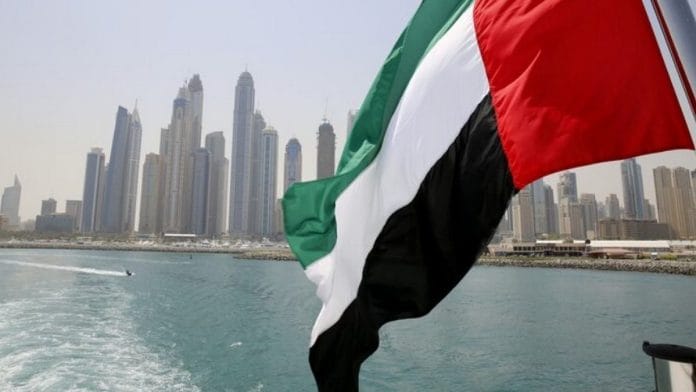
The UAE’s decision to leave OPEC and OPEC+ marks a shift in energy sovereignty. This is not a simple dispute over quotas or regional competition. It reflects a transformation from collective action in 1960 to a modern sovereignty that emphasises flexibility for national strategy in 2026.
The UAE’s departure from OPEC is not a rejection of the organisation’s founding purpose. Instead, it extends OPEC’s goal by seeking greater control through national flexibility rather than collective restraint.
Also Read: UAE-Saudi Arabia rivalry & what Emiratis’ OPEC exit amid war in Iran means for Gulf’s oil cartel
Oil market has outgrown OPEC
OPEC’s historical achievement should not be understated. It altered the relationship between producer countries and the international oil companies that shaped the early petroleum order. Its influence became unmistakable in the 1970s, when oil ceased to be viewed merely as a commodity and became central to global power. Saudi Arabia, because of its reserves, spare capacity, and diplomatic weight, came to occupy a uniquely influential position within this order. For Riyadh, OPEC was not only an economic institution, but also a mechanism for energy stability and international diplomacy.
Yet the world for which OPEC was designed has changed. The United States is now the world’s largest crude producer. Russia remains outside OPEC, though it participates in the wider OPEC+ framework. Canada is a major non-OPEC producer. Brazil, Guyana, and others have added barrels outside the cartel’s discipline. Venezuela, one of OPEC’s founders, remains symbolically important, but is no longer the operational force it once was. The oil market is no longer organised around a small set of producers capable of disciplining a dependent set of consumers.
The creation of OPEC+ in 2016 recognised this reality. It brought non-OPEC producers, especially Russia, into a broader coordination framework because OPEC alone could no longer manage global supply as effectively as it once had. OPEC remains the formal institution, with its history, secretariat, and membership structure. OPEC+ is a wider production-coordination mechanism. Together, they show that the oil market has outgrown OPEC’s original architecture.
UAE’s strategic choice
The UAE’s long-term plan is to expand its energy, logistics, finance, and technology sectors. OPEC production limits are at odds with that ambition, making the issue strategic for the UAE.
As oil demand persists even as the global economy moves toward electrification and stricter climate policy, low-cost producers must choose between defending prices and monetising oil.
The UAE favours early monetisation and reinvestment.
The Iran-US war and disruption around the Strait of Hormuz have given this calculation additional urgency. Hormuz remains the world’s most important energy chokepoint. A disruption there does not merely raise prices; it forces producers and consumers to reassess supply security, export infrastructure, and geopolitical risk. The UAE’s access to Fujairah on the Gulf of Oman, together with pipeline infrastructure that can move some crude outside the Strait, gives it a degree of strategic flexibility. It does not replace Hormuz, but it offers redundancy, optionality, and reassurance to buyers under pressure.
Oil-importing countries may benefit strategically from this shift. While immediate effects are muted by ongoing conflict and higher costs, a UAE outside OPEC could foster a more competitive supply environment, enabling greater responsiveness and increasing buyers’ bargaining power, thereby reducing their reliance on collective restraint.
How will UAE’s decision impact India and other countries?
This matters especially for Asia. India, China, Japan, and South Korea are not passive spectators in the oil order. Their demand, refining capacity, shipping networks, and long-term contracts increasingly shape producers’ strategies. A more flexible UAE could deepen its role as a reliable supplier to these countries. For import-dependent economies, even modest improvements in supply security can reduce inflationary pressure and improve macroeconomic stability.
The United States also has reason to welcome a less concentrated oil-governance structure. Washington has long been sceptical of OPEC’s ability to influence prices through coordinated restraint. Under Donald Trump, that scepticism became explicit; he repeatedly pressed for lower oil prices and criticised OPEC for keeping prices elevated. A UAE outside OPEC aligns with the American preference for diversified supply, greater producer competition, and reduced cartel influence. Trump has already welcomed the UAE’s exit, arguing that it could help lower energy prices.
For Russia, the implications are more complex. Moscow has valued OPEC+ because it gives Russia a role in oil coordination without requiring formal OPEC membership. A weaker OPEC could increase the importance of non-OPEC producers, including Russia, but a disorderly price decline would damage Russian revenues. Russia benefits from a world in which OPEC is less dominant, but not from one in which producer coordination collapses entirely.
For Saudi Arabia, the UAE’s exit presents an institutional challenge, but not necessarily a regional rupture. Saudi Arabia will remain central to oil markets. Its reserves, spare capacity, and experience cannot be easily replicated. The point is not that Saudi influence is ending. It is possible that Gulf energy politics may become more plural. Saudi Arabia, the UAE, Qatar, Kuwait, Oman, and others may increasingly pursue specialised energy strategies while maintaining cooperation through the Gulf Cooperation Council (GCC), bilateral partnerships, and shared security interests.
This should not be framed as deterioration of the Gulf energy structure. It may represent its maturation. European states compete in finance, ports, aviation, technology, and energy while remaining embedded in shared institutions. The Gulf can evolve similarly. Saudi Arabia’s scale, the UAE’s agility, Qatar’s gas strength, Oman’s diplomatic balance, and Kuwait’s institutional conservatism need not be contradictions. They can form a more diversified regional order.
Also Read: Deepening Gulf tensions laid bare as UAE quits OPEC amid widening rift with Saudi and Iran
OPEC after UAE
Other OPEC members will study the decision, but a rapid wave of withdrawals is unlikely. Many still derive value from OPEC: price coordination, diplomatic visibility, and predictability. In 2019, Qatar left the organisation, and in 2024, Angola did so as well, but each case reflected specific national priorities. The more likely outcome is not institutional collapse, but gradual rebalancing: OPEC remains relevant, while its capacity to impose uniform discipline weakens.
Iran’s position requires nuance. The country has vast resources, strategic geography, and deep energy potential, but sanctions, underinvestment, and restricted access to finance and technology are challenges.
A weaker OPEC may reduce the value of a single platform on which Iran and Gulf producers engage within a shared institutional structure. But OPEC is not the only such forum. Iran and Gulf states also meet through the Organisation of Islamic Cooperation (OIC), the United Nations system, and regional channels.
The UAE’s decision should therefore not be read as against any nation. It is better understood as pro-autonomy. And autonomy has consequences for some actors. A Gulf energy system that is more diversified in infrastructure, more responsive to Asian demand, and less dependent on a single coordination structure will gradually reduce the strategic value of disruption as a political instrument.
The importance of OPEC will not dilute overnight. However, the UAE’s exit indicates that the organisation is moving from being the central architecture of oil power to being one institution among several in a more distributed energy order.
That is the deeper significance of the moment. OPEC was born when producers needed unity to gain control. The UAE is leaving at a time when some producers believe that control now requires differentiation. In 1960, sovereignty meant entering the oil club. In 2026, for the UAE, it means stepping beyond it.
The author is an Islamic thinker and author of ‘The True Face of Islam’. Views are personal.
(edited by Asavari Singh)