





Eight metres below the endless darkness of the Arctic winter, there were hot showers, flush toilets and a cafeteria serving double portions of steak and ice cream. The 21 tunnels cut into the ice sheet of northern Greenland in 1959 were to have grown into a 1,25,000 square-kilometre secret city, housing hundreds of nuclear missiles aimed at the Soviet Union. Even as winds exceeding 200 kilometres per hour lashed the surface and temperatures fell below minus 50°C, the portable PM2A nuclear reactor powering the ice city ensured it was always summer inside.
“Life inside the mile-thick glacier is not too different from that in many small US, Canadian or British towns,” a visitor recorded: Even if those towns were annihilated in a nuclear war, civilisation would live on under the ice.
However, there was one small catch: The Social Democratic coalition that had won Denmark’s 1957 election had vowed, in writing, not to allow nuclear weapons to be stationed on its soil. The decision followed a threat made by Soviet Prime Minister Nikolai Bulganin earlier that year: “For countries the size of Denmark, the granting to foreign powers of the possibility of establishing bases would, in the event of the outbreak of an atomic war, be synonymous with suicide.”
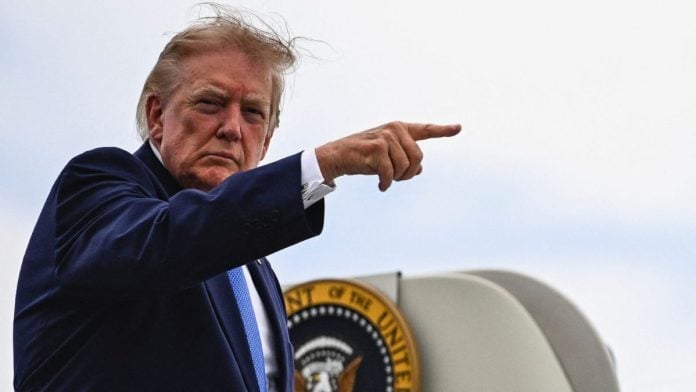
Last week, as US President Donald Trump ended his months-long confrontation over Greenland by gloating over what he claims to be a historic new agreement, European leaders were remembering the enormous risks taken as the Cold War began to descend on their borders.
Fearing that its North Atlantic Treaty Organisation (NATO) allies might break ranks over the deployment of nuclear weapons in Europe, the State Department ordered its ambassador to Denmark to meet Prime Minister Hans Christian Hansen.
Even though he’d heard about “the possible storing of supplies of munition of a special kind in the defence areas in Greenland,” Hansen responded, the Denmark government had not been presented with concrete plans or asked about its attitudes. The equipment the United States chose to store on its bases was, in any case, “permitted entry into Greenland free of inspection.”
As long as he was told nothing, Hansen was saying, he was willing to allow nuclear missiles to be stationed at American bases in Greenland, and risk Soviet wrath.
New words, old wars
The text of the new Greenland agreement hasn’t been released, but officials have said it gives America “permanent access, basing and overflights rights,” as well as the “unilateral power to build additional military structures.” The agreement is also thought to contain provisions barring adversaries of the US—like China or Russia—from deploying troops in Greenland, or making investments in strategic sectors. Trump claimed the agreement allowed the US to address its security concerns at “no cost to the United States.”
All of this would be a significant victory—if it hadn’t already been won in 1951. For little more than a few moments of social media bragging, Trump has taken a hammer to the trust built over generations.
The Defence of Greenland Treaty of 1951 gave the US the right to control airspace and anchorage over designated defence areas. The kingdom also ceded its right to enforce its laws against, and to collect taxes from, American military personnel. The Treaty was to stay in effect as long as the North Atlantic Treaty, which had no date of expiry. Laws subjecting foreign investments in Denmark to security screening were put in place in 2021. Greenland began working on a similar legal framework three years later.
From as early as November 1945—eight weeks after the end of the Second World War—American war planners began preparing the first drafts of their nuclear war doctrine, as part of a thoroughgoing study of Soviet military capabilities. These early efforts had crystallised by 1946, when a plan drawn up for the Joint Chiefs of Staff, recommending expansion of America’s nuclear arsenal, concluded that nuclear weapons could “nullify any nation’s military effort and demolish its social and economic structures.”
America’s nuclear arsenal was small—growing from nine warheads in 1945 to 56 in 1948—but the country’s leadership believed it offered a means to offset Western deficits in numbers. Greenland and Iceland were critical elements of nuclear deterrence. Few aircraft could fly transatlantic, and refuelling bases were needed along polar routes. Those routes also enabled surveillance of the Soviet submarine fleet.
The February 1948 coup in Czechoslovakia, followed by the blockade of West Berlin, persuaded former US President Harry Truman that the Soviets had to be confronted. That summer, he dispatched B-29 bombers to Europe—a declaration of willingness to use nuclear weapons to defend America’s allies.
Europeans were not universally persuaded of the wisdom of the emerging doctrine of nuclear deterrence. The US believed that stationing nuclear weapons on the territory of NATO partners would strengthen deterrence. To both Denmark and Norway, though, there seemed a real risk that nuclear weapons stationed on their soil might invite attack. A complex series of negotiations followed, carving out an exception in Greenland: The language of Danish sovereignty would not apply to American defence zones on the island.
Also read: Trump threatened to redraw the map. Greenland deal shows the limits of his disruption
The Wholesale empire
The Arctic Eden had, in fact, been bid for long before the Cold War: the sea, a determined buyer’s brochure recorded, was awash with “whale, walrus, seal, and shark, cod, ivory-cod, salmon, salmon-trout, and herring; foxes, wolf, reindeer, bear, hare, myriads of birds, including the king duck, eider duck, dorskin, petrel, gull, brent, burgo-master, goose, killiwoke, lolard, and sea swallow.”
Like most marketing material, the text had raced just a little ahead of reality: “Killiwoke,” likely a misspelling of kiviak, was a dish made of fermented seabirds, not a kind of wildlife. There was, it was true, enough coal to power a merchant fleet and summer routes across the Bering Strait from Europe to East Asia.
Long before Trump and rare-earth metals lobbyists began pushing the idea, US Secretary of State William Seward—the force behind the purchase of Alaska for $7.2 million—decided Iceland and Greenland should be added to the American empire.
To Seward and other American imperialists, their case was unassailable—and not because of the wildlife. American naval power would be able to flank what an 1868 government publication called British America—the territory that had become Canada the previous year. Like Trump, Seward believed that control of the territory off Canada’s eastern coast would “greatly increase her inducements, peacefully and cheerfully, to become a part of the American Union.”
Few in America, though, were keen to buy. The problem was that Americans didn’t want their taxes spent buying what the newspapers were starting to call a Polar Bear Garden, an Ice-Box, or, even more unkindly, Seward’s Folly. The discovery of gold and oil in Alaska was still decades away.
The idea didn’t disappear. In 1910, America’s ambassador to Denmark, Maurice Egan, proposed a territorial swap, which would have restored the European principality of Schleswig-Holstein to Denmark, in return for a cluster of Philippine islands America would have given to Germany. Then, in 1940, Germany invaded Denmark. The US responded by occupying Greenland, and asserting that the island was covered by the Monroe Doctrine—the American declaration prohibiting any foreign strategic presence in the Western Hemisphere.
Enemies had changed, more than once, through the 20th century—but geography hadn’t. The question was how leaders of the transatlantic alliance could reconcile conflicting aims and values to protect their shared interests.
Also read: The 2026 midterms will test the political foundations of American power abroad
Friends and lovers
Geography is changing, though—and that change underpins the growing strategic significance of Greenland. The Arctic sea routes will be ice-free throughout the year before the middle of this century, opening up fast routes between ports in China, Russia and America’s western seaboard. The ice-city built in 1959 had to be abandoned within two decades because the enormous pressure exerted by the shifting ice sheet crushed the tunnels.
The melting of the ice sheets over Greenland, though, will make mining for rare-earth metals and hydrocarbons commercially viable. The question is: Was it really necessary for the US to assert sovereignty over Greenland to secure its interests and regulate the new regional order?
The story of the transatlantic relationship offers us a simple answer. Throughout the Cold War, the Danish leadership went to extraordinary lengths to protect and nurture their relationship with NATO and the US.
Following the crash of a B-52 bomber off Thule in 1968—which led to a cloud of radioactive material from its four nuclear bombs being spewed over the ice-bound port—the US agreed to demands for Greenland to become a nuclear-free zone. This was, in part, because nuclear submarines and ballistic missiles had made conventional bombers irrelevant. For their part, Danish authorities agreed to language that would allow nuclear weapons back on Greenland in some circumstances.
Leaders in both Washington and Copenhagen understood that their alliance was anchored in one core interest: the need to defend themselves against the Soviet Union. To do so, however, they had to make complex compromises, sometimes even resorting to lies and deceit. The solutions, though, emerged from hard-won trust, not braggadocio or bullying.
Praveen Swami is a Contributing Editor at ThePrint. His X handle is @praveenswami. Views are personal.
(Edited by Saptak Datta)