








Long after its hull was peeled open by a missile fired from an Iraqi jet, the funnel of the APJ Ambika could be seen rising from the viridian waters of the Khowr-e Musa channel. Like the white-domed tombs of unknown captains that line the shores of ports around the Persian Gulf, the funnel served as a memorial to the hundreds of civilian sailors whose lives were lost in the course of the Iran-Iraq war. As the wreck slid deeper into the mud, though, memory faded. The loss of the Ambika figured in Parliament, but the airstrike on Great Eastern Shipping’s Jag Pari, the attack on Spic Emerald, and the killing of Jagdish Bhagwan—shot dead by the panicked crew of an American missile frigate—escaped wider notice.
Forgetting does not erase reality, though. Twenty years after the Ambika went down in 1984, a merchant ship headed through Khowr-e Musa sank after crashing into its wreckage. Likely, the long-forgotten wreck had drifted, and maritime maps no longer accurately reflected its location.
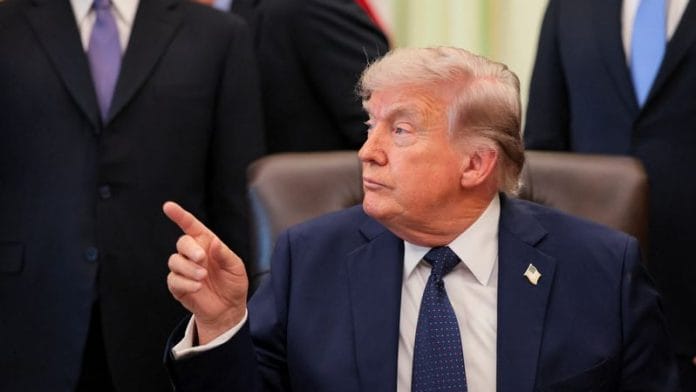
The strange creatures rising from the depths of United States President Donald Trump’s mind have led the Persian Gulf—and the world—back into the nightmare of that war, the longest of the 20th century, in which poison gas and missiles are thought to have claimed the lives of as many as 10 lakh people. There is some tenuous comfort that a ceasefire has held in the face of the disintegration of dialogue, but there is also the grim reality: Each ceasefire has led back to war.
Allies, not friends
From 1981, Iran and Iraq waged a bitter war against shipping in the Persian Gulf, each seeking to hollow out the other’s economy: The Tanker War, strikes on merchant traffic, oil infrastructure, and the gargantuan vessels which carried crude to power the globe. Iraq was soon attacking ships with international flags. The US hushed up evidence that dictator Saddam Hussein was using chemical weapons in his war against Iran, and provided his regime with weapons and intelligence. America ended up drawn into the murderous shipping war—and added to the carnage by shooting down an Iran Air jet with 290 passengers and crew on board.
The strange part of the story is that until 1959—and even after—the two enemies were allies, bound together. Iran and Iraq were both founder-members of the Central Treaty Organisation, set up as an eastern version of the North Atlantic Treaty Organisation. Following a coup led by Brigadier Abdul-Karim Qasim, Iraq left the organisation. The Brigadier, however, soon eased US President Dwight Eisenhower’s fears by cracking down on communists.
Less than six months after the end of the Second World War, a new global conflict had begun to rise. The first crisis of the Cold War did not take place in Berlin or Eastern Europe, but on the mountains of northern Iran. In August 1941—just eight weeks after Nazi troops launched their offensive against Moscow—the United Kingdom and Soviet Union together invaded Iran, and forced Reza Shah Pahlavi from the throne that London had raised him to. Iran emerged as a critical bridge for routing supplies to the war-ravaged Soviets.
The Soviet Union pushed hard for strategic parity in Iran, seeking oil concessions similar to what the UK enjoyed, as well as equal spheres of influence. The Soviets mounted pressure on Iran by refusing to abide by an agreed commitment to withdraw by February 1946. For a time, the Soviet decision seemed set to transform Iran’s political destiny. The Kurdish and Turkic-speaking minorities in the country’s north formed autonomous republics. Tudeh, Iran’s communist party, expanded dramatically.
Likely, the Soviet Union backed away from confrontation to conserve its limited means for its core interests in Eastern Europe. As historian Geoffrey Roberts points out, Soviet leader Josef Stalin did “little or nothing to stop the crushing of the communist-led insurgency in Greece; withdrew his troops from Iran only two months after the agreed deadline; and rapidly backed away from confrontation with Turkey.”
The Soviets did eventually secure an oil concession from Iran—but the country’s Parliament refused to ratify the deal, and it was soon scrapped. The eviction of the Soviet Union, though, did not end the problem.
Also read: India needs to learn from US-Iran conflict, just like Tehran took lessons from Iraq war
The tides of war
From 1968, as the UK began withdrawing from its imperial control of the Persian Gulf, a new struggle was emerging between the region’s states—all American allies in the Cold War. In 1961, Iraq under Qasim had asserted territorial claims over Kuwait, arguing that the emirate had been part of the imperial Turkish province of Basra. Iraq had been deterred by the deployment of some 5,000 British troops. Iran, meanwhile, seized several islands in 1971.
The Iran-Iraq conflict intensified in 1974. Tehran aided Kurdish secessionists, while Baghdad ordered its troops to stage cross-border raids. The countries were pressured by the United Nations to come to a settlement, but nothing was, in fact, settled.
Following the 1979 revolution in Iran, Saddam sensed an opportunity to seize the advantage. The theocratic regime of the cleric Ruhollah Khomeini, he believed, had been weakened by purges of officer cadre loyal to the exiled monarch. Iran’s economy was also in disarray. The Iraqi dictator demanded the return of the islands Iran had seized in 1971, and quasi-independence for the ethnic-Arab minority in the province of Khuzestan. Iraq also demanded sovereign rights over navigation through the Shatt al-Arab, the 200-kilometre waterway formed by the confluence of the Tigris and Euphrates rivers.
Little thought, however, was given by Iraq’s regime on how it meant to secure its ends. In interviews conducted after the war, Saddam’s commanders said he voiced no strategic conception, beyond claiming to reverse 1,500 years of Persian power over the Arabs. Iraqi Generals were given no directions to prepare their military for an extended war, nor were they offered clear war aims.
The initial successes of Iraq’s military were soon checked. Iranian counteroffensives succeeded in reclaiming lost territory by 1982. Lakhs of soldiers—many of them children—were squandered in operations of dubious strategic value. The Iraqis were hit hard, but knew time was on their side: Iran’s new regime had frenzied supporters willing to give their lives, but a diminishing pool of weapons and a serious shortage of funds.
Also read: Israel-US-Iran war could go many ways for India. The dust needs to settle first
Fires rage out of control
From 1984, a series of CIA assessments pointed to the international consequences of the Tanker War. Iraq had stepped up attacks on Kharg Island, the hub for Iran’s oil exports. The bulk of Iraq’s oil exports were transported through pipelines, so Iran responded by targeting shipping bound to the Saudi oil facility at Ras Tanura. Though the country’s air assets were limited, it began using fast boats and its small fleet of naval ships to target shipping. The Iranian warship Sabalan became infamous for boarding and then shooting up merchant ships. “Have a nice day,” the later Vice Admiral Abdolla Manavi would say to his victims on the wireless as he left the site of an attack.
The availability of was not a concern for the US, which had vast domestic supplies and the Caribbean to count on. The essence of its strategic guarantee to its Persian Gulf allies, though, was to ensure stable prices—something a protracted shipping war would endanger.
Following desperate requests from Kuwait—and credible suggestions that it would turn to the Soviet Union if help was not forthcoming—President Ronald Reagan agreed to provide escorts to the emirate’s tankers, flying American flags. The first operation did not end well, though. The supertanker Bridgerton was hit by an Iranian mine and limped into port with its escorts using its bulk for protection.
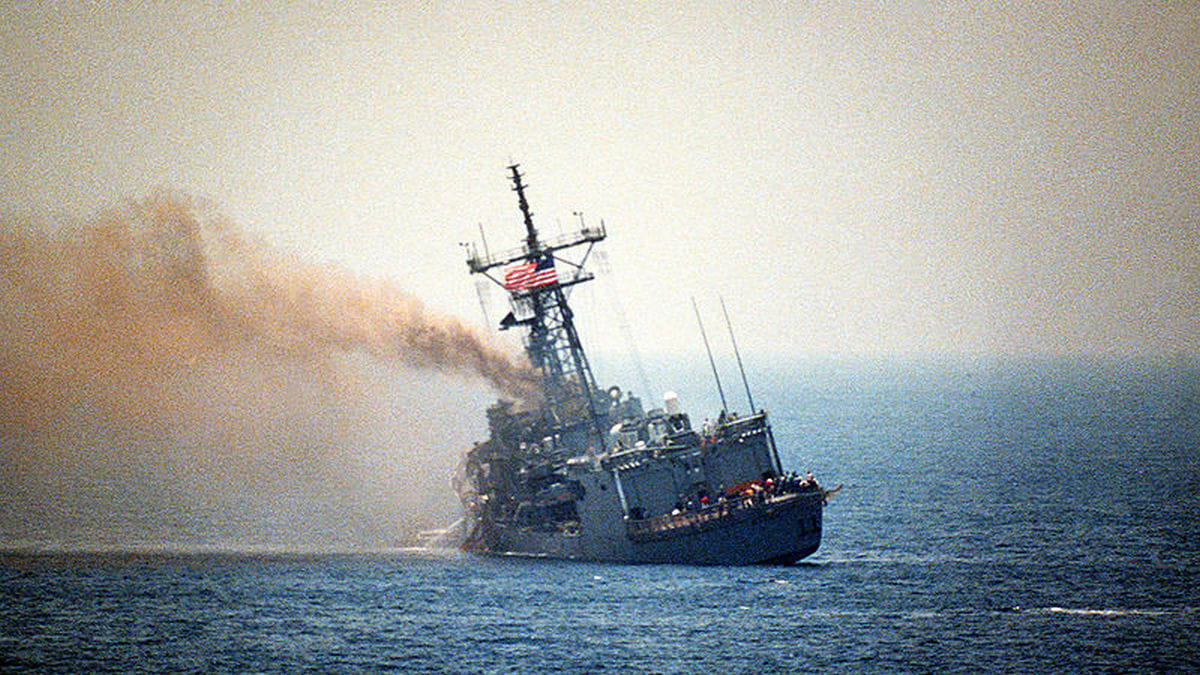
Things soon went further downhill. The frigate USS Stark was hit by two missiles fired from an Iraqi jet, killing 37 sailors. The action was blamed on pilot incompetence, but raised questions in the US about why the country’s sailors were being put in the line of fire. The frigate Samuel B Roberts was severely damaged by an Iranian mine the next year. Though the US Navy delivered severe punishment, the shooting down of Iran Air 655 just two months later took much of the glow off America’s role in the Persian Gulf.
Iran’s leadership finally agreed to a ceasefire in 1989. American military presence was not the key reason: Low oil prices had gutted Iran’s finances, and its stockpile of weapons purchased before the Revolution had dwindled. Iraq was able to outspend its enemy, if not outfight it.
The victory, though, was to prove pyrrhic. Two years after the end of the Iran-Iraq War, Saddam decided to invade Kuwait—the rightful spoils, he believed, for defending the Arab emirates from Iran, and the enormous debts he had incurred. Though the US crushed Iraq in the war that followed, Iran acquired profound influence in the Shia-majority country—influence it had been unable to win through its own war. Iran had, by 2011, developed increasingly sophisticated tools to close the Persian Gulf—or, at least, ensure any fruit an adversary might harvest would prove poisoned.
Like many rulers before him, Trump was too easily seduced by the promise of easy victory—and now faces the prospect that the price of the fruit he craved might be too high.
Praveen Swami is contributing editor at ThePrint. His X handle is @praveenswami. Views are personal.
(Edited by Prasanna Bachchhav)