








As a child growing up in Israel, the state-controlled media repeatedly replayed the tale of our national football team’s heroic encounter with the mighty Soviet Union. Commentators never tired of recounting the spectacular goal scored by one of our strikers against the legendary goalkeeper Lev Yashin. For a generation of young Israelis, that moment embodied national pride—until, of course, we later discovered the fuller picture: however stirring the goal may have been, it was the USSR that ultimately carried the day and won the match.
I recall that match now because the current war in the Persian Gulf — now nearly two months old — appears to demand a clear separation in any analysis between the contest for public opinion and the realities on the ground.
The conflict has produced a striking paradox for Iran: an obvious military setback, with American-Israeli strikes degrading its capabilities and exacting a heavy civilian toll, yet also a notable propaganda victory as the plucky underdog that dared confront American power.
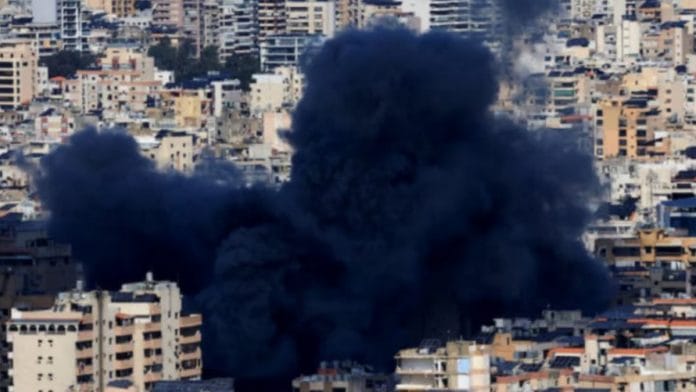
Israel, meanwhile, has sustained reputational damage, compounded by its expanded campaign in Lebanon. For the United States, the gains appear limited, with transatlantic ties strained and new adversaries emerging.
For India, the long-term implications of this episode deserve careful consideration once the immediate dust has settled.
Also Read: Iran war has given India a blueprint for the next conflict
India’s Israel concerns
Let us begin with Israel. Recent events in Hungary offer a useful parallel. Europe has not sought collective punishment of the Hungarian people for the prolonged mandate they granted Viktor Orbán; rather, it has quietly welcomed his electoral defeat. One can reasonably predict that Brussels will now tread carefully, avoiding excessive pressure on the new Hungarian government over immigration policy, precisely to prevent any resurgence of public sympathy for Orbán. In short, much of the damage to Hungary’s image in Europe has been wiped clean by the change of leadership.
A similar dynamic may well play out in Israel. Current polls suggest that Netanyahu is likely to lose the next election. The key question, therefore, is how much lasting harm Israel will continue to suffer even after he departs. A good deal of the reputational damage is intimately tied to the actions and style of the present government, and could, at least in part, be repaired under different leadership.
Yet two deeper, longer-term concerns stand out, both of which carry particular significance for India.
The first is the erosion of Israel’s image as a stabilising force in the region. This perception had been bolstered by the Abraham Accords and the I2U2 grouping, which together helped nurture the ambitious IMEC corridor — a strategic trade and infrastructure route linking India directly to Europe via Israel, bypassing more volatile routes through Turkey, Lebanon, Iraq, or Syria.
Israel’s objective reality — surrounded by hostile actors and often compelled to strike pre-emptively — means that even a future government that excludes the two hard-right parties currently within Netanyahu’s coalition may find itself drawn into military actions that once again cast it as a source of regional instability rather than a partner for stability.
The second issue is more paradoxical and perhaps harder to reverse. At the very moment when Israel’s critics accuse it of having masterminded Washington’s war on Iran, the country has in practice become the most compliant of American allies, having surrendered a significant degree of autonomy in its foreign and defence policy.
It is increasingly difficult to recall an Israel that once acted with bold independence: whether in 1981, when it quietly circumvented a US arms embargo on Iran (yes, Iran!) by helping supply F-4 Phantom tyres and tank spares; in 2007, when it destroyed Syria’s nuclear reactor without American approval or even prior coordination; or as recently as the 2024 Rafah operation, conducted in defiance of President Biden’s explicit “red line”.
More recently, Israeli citizens first learned of the 10-day ceasefire between Israel and Lebanon through a statement by Donald Trump, rather than from their own government after a meeting and approval by the security cabinet chaired by Netanyahu.
An Israel that appears overly deferential to American interests, and possesses significantly less room for independent manoeuvre, may well be seen by New Delhi as a somewhat less valuable strategic asset.
Best case for UAE-India-Israel axis
Alongside the risks, however, one cannot overlook the opportunities this conflict may yet present for Israel. In the aftermath of the war, Israel is likely to emerge as a more significant defence exporter.
European nations and India alike will find it difficult to disregard Israeli military systems that have been battle-tested in real conditions. With Russia expected to remain a long-term threat to European security, and the United States increasingly reliant on capable partners, Israeli experience and technology could become even more valuable to the democratic world.
Without for a moment underestimating the profound suffering of innocent Lebanese civilians caught in the current fighting, it is equally impossible to ignore the historic opening of direct peace talks between Israel and Lebanon, whatever their eventual outcome.
The Lebanese newspaper Nidaa al-Watan captured the moment with striking clarity on the day the negotiations began. Its headline read: “Lebanon and Israel: Breaking Taboos and Commencing the Era of Negotiations.” The paper continued: “Yesterday, the nation aligned itself with its supreme national interest, positioning itself solely according to the dictates of its sovereign agenda and the public good. By sitting down directly with the Israeli side, it declared an end to the era in which ‘official Lebanon’ had been imprisoned inside Iran’s ‘house of obedience’.”
Never before has sovereign Lebanon appeared so united in its opposition to Hezbollah, nor so averse to Iranian interference. The Iranian ambassador in Beirut has effectively become persona non grata and is now present in the country on an illegal footing. Hezbollah’s faltering campaigns against Israel — driven by Iranian and Hamas interests — have galvanised a Lebanese consensus that the group is an unlawful militia. It has strengthened national resolve to confront and resolve the issue, while simultaneously breaking a long-standing taboo against direct engagement with Israel.
In the same vein, there has been no significant rupture between Israel and the United Arab Emirates. On the contrary, in many respects the war has reinforced the partnership between the two countries.
For India, the contemporary relationship with the Emirates carries far greater strategic weight than any connection with Iran. While the deep civilisational ties between the two nations are often invoked in the Indian media, it is worth noting that the ayatollahs’ regime in Tehran has largely trampled upon that ancient Persian heritage.
In this context, an Israel governed by a more stable centre-right administration — one less prone to chaos and less inclined to engage in weekly international raita phailana (mess-making) — is likely to see the UAE, India, and Israel axis grow only tighter and more resilient.
Iran after the war
Iran did not fight this war as a conventional army. In many respects, its most notable achievement — the temporary paralysis of the Strait of Hormuz — was the success of a semi-guerrilla-style force rather than a regular military. In the cold light of day after the conflict, the praise Iran has received for refusing to surrender will gradually fade into oblivion. What will remain, however, is the extensive damage to both military and civilian infrastructure, which will demand enormous resources and sustained effort to repair.
The Iran that emerges from this war is not the same as the one that entered it. The supreme religious authority that had, for more than four decades, successfully preserved national unity has been largely sidelined. In its stead sits a kleptocratic military junta, desperate to manufacture legitimacy before a disillusioned public. Theirs is a precarious inheritance: presiding over a skeletal economy that can no longer be sustained by revolutionary fervour alone.
As seen during similar transitions in South America, this will be a complex and arduous task, especially in an atmosphere of deep suspicion among the new centres of power, where it is far from clear who ultimately holds the final say.
Iranians themselves, I am convinced, understand their predicament far better than many of their cheerleaders abroad. They know that their situation is genuinely difficult. Few among them seriously believe that taxes and levies extracted from shipping in the Gulf of Hormuz, if levied behind America’s back, will magically cover the cost of reconstruction. They recognise that Iran may succeed in extorting a few specific vessels (mostly “friendly” ones) and collecting scattered millions here and there, but it lacks the institutions, banks, legal framework, and international credibility to turn such actions into a stable, efficient, and profitable bureaucratic system. It is rather like attempting to operate a toll booth on a major international highway without proper banking facilities or legal protections—and with some willing payers, but only on the condition that they are not caught paying.
The only consolation for Tehran is that its inability to breach the American blockade of the Strait of Hormuz, or to levy an effective Iranian tax on transit, mirrors the United States’ failure to prevent a prolonged, impressive, and effective Iranian blockade against its allies in the Persian Gulf.
Also Read: A perfect storm? High energy prices, the West Asia war, and India’s narrowing fiscal space
What next for New Delhi?
Even if President Trump continues to behave in a rude and bullying manner toward longstanding friends such as Canada, India, and Denmark, and even if — as his opponents keep saying — he entered this war out of hubris and without fully grasping its consequences, the underlying power imbalances may still produce an eventual agreement. Such a pact could help stabilise the region and further diminish Iran’s strategic relevance for India.
For all the current excitement surrounding Pakistani facilitation of talks and the notion of growing Chinese influence in West Asia, the opposite outcome remains plausible. Pakistan is unlikely to transform itself into a major regional power simply by playing the role of broker. After all, Iceland did not become a superpower merely because it hosted negotiations between the Soviets and the Americans during the Cold War.
In the end, like that famous goal against Lev Yashin, initial perceptions of victory may prove deceptive once the full score is known.
The paradox for India lies in the fact that the consensus that has now been reached — such as the need for enhanced integration across its intelligence services, Army, Navy, and Air Force, or for further diversification of energy sources — were evident well before the conflict began. Conversely, the question of whether the war necessitates a shift in India’s foreign policy demands an extended period of observation, until the turbulent tides of propaganda from all involved parties recede to reveal the bedrock of objective reality.
Lev Aran is a former coordinator of the Israel-India Parliamentary Friendship League and an Israel-based freelance columnist and journalist. He tweets @LevAranlookeast. Views are personal.