






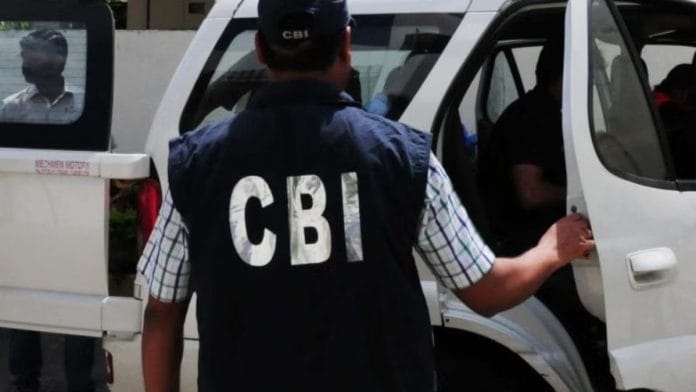


Rahul Gandhi’s dissent letter questioning the constitutional propriety of the Central Bureau of Investigation’s Director selection process spotlights an organisation that has long outlived its utility. The question is not who should lead the CBI, but whether it continues to serve any useful purpose in the federal polity of India.
Once derided as the “Congress Bureau of Investigation” by BJP in opposition — a charge conveniently forgotten upon assuming office — the agency earned its most memorable epithet from the Supreme Court itself: a “caged parrot speaking in its master’s voice.” That indictment led to a tripartite selection mechanism — the Prime Minister, the Leader of Opposition, and the Chief Justice jointly recommending the Director. It was designed to insulate the appointment from executive capture.
Even that safeguard was tested. On 23 October 2018, Director Alok Verma was placed on forced leave without charges or notice; his subordinate M Nageshwar Rao handed charge overnight. The Supreme Court reinstated Verma on 8 January 2019. Forty-eight hours later, a PM-led committee — voting 2:1, with Mallikarjun Kharge dissenting — removed him on the basis of a Central Vigilance Commission (CVC) report without an opportunity to respond. He was posted as Director General, Fire Services, refused the assignment, and resigned from the IPS on 11 January 2019. “The selection committee didn’t consider the fact that the entire CVC report is premised on charges alluded by a complainant (special director Rakesh Asthana) presently under investigation by the CBI,” Verma said in a statement.
A house built on sand
Before examining what the CBI cannot do, it is worth recalling that it may have no legal right to do anything at all. The Gauhati High Court, in a path-breaking judgment of 8 November 2013 (Navendra Kumar v. Union of India), struck down the very establishment of the CBI on the ground that it had been created through an executive notification despite police being a State subject under the Constitution. The court ruled that the Central Government could not confer investigative powers on an agency not founded under competent law. The Supreme Court stayed that order the very next day, but the matter has since remained in jurisdictional uncertainty. The possibility of retrospective parliamentary validation exists, but legislation on a State List subject would itself invite challenge. The organisation thus investigates crime from a constitutionally uncertain perch.
Death by a thousand jurisdictional cuts
Whatever legitimacy the CBI once commanded has been steadily hollowed out.
First, the National Investigation Agency. In the aftermath of the 2008 Mumbai attacks, P. Chidambaram steered through the NIA Act, vesting terrorist offence investigation in a dedicated agency under the Unlawful Activities (Prevention) Act (UAPA). The NIA did a commendable, if imperfect, job. The consequence, however, was that the CBI was stripped of the very category of high-stakes investigation that had given it national relevance.
Then came the withdrawal of general consent. A growing number of state governments — Maharashtra, West Bengal, Kerala, Telangana, Rajasthan, Chhattisgarh, Jharkhand, at various points have withdrawn standing consent for CBI operations on their soil. Because the Prevention of Corruption Act 1988 does not distinguish between a state and a central government public servant, this withdrawal forecloses CBI jurisdiction even against Central employees posted in those states. The jurisdictional perimeter has steadily narrowed from without as well.
Investigation that cannot begin
The July 2018 amendment inserting Section 17A into the Prevention of Corruption Act may prove the quietus. The provision is precise in its sweep: no police officer shall conduct any enquiry or inquiry or investigation into an alleged offence by a public servant — where the allegation is relatable to a decision or recommendation made in discharge of official duty — without prior approval of the competent authority. For IAS officers on state deputation, that sanction must come from the state government.
The section mandates a decision within 90 days, extendable by 30 days. It is studiously silent on the consequence of non-decision. A two-judge bench delivered a split verdict in Nara Chandrababu Naidu v. State of Andhra Pradesh on 16 January 2024 — leaving unsettled the retrospective reach of 17A and the precise distinction between “enquiry”, “inquiry” and “investigation.” On 13 January 2026, a fresh bench split again — this time on the provision’s constitutional validity itself. One judge struck it down as unconstitutional, holding that it blocks scrutiny at the threshold and may protect the guilty alongside the innocent. The other upheld it but sought to cure its conflict-of-interest problem by routing the sanction decision through the Lokpal rather than the executive. Both matters now await a larger bench. In the interim, the CBI stands paralysed at the very first step of any corruption inquiry against a serving officer.
Should this hurdle be cleared, Section 19 requires a separate prosecution sanction — applicable to every member of the All India Services, every gazetted employee of the central government, and every officer of a public sector bank. In the case of IAS and IPS officers serving in state affairs, the comments of that state government are additionally required — all of which meanders through the CBI, Law Ministry, and Department of Personnel and Training (DoPT) before a file that may never emerge intact.
One might expect the judiciary — which created the tripartite selection mechanism and coined the caged parrot metaphor — to have compensated through court-directed CBI investigations. It has not. In high-profile matters where public interest was palpable — the Rafale fighter aircraft purchase, the Pegasus interception of iPhones, and most recently the Vantara wildlife centre allegations — the Supreme Court did not rely on the CBI investigation. In the Mahua Moitra cash-for-query case, it was the Lokpal, not the Supreme Court, that directed the CBI to investigate — one of the very few instances where an independent institutional direction has translated into actual investigative action. For the most part, the courts have been content to express concern and leave the field to the very executive whose conduct is often in question.
The case that says it all
A senior IAS officer serving as Director of Industries in Punjab was caught red-handed by the Punjab Vigilance Bureau in 2008. Seventeen years later, the trial has still not begun. The state government somersaulted repeatedly on whether to recommend prosecution. Eventually, the government of India granted sanction only after the Punjab and Haryana High Court directed it to take a decision, one way or the other, in a time-bound manner. By then, the officer had risen to Chief Secretary, retired, and settled into a post-retirement appointment. Justice deferred is the operative principle; justice delivered remains aspirational.
The most recent episode is instructive. While investigating a Punjab government public servant in a case on the soil of UT Chandigarh, the CBI registered an FIR, made arrests, recovered assets — and then raided and sealed the office of the Punjab Vigilance Bureau in Mohali. That last act raises questions about whether investigative priorities are shaped by federal politics as much as by evidence.
Also read: India just doesn’t want to go into the real reasons behind wars. It’s our blind spot
The path ahead
Measure the CBI against the two metrics that matter: conviction rates and asset recovery. The agency’s budget isn’t justified on both metrics—including cadre strength or institutional prestige. The Enforcement Directorate at least attaches proceeds of crime with regularity — and frequently uses a CBI FIR as the predicate on which to build its own Enforcement Case Information Report (ECIR). The CBI has become the subcontractor who lays the foundation and walks away before the building rises.
The case for winding it up is compelling. Strengthen state vigilance bureaus under genuinely independent commissions. Empower the CVC with direct investigative capacity for central government corruption. Let the NIA handle what it was built for. Resolve before the Supreme Court the foundational question of the CBI’s constitutional validity.
The selection committee drama between Rahul Gandhi and Narendra Modi is a sideshow. The real question is not who occupies Room No. 6, Central Government Offices Complex, Lodhi Road. It is whether that room needs to exist at all. The caged parrot has long since stopped singing. It is time for a decent burial.
Disclaimer: In the interest of full transparency, readers may note that the author was himself subject to a CBI inquiry (RC CHG 2006A0013) in 2006, which was closed after the Government of India, on the advice of the Central Vigilance Commission, declined to grant sanction for prosecution in May 2010.
The author is a retired IAS officer of the 1984 Punjab cadre who superannuated as Special Chief Secretary, Government of Punjab. Views are personal.
(Edited by Ratan Priya)