




As the chief ministers of Uttar Pradesh, Uttarakhand, Himachal Pradesh, Rajasthan, Haryana and Delhi signed the Kishau Multipurpose Dam Project agreement in New Delhi on Tuesday, Union Home Minister Amit Shah rightly took credit for what he called the tenth inter-state water dispute resolved since Narendra Modi became Prime Minister.
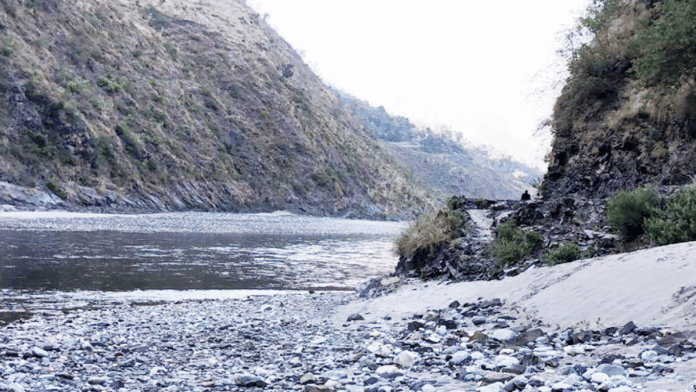
Kishau, a dam on the Tons, a tributary of the Yamuna, had been stuck for more than eight years over cost-sharing. Amit Shah’s list included Lakhwar, Renukaji, Ken-Betwa and Shahpur Kandi, where Punjab and Jammu and Kashmir settled their Ravi quarrel in 2018. He added that 2018 to 2026 would be remembered as the years in which almost every water dispute from Kashmir to Uttar Pradesh was put to rest.
Almost every.
Ten counted, one never listed
I am not writing here about the Sutlej-Yamuna Link canal or the Ravi-Beas waters, which remain unresolved and which I have dealt with elsewhere. I am writing about a dispute that appears in nobody’s count because it has never been allowed to become one: Punjab’s standing in the Yamuna basin.
It sits quietly on the back burner. Chandigarh brings it out now and then as a debating retort; Chief Minister Bhagwant Mann told the Northern Zonal Council in 2023 that Punjab’s request for Yamuna water had been turned down because no part of the state lies in the basin, and proposed a Yamuna-Sutlej Link instead. But no political party in Punjab has made the state’s place in the basin a plank, and Punjab’s legal defence in the river-waters litigation, as far as the public record shows, has argued availability rather than standing. Since the signing, not one of them has said a public word about Kishau.
Kishau makes the omission impossible to ignore. Amit Shah himself explained that the basin states’ agreement of 12 May 1994 provided for a separate agreement for each storage project, and that Kishau’s cost-sharing follows the 1994 formula. Kishau is the child of a framework from which Punjab was excluded at birth. Punjab did not sign in 1994, has no seat on the Upper Yamuna River Board that administers the allocation, and was neither a party to nor consulted on the pact signed this week.
Trifurcated, then forgotten
The reason lies in the Punjab Reorganisation Act, which came into force on 1 November 1966 and trifurcated the state. Haryana was carved out, the hill areas went to Himachal Pradesh, and Chandigarh became a Union Territory. Undivided Punjab’s eastern edge ran along the Yamuna, from the Jagadhri tehsil of Ambala district, where Yamunanagar now stands, downstream. All of it went to Haryana.
Parliament took care to parcel out undivided Punjab’s rights in the Bhakra and Beas projects between the successor states, and the Centre’s March 1976 notification gave Haryana 3.5 million acre-feet of Ravi-Beas waters, though reorganised Haryana has never been riparian to either river. Nobody parcelled out undivided Punjab’s Yamuna link. That silence has since been read as extinction.
A revenue officer would recognise the result as a botched partition. When a joint khewat is divided, every co-sharer is entered against every khasra number the family held in common. No patwari enters one brother against the canal-irrigated fields and quietly leaves him out of the plot along the river. Yet that is precisely how 1966 was recorded. Haryana and Himachal Pradesh, both of which received territory from Punjab, sit in the Yamuna framework. Punjab, the parent estate, sits outside it and is told that the river no longer touches its boundary.
Two heirs, two seats
Consistency is not a Punjabi invention. When Uttaranchal was carved out of Uttar Pradesh in 2000, the Centre modified the Upper Yamuna River Board’s constitution in 2001 to include the new state, now Uttarakhand. When Andhra Pradesh was bifurcated in 2014, Parliament created the Krishna and Godavari River Management Boards and seated both Andhra Pradesh and Telangana on them. The settled practice of the Union is that when a state is divided, river assets and the seats that govern them follow both heirs. The only reorganisation read the other way is Punjab’s.
Cusecs are not the currency
This is not about cusecs and million acre feet. It is about justice, and about consistency in how river-water assets are divided when states are bifurcated or trifurcated. Punjab wants a chair at the Yamuna table, not merely a share of the waters.
Nor should the Yamuna-Sutlej Link be taken literally. No canal need be dug from the Yamuna to the Sutlej. If Punjab’s Yamuna share is ever computed, it can be settled on paper: deduct it from the water that flows to Haryana down the Bhakra Main Line, and let Haryana draw the equivalent from the Yamuna it already sits on. That is a book entry, not a bulldozer.
Punjab does not grudge Delhi or Rajasthan the drinking water Kishau will deliver, and it showed at Shahpur Kandi that it settles when treated as a party. Amit Shah admitted at the signing of the Kishau dam agreement on Tuesday that when the Yamuna’s waters were first allocated, no environmental flow was calculated, leaving nothing for the river. That admission means the 1994 allocations will have to be reopened. When they are, Punjab must be in the room.
I have written, as a private citizen, to Union Jal Shakti Minister CR Paatil asking for three things before the Union Cabinet takes up Kishau: that the Cabinet note record Punjab’s exclusion and the basis for it; that Punjab be admitted as a full member of the Upper Yamuna River Board; and that Punjab be heard whenever the 1994 allocations are reviewed. A formal claim, however, can come only from the state government, and Chandigarh should make one.
The Centre’s answer will cut both ways. If successor states keep their standing in basins they once shared, Punjab belongs on the Upper Yamuna River Board. If present geography alone decides, Haryana has no footing for its existing or future demands on the Ravi-Beas system, including on the western river waters expected to be diverted into it now that the Indus Waters Treaty is held in abeyance. The rule must bind both heirs.
Amit Shah has counted ten disputes. The eleventh has waited 60 years to be listed, and the Kishau Cabinet note is the place to list it.
KBS Sidhu is a former IAS officer who retired as Special Chief Secretary, Punjab. He tweets @kbssidhu1961. Views are personal.
(Edited by Prashant Dixit)