





In a twist no one saw coming, “Mamdanification” went from a half-joking progressive meme to an actual dictionary entry with its own Wikipedia page. The term has been floating through progressive circles ever since Zohran Mamdani turned a hard-left, Instagram-ready, affordability-leaning campaign into the mayor’s office in New York. Young progressive candidates in cities across the country have been running versions of the same playbook.
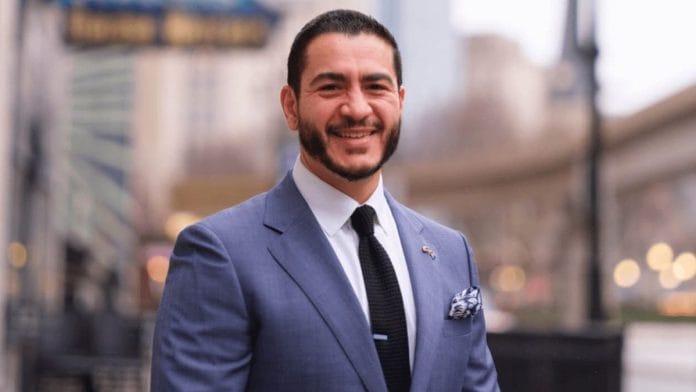
But if you want the latest version, look at Michigan. Three weeks after Abdul El-Sayed’s narrow win in the Democratic Senate primary, the “Mini Mamdani” label has stuck with him. The original Mamdani, asked to comment on the label, congratulated Sayed, mocked the panic in Washington, and threw in a joke about the man’s biceps: “he can lift a lot more than I can, and I think we should give him his respect in that way.”
The comparison, however, is something one cannot ignore. Both men are Muslim. That fact is obvious and frequently noted. It is also the least interesting part of the resemblance. Their real similarity runs deeper.
The likability factor
Mamdani has a rare ability to make opponents grudgingly admit they enjoy his company. New York business leaders who walked into meetings prepared to despise him walked out calling him smart, curious, and surprisingly good company. Even US President Donald Trump, after months of calling him a “100% communist lunatic,” invited him into the Oval Office and, 30 surreal minutes later, was calling him “very rational,” predicting he would do “really great” things for the city. At one point, Trump patted him on the arm while telling him it was fine to keep calling the President a fascist.
None of this warmth is accidental. It does real ideological work. It allows Mamdani to hold a hard-left platform without triggering the level of panic his politics alone would predict.
Now, while El-Sayed hasn’t had his own Oval Office moment yet, the same instinct is visible in how he carries himself. A Rhodes Scholar with a medical degree from Columbia University and a doctorate in public health from the University of Oxford, he has the credentials of someone who’d talk over your head, but somehow doesn’t.
He wears a simple black V-neck T-shirt and jeans almost every day, posts goofy videos of himself dancing to Taylor Swift or mimicking Blue’s Clues, and more recently, paying tribute to Dolly Parton through a reel, while campaigning for Medicare for all and taxing the rich in plain language, and somehow makes the combination feel authentic rather than try-hard.
Both Mamdani and El-Sayed centred their pitch on affordability and getting money out of politics, and both distilled it into something supporters could recite by heart. Mamdani ran the same three lines at every stop until they became shorthand for the whole campaign: freeze the rent, free buses, free childcare. El-Sayed went a step further: ‘Money out of – Politics.’ ‘Money in your – Pocket.’ ‘Medicare for – All.’ He told the New York Times he could walk into almost any room and the crowd would finish the sentences for him.
In a recent Fox News interview, when pressed on whether billionaires like Beyoncé should have to “break off” money every year, El-Sayed didn’t flinch. He simply said that people who have done extraordinarily well financially should be happy to help fund the schools and roads that made their success possible. The point landed the way his other messages do: as basic fairness delivered without apology.
That’s the pitch, whether either man would say it out loud or not: disagree with me all you want, vote against me if you have to, I’m still worth the conversation.
Also read: Amrita Pritam was a lifelong romantic. Faiz felt her poems in his soul
Social Media game
No man like El Sayed is performing politics on the internet. Both Mamdani and he look like they grew up on it, know exactly which cultural references land, and are comfortable enough to be a little silly on purpose.
Interestingly, their video styles are almost the same. Mamdani’s team makes short, slightly cinematic clips that feel closer to internet culture than political advertising: walk-and-talks through the city, a “halalflation” explainer filmed inside actual food carts, victory moments scored to Bollywood anthems like Dhoom Machale, and even a blooper reel of himself trying to speak Mandarin.
El-Sayed operates in the same lane. He lip-syncs to Dolly Parton’s ‘9 to 5’ while the video cuts to his own team at work, turning tribute into campaign metaphor; conducts walk-and-talks through schools, features reels conducting open-air conversations on health insurance policies; and generally treats the format the way Mamdani does—more real than rehearsed. The format relies on the same music-driven editing that makes a political point feel like something you’d actually choose to watch.
It became obvious enough that House Speaker Mike Johnson warned that America risked being “overrun by mini-Mamdani.” Mamdani’s response was pure Mamdani: he congratulated El-Sayed, taunted Johnson for being “deeply out of touch,” and dismissed the “mini-Mamdani” labels.
Views are personal.
(Edited by Ratan Priya)
Progressivism is euphemism for communism.
For a Muslim, Mamdani may look very progressive, but is way behind the common Hindu in progressivism.
What a great column, love it. Personality worship is exactly what the world needs. DJT has shown the way! A system that depends on the charm and persona of an individual is the need of the hour. Love how both these leaders make a mockery of capitalist by using their own platform and also making them more rich.