





It has been three years since Hamas attacked Israel on 7 October 2023, but the Israel-Palestine conflict and its many wars and escalations have dominated regional peace and stability since the dawn of the 20th century. The Arab states appropriated the Palestinian cause and fought multiple wars with Israel in 1948, 1967 and 1973.
Then Egypt signed a bilateral peace with Israel in 1978, and Jordan did the same in 1994. Abraham Accords of 2020 further ended the regional Arab boycott of Israel, keeping aside the Palestinian issue. Since 1979, it is the Iranian radicals who carry the rhetoric for the liberation of Palestine.
There remains a lot for the Israelis and the Palestinians to take stock of the last three years. The question is whether the Middle East can move on from this period and get back to the kind of peace-making it acted upon with the Abraham Accords in 2020?
Before October 7
The Middle East has turned out to be one of the most complex regions in world politics since the end of World War II. Its political life has been peculiar, with monarchies, autocracies, dictatorships and theocracies, whereas its oil economy became a vital cog in the international energy market.
The Soviet Union and the US both played their great games during the Cold War, but the end of that war didn’t leave the Middle East in a better place either. In the early 1990s, the grand Oslo Peace Process took place between the Israelis and the Palestinians but unfortunately failed in early 2000.
Hamas came up with suicide bombings and the militant Al-Aqsa Intifada in the region; Al-Qaeda took Jihad at the global level with its attack on the US Twin Towers in September 2001. The “war on terror” started by the US pushed the region into more violent decades with the invasion and occupation of Iraq and Afghanistan thereafter. The Palestinians got divided into the jihadist Hamas and secular-nationalist Palestinian Authority and they were left on their own by the regional actors as well as the US and the European powers.
There were also promising events in between these many violent episodes, like the Arab Spring, when the common people arose against authoritarian regimes in Tunisia, Libya, Egypt, Yemen, Oman, Jordan, Morocco, and Algeria in the 2010s.
One of the most diplomatic breakthroughs was the Abraham Accords led by US President Donald Trump in his first term in 2020, when the Gulf states decided to end the diplomatic boycott of Israel. It was a pragmatic move on the part of the UAE, Bahrain, and Morocco to move on from the Palestinian issue that was hijacked by the radical Hamas after the death of Yasser Arafat in 2004.
It was also the idea of transactional diplomacy driven by the logic of a win-win situation with Israel against the rising Iranian threats. Thereafter, came the bold vision for the region from New Delhi. The India-Middle-East-Europe Economic Corridor (IMEC) was announced in the presence of the US President Joe Biden and Mohammad Bin Salman of Saudi Arabia in September 2023 by Prime Minister Narender Modi at the G20 Summit in India.
Thus, the Middle East was charting a new chapter altogether and most believed inside as well as outside the region—in Delhi, Washington and Brussels—that the Middle East is capable of breaking the jinx and stepping into multilateral alliances based on peace, stability and prosperity. Even if it is limited peace based on economic dividends rather than justice and historical reconciliation.
October 7
Hamas (harakat al-muqawama al-islamiya, Islamic Resistance Movement) carried multiple terror attacks on southern Israel on 7 October 2023. According to the Israeli reports, the Hamas militants, Palestinian Islamic Jihad and Nukhba Forces breached the security barrier between Gaza and Israel at 119 spots and attacked on 21 communities of civilians, which resulted in more than 1,200 deaths in less than 24 hours and 251 hostages who were taken into Gaza alive.
Israel retaliated and bulldozed Gaza, and the deaths there reached over 74,245 Palestinians, according to Gaza’s health ministry, which does not distinguish between Hamas militants and civilians. Hezbollah and Iran’s religious regime were also actively involved in the war from 8 October 2023. Hezbollah started attacking northern Israel. Then the Houthis, another proxy of Iran, joined this war from Yemen against Israel.
It took several months for Israel, but it took the war into Lebanon’s Beirut with the assassination of Hassan Nasrallah in September 2024, and then, with the American forces, Israel reached Iran in June 2025 and again in February 2026 when it assassinated Iran’s Ayatollah Ali Khamenei. Iran involved in its attacks the major Gulf states like Saudi Arabia, United Arab Emirates, Qatar, Oman, Kuwait, Bahrain and Arab states like Jordan and Egypt.
Also read: US wants India to concede on trade and Russia. New Delhi should negotiate without fear
After October 7
One of the key takeaways of the last three years from the Middle East is that without a resolution of the Palestinian issue, the region remains captive to instability, radicalisation and conflict escalations from time to time. Israelis, in the aftermath of 7 October, are far more skeptical of the two-state solution, and the Palestinians are far more radicalised by Hamas and Iran.
Does the Middle East remain captive to history? Can it have the resolve to fix the seemingly hopeless scenario between Israel and the Palestinians? If not, is there an alternative?
Another takeaway is that wars in the Middle East last longer, and there are several spoilers at every turn. What started on 7 October is not over yet. There are several fronts of hostilities open, including between Israel and Hamas in Gaza, Israeli settlers and Palestinians in the West Bank, Iran and the US, Iran and Saudi Arabia, and the Houthis in Yemen and Saudi Arabia. It is going to be a Herculean task to carry on with the ideas behind the Abraham Accords or IMEC anytime soon, but these are the only promising initiatives that need more faith and work now.
Additionally, the three years of multi-layered wars have cleared the decks for alliances of the future. Most of the Arab states are with Israel and the US, even if Saudi Arabia is reluctant to pursue diplomatic normalisation with Israel at the moment. Iran has lost Lebanon and Syria in a significant way, and it is clinging to Russia, China, or Turkey-Pakistan. However, the last two have ambiguously promised to fight against Iran under the Mecca Pact recently.
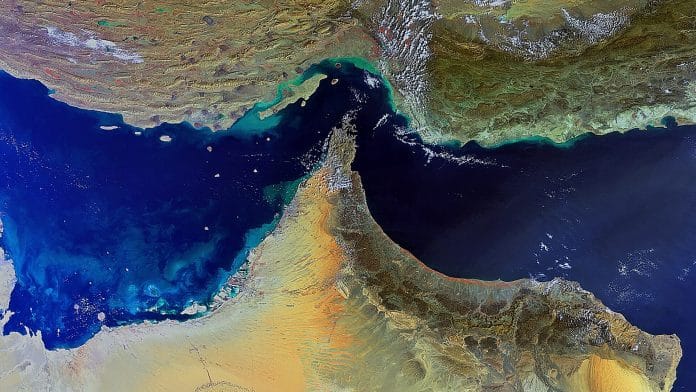
Last and perhaps one of the most ironic takeaways is about the Palestinians who have once again become a footnote in the larger politics of the Middle East. The attack of 7 October began with them, but they are out of the headlines. Now it is about Hormuz, the Iranian regime and its survival or fight for civil nuclear rights. The Palestinian issue does not even appear in the long demands of the Iranian regime when it is asking for the moon before opening Hormuz.
Dr Khinvraj Jangid is Professor and Director Centre for Israel Studies, Jindal School of International Affairs, OP Jindal Global University, Sonipat. Views are personal.
(Edited by Ratan Priya)