




Let me declare an interest before I disagree. On 17 March 2023, I argued that the Republic had drifted into a “quasi-secular” State. The 1986 law undoing the Supreme Court’s Shah Bano verdict, the Haj subsidy and the reservation at Aligarh Muslim University sat uneasily with equidistance, and much of this was being corrected after 2014. I have not recanted a line of it. So when Ibn Khaldun Bharati traced the rot from Shah Bano to Waqf, I expected to nod along.
I nodded for about four paragraphs. Then the essay stopped being about Muslim politics and became a verdict on Muslims. A community of some 20 crore was described as an undifferentiated lump, its thought unchanged since its tribal origins, its code of public prudence, maslehat, glossed as deceit. A verdict on one Syed Shahabuddin needs evidence about Shahabuddin. A verdict on 20 crore people needs a lot more.
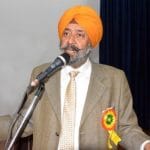
Bharati would file me under two categories he scorns: the non-Muslim presuming to speak about Muslims, in my case a practising, turbaned Sikh, and the former bureaucrat. This is not speaking for anyone, only from where one has stood.
I spent four of my pre-school years (1962-66) in Malerkotla, Punjab’s only Muslim-majority town. My late father, a PCS officer, was posted there as the principal revenue and administrative officer, and Muslim neighbours were a daily fact of life, not a seminar topic. For a Sikh, the town’s defining memory is of a Muslim speaking truth to power: Nawab Sher Mohammad Khan’s unequivocal opposition to the egregious proposal to brick alive Guru Gobind Singh Ji’s younger Sahibzadas at Sirhind.
That stand is lodged in the collective Sikh psyche. It is retold every December at the Shaheedi Jor Mela at Fatehgarh Sahib, and Sikh memory holds it to be why Malerkotla was spared when Punjab burned in 1947.
My 1989-90 assignment as District Magistrate of the Batala police district introduced me to the Ahmadiyya community of Qadian, their movement’s birthplace and spiritual centre. They are Muslims by their own lights, declared otherwise by Pakistan’s Constitution in 1974, and protected in their worship by India’s. On 3 July 2023, I chronicled Sikh–Muslim amity through the centuries, even at the cost of backlash from within my own community.
Land-revenue training gave me working Urdu, the language of the old jamabandis (Punjab’s periodic record of land rights). In Urdu, maslehat means prudence, at worst expediency; every file I ever noted carried a little of it. Makkari is another word altogether.
The tout at the tehsil gate
Anyone who has sat in a deputy commissioner’s chair learns that the tout at the tehsil gate exists because the tehsil lets him. He is the product not of the villager’s want of intelligence but of a counter that will not deal with the villager directly. Shut the side window and the tout goes looking for other work.
Bharati’s Muslim intermediary is the same creature, and the counter that fed him for decades was the Indian State. Nobody compelled Rajiv Gandhi’s government, with more than 400 Lok Sabha seats, to legislate around Shah Bano. It chose to treat the AIMPLB (All India Muslim Personal Law Board) as the community’s authorised signatory, because one signatory is cheaper to satisfy than 20 crore citizens. Shah Bano herself had no seat at that table. A 2023 piece blamed the State for that bargain; Bharati blames the people it was struck over. A broker needs a buyer. Indict the buyer too.
The larger claim, that there is no intelligentsia and no self-criticism, does not survive a roll-call. On 18 April 1966, Hamid Dalwai took seven Muslim women divorced by triple talaq to the Mantralaya in Bombay. In 1970, he founded the Muslim Satyashodhak Mandal, and he argued for a uniform civil code until his death at 44. Arif Mohammad Khan resigned from Rajiv Gandhi’s government in 1986 rather than defend the Shah Bano reversal. The Bharatiya Muslim Mahila Andolan joined the fight against instant triple talaq that the Supreme Court ended in 2017. And the Pasmanda movement exists to tell the Ashraf elite, Bharati’s own villains, that their interests are not the community’s. That is an inside class critique, the very differentiation he says does not exist.
He may reply that these were voices in the wilderness. Partly true. But an unheard reformer is not an absent reformer. Delhi did not hear them because it chose to hear the Board instead.
Also read: From Shah Bano to Waqf—how Muslim politics has produced just intermediaries, not intellectuals
Two secularisms, one spelling
The essay’s master explanation is that Muslims lack a civil society because they never underwent secularisation. That makes one word do two jobs. Secularisation, in Habermas’s sense, is what a society does to its own beliefs in its coffee-houses. Secularism, as I argued, is what the State owes every faith: active, even-handed equidistance, with no community owning the Republic. The first cannot be decreed. The second must be.
And the first seldom arrives without the second. Hindu personal law was reformed not by a spontaneous public sphere but by Parliament, through the Hindu Code Acts of 1955–56, carried against orthodox resistance. My own community wrested our gurdwaras from hereditary mahants between 1920 and 1925 through morchas, martyrdoms and, finally, a statute. Bharati cites BR Ambedkar’s Pakistan or the Partition of India; the same person wrote Annihilation of Caste. His quarrel was with orthodoxy, Hindu and Muslim alike.
Bharati ends by demanding that the self-appointed intermediaries be removed. Agreed, but only the counter can remove the tout. The abolition of the Haj subsidy in 2018 was one such correction, and I welcomed it. What follows, however, is that the State must deal with Muslim citizens as it deals with every citizen, directly and by name. It should not swap one set of brokers for another more agreeable to the government of the day.
An essay lamenting that Muslims will not speak truth to power in their own voice appears under the name of a 14th-century historian born in Tunis. I do not fault the choice; I can guess at its cost. But that pen-name is the most eloquent evidence in the piece that Muslim dissenters still need cover in our public square. That is the Republic’s problem as much as the Qaum’s.
(Edited by Saptak Datta)