






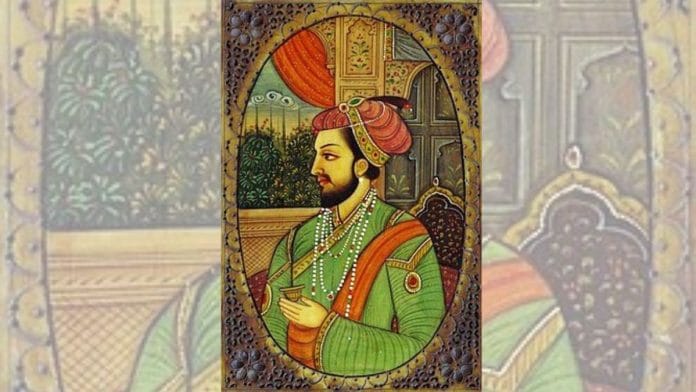


Our nation is fascinating—we enthusiastically mark five centuries since the First Battle of Panipat, the event that established Timurid Gūrkāniyān rule in parts of Bharat, still inaccurately remembered as the Mughal Empire. Barely any attention was paid to the 250th anniversary of the Maratha revenge for the Third Battle of Panipat in 2021. Given the manner in which history has been taught here, many may not even know that Panipat was ever avenged.
The issue, however, is not observation itself. History must be remembered, for every triumph and tragedy has shaped who we are. The problem begins when remembrance turns into a celebration of a reign that largely brought difficult times for the nation.
I speak here of the establishment of Timurid rule after the First Battle of Panipat. Even in that battle, one sees early signs of what followed. While Panipat is often remembered for Babur’s cannons and military skill, little is said about his use of villages around Panipat as human shields, drawing non-combatants into war. Baburnama has proof that massive plunder followed, with wealth flowing toward Samarkand, Khurasan, Kashghar, Iraq, Mecca, and Medina. Babur himself acknowledged Bharat’s riches and, after the battle of Chanderi, declared that he had conquered Dar-ul-Harb (territories ruled by non-Muslims).
The same disposition became more visible after the Rajput resistance at Bayana, when he broke his wine vessels, invoked jihad, and proclaimed:
“They shattered them as, Allah willing, soon shall be shattered the idols of the idolaters, distributing the fragments among the poor and needy.”
And then came the Battle of Khanwa, after which Babur assumed the title of Ghazi (victor in a jihad fought by the sword) and declared:
For Islām’s sake, I roamed the untamed wilds,
Ready for battle against the pagans, the Hindūs,
Resolved to embrace the Shahid’s martyrdom.
Thanks be to Allāh! I became a Ghāzī.
The Fathnama (Fatḥ-i-Pādshāh-i-Islām), composed at the hands of Shaikh Zain, further states in Baburnama:
Upon hearing the thunderous approach of the forces of Islam, the accursed Kafir enemies of Muḥammad’s religion gathered their ill-fated troops and advanced with a unified resolve, placing their trust in their towering, monstrous elephants, as the Lords of the Elephant once did when they marched to overthrow the sanctuary (Ka‘ba) of Islam.
The Battle of Khanwa was clearly framed as a conflict between the armies of Islam and the kafirs (non-Muslims). Equally striking is the reference to the tower of Hindu heads that follows:
All the Hindus slain, wretched and lowly,
By matchlock fire, as if under elephants’ might,
Piles of their bodies rose like hills,
From each mound, a fountain of flowing blood.
The point I seek to draw here is simple: when Babur fought Muslim armies such as the Lodis, he did not invoke jihad. But against the brave Hindu king Rana Sangram Singh at Khanwa, the language of jihad emerged prominently. Since Rana Sangram Singh is mentioned, another popular claim also deserves clarification. A triangulation of sources suggests that Rana Sanga did not invite Babur into Hindustan; rather, it was Babur who reached out seeking an alliance against the Lodi power.
Limits of ‘syncretism’
Another aspect worth touching upon is the idea of syncretism, a theme many are eager to celebrate. And perhaps there is no better place to begin than the famous rakhi episode of Humayun and the Queen of Mewar Karnavati. What actually transpired, as opposed to the popular tale of Rani Karnavati sending a rakhi and Humayun marching to preserve its honour? The story largely enters popular imagination through James Tod’s Annals and Antiquities of Rajasthan:
When her Amazonian sister, the Rathor queen, was slain, the mother of the infant prince took a surer method to shield him in demanding the fulfilment of the pledge given by Humayun when she sent the rakhi to that monarch.
Gulbadan Begum’s Humayun-nama remains completely silent on the rakhi episode. More importantly, contemporary correspondence suggests not only that Humayun never came to honour a rakhi, but also why he chose not to intervene. In his exchanges with Bahadur Shah, Humayun openly justifies his inaction on the grounds that Bahadur Shah was engaged in a campaign against kafirs. The decision appears to have been guided less by legendary bonds of honour and more by religious considerations. Historian Mahomed Kasim Ferishta records Humayun writing to Bahadur Shah in the book History of the Rise of the Mahomedan Power in India:
O thou the ravage of Chittor,
In what way wilt thou subdue infidels?
Knowest thou, that while employed at Chittor?
A king cometh to subdue thee?
Ferishta further records Bahadur Shah’s reply:
I, who am the ravager of Chittor,
Will conquer the idolaters by valour;
And he who dares not succour Chittor.
Shall see in what way he himself shall be conquered.
This point deserves attention: Bahadur Shah was Humayun’s enemy, yet Humayun chose not to oppose him in a campaign directed against kafirs. Another historian, Abdul Qadir Badayuni, also notes that Humayun hesitated precisely for this reason. The romantic layers added later fade before this admission, revealing a choice shaped by religious considerations.
If tradition is to be believed, Rani Karnavati’s appeal may indeed have reached the Timurid court. But the outcome remained unchanged. Humayun did not ride to the defence of Chittor, and Bahadur Shah’s confidence rested on the belief that a Muslim ruler would not take up arms against a fellow Muslim for an infidel cause.
The broader pattern also becomes difficult to ignore. Timurid rulers often distinguished between Muslim and Hindu polities in political dealings. One incident recorded by ‘Abd al-Qadir Badayuni makes this sentiment starker in Muntakhabu-t-Tawarikh. During the Battle of Haldighati, when asked how friendly Rajputs could be distinguished from enemy Rajputs, Asaf Khan reportedly replied: “They will experience the whiz of the arrows, be what may—on whichever side they may be killed, it will be a gain to Islam.”
With that, let us turn to another aspect frequently celebrated in this legacy: interreligious marriages.
Under Jahangir, a Hindu woman could enter a Muslim household only through conversion. But a Muslim woman entering a Hindu household was treated as a serious offence, even inviting capital punishment. Jahangir himself records in his memoir Tuzuk-i-Jahangiri:
They ally themselves with Hindus, and both give and take girls. Taking them is good, but giving them, God forbid! I gave an order that hereafter they should not do such things, and whoever was guilty of them should be capitally punished.
And what of Shah Jahan, often remembered through marble and romance? Under his rule, a Muslim woman married to a Hindu faced a stark reality: either the husband converted to Islam or the marriage stood annulled, according to Bādshāh-Nāma.
Take the case of Dalpat Singh of Sirhind. He married a Muslim woman, Zinab, renamed her Ganga, and raised their children as Hindus. Shah Jahan ordered him to accept Islam or face death. He chose death over conversion and was executed, a grim footnote to the celebrated idea of Ganga Jamuni Tehzeeb.
Then comes the enduring legend of Jodha Bai—Akbar’s third wife—perhaps the most romanticised symbol of this narrative. Contemporary Timurid sources such as the Ain-i-Akbari and Akbarnama do not mention a queen by that name. The figure largely emerges later in colonial narratives. The woman commonly identified as Jodha Bai entered history as Mariam-uz-Zamani, lived under that title, and was buried according to Islamic rites.
The pattern itself remains notable. Hindu princesses entering the Timurid zenana did not retain their original identities. Their names altered, their political roles expanded, and dynastic considerations often shaped their place in the imperial structure.
Under Shah Jahan, apostasy from Islam invited harsh punishment, and cases involving forced or pressured conversions repeatedly appear in chronicles. During the rebellion of Jujhar Singh, his sons were renamed Imam Quli and Ali Quli, while Udai Bhan (Jujhar Singh’s eldest son) reportedly chose death over conversion.
Also read: India is rewriting the Mughals. Again
Marble, famine & imperial extraction
Another aspect often overlooked in discussions of Timurid rule is the state of the economy.
The Taj Mahal, commissioned in 1631, reportedly cost 41.8 million silver rupees at a time when a farmer’s family survived on roughly one dam (copper coin) a day (one rupee was equal to 40 dams). This coincided with the devastating Deccan Famine of 1630–32, which claimed around 7.4 million lives, worsened by imperial campaigns that ravaged Malwa and the Deccan, leaving ‘scarcely a vestige of cultivation’, as chroniclers recorded. I was shaken after reading the agony of people, and surprisingly, court chronicler Abdul Hamid Lahori didn’t push it under the rug:
“Inhabitants were reduced to the direst extremity. Life was offered for a loaf, but none would buy. Dog’s flesh was sold for goat flesh. The pounded bones of the dead were mixed in flour and sold. Men began to devour each other, and the flesh of a son was preferred to his love. The number of deaths caused obstructions in the roads. Those lands which had been famous for fertility and plenty of resources retain no traces of production.”
Peter Mundy, the 17th-century British traveller and merchant who visited the region during the famine, wrote in his diary:
“Surat (Gujarat)- Great famine, highways unpassable, infested by thieves looking not for gold but grain; Kirka- Town empty. Half inhabitants fled. Another half dead; Dhaita- Children sold for 6 dams or given for free to any who could take them so they might be kept alive; Nandurbar (Maharashtra)-No space to pitch a tent, dead bodies everywhere. Noisome smell from a neighbouring pit where 40 dead bodies were thrown. Survivors searching for grains in the excrement of men and animals. Highway stowed with dead bodies from Surat to Burhanpur.”
He gives complete details about how the Timurid lords were treating people. He wrote:
In Bazar lay people dead and others breathing their last with the food almost near their mouths, yet dying for want of it, they not having wherewith to buy, nor the others so much pity to spare them any without money. There being no course taken in this Country to remedy this great evil, the rich and strong engrossing and taking perforce all to themselves.
While famine consumed the countryside, Shah Jahan’s imperial camp remained stocked and abundant with supplies arriving from all directions. Even amid this devastation, taxes continued to flow. Timurid revenue extraction was among the highest in the world, often taking more than half of peasant produce, compared to systems such as Vijayanagara that took roughly one-sixth. Records also suggest that nearly 62 per cent of revenue was spent on just 665 court elites. Coupled with devastated cultivation, revenue diversion, and failed rains, the famine of 1630–1632 claimed around eight million lives. The Taj Mahal, celebrated as a monument of love, acquires a far darker shadow when viewed through this lens.
According to economist Angus Maddison, India held the world’s largest GDP share until AD 1000, at one point accounting for nearly one-third of global output. Even when the Timurid Empire was established, Hindustan already held a 24.4 per cent share of world GDP, second only to China. This challenges the claim that the Timurids created India’s prosperity.
During their rule, GDP share declined, and India fell behind China by AD 1600 under Akbar. While overall GDP remained comparatively stable, GDP per capita saw negative growth between AD 1500 and 1820, suggesting that while imperial wealth accumulated, ordinary people grew poorer. Contemporary accounts also describe continued outflows of wealth, including state-funded Hajj expenditures and lavish patronage to Meccan elites.
Records suggest that large amounts of Indian wealth also flowed outward through state patronage of Hajj and diplomatic gifting. Under Akbar, Hajj caravans reportedly carried donations of Rs 6 lakh and Rs 5 lakh, with an additional Rs 1 lakh sent to the Sharif of Mecca. Jahangir continued this pattern through costly gifts and endowments, while Aurangzeb spent heavily on foreign Muslim rulers, embassies, and donations to Mecca.
Contemporary observers such as Francois Bernier noted that this outward flow was largely one-sided, while ordinary subjects at home continued to face heavy taxation and hardship. Bernier’s descriptions of Aurangzeb’s period paint a stark contrast between imperial luxury and public misery.
He wrote that labourers perished under oppressive governors, children of the poor were sold into slavery, and peasants abandoned lands in despair. Artisans producing luxury goods for the Timurid aristocracy often lived in poverty, with prices fixed by buyers and refusal risking imprisonment or death. Even weavers of world-famous brocades reportedly moved about half-clothed. English diplomat Thomas Roe similarly observed dazzling riches in the imperial court alongside widespread poverty among common people.
The contrast becomes sharper under Shah Jahan. During Nauroz in 1628, Mumtaz Mahal received Rs 50 lakh, Jahan Ara Rs 20 lakh, and Raushan Ara Rs 5 lakh, while Rs 1.6 crore from the treasury was spent on rewards and pensions. Yet after the devastating famine, when corpses lined highways and families sold children in desperation, famine relief amounted to only Rs 1 lakh. Mumtaz’s annual maintenance alone stood at Rs 1 crore, while the treasury held Rs 6 crore, and the Peacock Throne itself was valued at Rs 3 crore.
Maddison estimated that 15–18 per cent of national income sustained the state and associated elites, with nearly 21 million people dependent on this imperial ecosystem. He described the Mughal state as ‘parasitic,’ focused largely on hoarding wealth rather than productive investment. Historian JF Richards noted that agriculture formed the backbone of revenue extraction. Tapan Raychaudhuri called the state an ‘insatiable Leviathan,’ while economic historians argued that surplus was systematically extracted from peasants. Despite limited irrigation within India, large funds continued flowing outward, including projects beyond the subcontinent, reinforcing the pattern of extraction amid declining per capita prosperity.
It is impossible to compress the story of Timurid rule in Hindustan into a single essay, and I have merely scratched the surface. I end with one disturbing account recorded by Badayuni under Akbar: women found unveiled in public, or accused of lying or quarrelling with their husbands, could reportedly be pushed into prostitution as punishment. Behind the grandeur of courts and monuments lay harsher realities often left untold.
History often arrives draped in marble, poetry, and romance, while concealing its scars beneath silk. Monuments may dazzle the eyes, but chronicles often unsettle the conscience. And this deserves repeating: it was never that the Timurids had no desire to leave India and had somehow become part of the region. They repeatedly attempted to reclaim Samarkand, for that was the homeland they longed for and remembered as their own. They didn’t imagine Hindustan as home; it was a dominion to rule, a land to draw from. The dream simply remained unfulfilled because the project of Samarkand never materialised.
Aabhas Maldahiyar is the author of #Modi Again, Babur: The Chessboard King, Babur: The Quest for Hindustan, and Hitler: The Proclaimed Messiah of the Palestinian Cause. Views are personal.
(Edited by Ratan Priya)
What many of the Timurid apologists(who I suspect have also a case of Stockholm syndrome going for them) do not realise is that there was a major difference among these many instances of pre-modern violence(which was common to all for sure), some were definitely more violent than others and with a clear religious motivation underlying their violence. This is what Abhaas ji is stating in this fact based article about these invaders.
The Marathas invasion of Bengal? Sure, discuss it…Gangaram. Why not? Unlike you who wants to white wash Mughals rule, the author would not shy away.
Another wants to discuss the political impact of Lanka and Kurukshetra wars. Sure, bring it on.
History of India has been revised and rewritten by the invasing Muslim and British many times. What is indeed happening now is restoration. So, yes, by all means, this should be researched and restored but neither forgottten nor abandoned…just be ause it inconveniences an ashok, a gangaram or an alex…alll of whom may not be who their ids indicate them to be.
One more “historian” whistling to his dogs. Has this “historian” read (or even heard of) the Maharashtra Purana? Is he aware of the Bargis? The Maratha Invasion of Bengal between 1741 and 1751? Merceneries under Raghoji Bhonsle who looted, pillaged, plundered Bengal, killing a lot of Hindus, even?
Here was a Muslim Navab, Alivardi Khan, protecting his Hindu populace against Maratha mercenaries! History is very interesting, indeed, if you care to read it properly. Or maybe this “historian” didn’t want to bring it up because it didn’t suit his narrative.
And then there are nitwits who have never read a page of history, who come here to support and defend all the filth that’s spewed in these articles. Jobless people, indeed!
Assuming that everything cited here is true.
Now what ?
Are we also going to examine the less shinier aspects of all rulers pre Mughals for a balanced perspective?
Or delve into a study of the economic, social and political impact of the two greatest wars ever fought – the ones at Lanka and Kurukshetra?
History, especially in school texts, is a heavily edited version of events. Yes it should be updated to highlight both positives and negatives of the rulers – but that application shouldn’t be selective.
And I suspect, once the religious markers are masked, there won’t be much difference between rulers across race, religion and gender.
Great piece. Never forget this history…the real history. Dudette ashok says not to stir up but he doesn’t realize the problem of miseducation that he qas our through. We need more such balanced and nuanced perspective,.exploration amd exposition, of facts that 6gis civilization has had to endure.
Mr.ashok, Satyameva Jayate nanritam. Truth Always Triumphs whether you like it or not, whether you want to rake it up or not, whether you want to be aware or not
Do not stir the settled sediment of history. Some things should be left to Ms Romila Thapar. Or Professor Ramchandra Guha. India has crushing problems, none of which will get resolved by setting different communities on edge. There are so many well documented atrocities from what may be called “ the other side “, after Mughal rule concluded.
The author seems to be living in an alternate reality — jihad, extraction, and imperial plunder are practically all India has heard of the Mughals in recent years.