






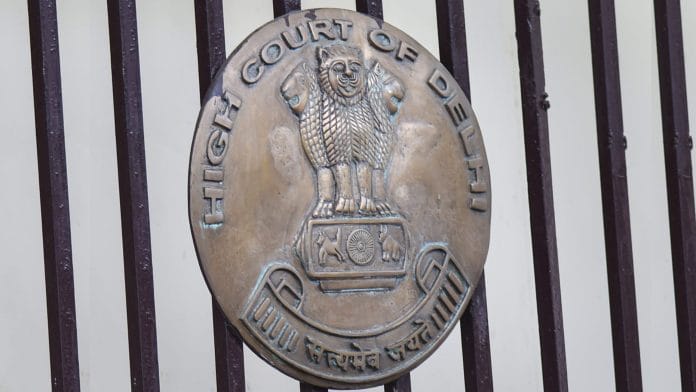


In a recent judgment, the Delhi High Court reaffirmed the ‘right to be forgotten’ as part of the right to privacy under Article 21 of the Indian Constitution. It directed search engines and legal databases to disable name-based searches in some of the cases before it. It also recognised the possibility of masking names and other personal identifiers in court orders and judgments. The Bombay High Court also recently directed its Registry to mask the name of an accused person from the court’s records after proceedings arising from an FIR were quashed. The court directed that the name be replaced with “ABC” in the relevant judgments, orders, and future digital versions of the records.
There is a legitimate concern justifying such erasures from public records: the internet does not forget. For example, a search engine may continue describing a person acquitted after a long criminal trial as an accused. A matrimonial dispute can remain attached to someone’s name years after the marriage has ended. A case which merely mentions someone can create a misleading impression and cause reputational harm.
That said, the trend of erasing, masking, and de-indexing names from court records is troubling. Making it harder for the public to search for information in public records has consequences that go beyond the individual seeking the right to be forgotten.
Truth does not become private because it is uncomfortable
Once information is part of a true public record, it is hard to ground a justification for masking or de-indexing it in either the ‘right to privacy’ or a more amorphous ‘right to reputation’.
First, the right to privacy protects information in the private sphere—medical records, bank statements, income tax records, Aadhaar number, who one contracts with, even litigates with in an arbitration, and so on. There is a difference between protecting private information and making it harder to discover after it has already entered the public domain through court records.
Second, the law does not give us a general right to have truthful information about ourselves suppressed merely because it is damaging to our reputation. The right to reputation has traditionally dealt with falsehoods such as defamation, libel, and slander. These laws entitle a person to a remedy when somebody publishes something untrue about them.
A court judgment recording that a person was sued, prosecuted, acquitted, or discharged is both public and true. Enforcing a right to privacy or a ‘right to reputation’ against truth as evidenced in public records is tenuous both in logic and law.
Also read: The corporate sleight of hand behind X’s journey into SpaceX
Forgetting has a price
Information asymmetry is one of the most expensive problems in commerce. When one party knows something relevant to a transaction and the other does not, the transaction becomes harder to price. The parties may demand additional guarantees, spend more money on due diligence, or simply decide not to transact. Judicial records are one source of information that helps reduce this asymmetry.
We do not read judgments only to understand precedent and case law. We also read them to understand people and institutions. A potential business partner may want to know whether a person has repeatedly been involved in contractual disputes. A lender may want to understand a borrower’s litigation history. An investor may want to know whether a promoter of a company has been involved in regulatory proceedings. A person considering a commercial relationship may want to know whether a prospective counterparty has a history of disputes with suppliers or customers.
To be sure, being involved in litigation does not make someone untrustworthy. Litigation can be frivolous. A person can be wrongly accused. A company can win every case brought against it. But the information that litigation occurred can still be relevant to someone assessing risk.
When information disappears, the risk does not disappear with it. Its price simply changes. A prospective counterparty who cannot find information may spend more on due diligence, demand more security, charge a higher price, or walk away. The cost of forgetting is therefore distributed across everyone who subsequently must make decisions without that information.
Indian court records are already difficult to access
The Delhi High Court has emphasised that disabling name based searches in legal databases does not erase a judicial record. The judgment or order continues to exist, and can still be found by someone who knows the case number, citation, or another identifier.
That is technically correct. But it is also a rather formal understanding of how the internet works. In the digital world, discoverability is key to accessibility. Consider how many times you look for something on the internet without using a search engine. The reason a search engine works is because it indexes material with the most intuitive keywords, organises it, and makes it easier to access. Asking a search engine to de-index records is the digital equivalent of asking a library to hide their catalogues even as all the books remain on the shelves. The distinction between “the record still exists” and “the record can still be found” is not trivial.
Asking legal search engines to disable name-based searches reflects an even poorer understanding of how non-lawyers navigate Indian case records. Ask someone to find a case whose existence they do not know about without using the name of one of the parties. How would they know the case number, its citation, or which court heard it?
This matters particularly in India, where accessing court records is already difficult. Court websites are fragmented and often require users to navigate different systems and identifiers. Legal databases are useful precisely because they make this information easier to discover and navigate. A search engine does not merely sit on top of the information; it determines what information can be found and effectively accessed.
Also read: Why NSE must not be brought under RTI
Internet may remember the allegation and forget the acquittal
Finally, disabling name-based searches from court websites and legal databases may end up having worse consequences for the people who seek to be forgotten.
Consider a person who is arrested and charged with an offence. The FIR becomes public. Newspapers report the arrest. The person’s name appears in articles, social media posts, and search results. Years later, the court acquits the person. Now suppose the court judgment recording the acquittal is de-indexed from a search of that person’s name. The internet may continue to remember the accusation while making it harder to find the most authoritative document explaining that the person has been acquitted. After all, as argued earlier in this column, in a world where large language models train themselves on every piece of information available on the internet, masking litigants’ names and disabling name-based searches will deprive the models of the single most important piece of information.
The instinct to protect such individuals is understandable. But the solution can produce an absurd asymmetry: the internet retains the story of the accusation while making the court’s resolution of that accusation harder to discover. That is not more accurate information.
What happens to memory when litigants’ identities are masked
There is a larger institutional concern here, especially with masking litigants’ identities in court records.
Judicial records are not ordinary public data. They are part of the institutional memory of the justice system. They tell us what disputes reached courts, how judges resolved them, whether and to what extent the litigant’s identity mattered to case outcomes, and how the law developed.
Indeed, there is a field of empirical research that uses court records to understand how litigant identity impacts the working of the justice system. A recent study of a decade of cases before the Patna High Court, for instance, found that caste-linked identities were associated with differences in dismissal and appeal outcomes in particular circumstances. A much larger study of more than 50 lakh criminal cases, on the other hand, found no evidence that judges systematically favoured defendants who shared their caste, religion, or gender. These papers demonstrate that litigant identity can be an important variable for understanding the functioning of a justice system. Remove the identity of parties from the record and we lose the ability to ask many of these questions.
There is a tendency to reduce all claims of privacy to an individual’s dignity. In this vein, the right to be forgotten is simplistically reduced to whether a person has a right to move on from a case. It ignores asking whether everyone else has an obligation to forget that the case happened and that the person was ultimately acquitted by the system. The latter question matters because the costs of privacy restrictions are not limited to search engines or journalists. They are also borne by lawyers, investors, creditors, businesses, employers, researchers and ordinary citizens trying to understand the history of a person or institution.
Courts should have the ability to protect individuals from disproportionate harms arising from the internet’s information architecture. But, there ought to be a high threshold for masking litigant names and de-indexing name-based searches from judicial records. They are public records for a reason. Protecting privacy should not require society to forget what its courts have recorded.
Bhargavi Zaveri-Shah is the co-founder and CEO of The Professeer, and runs CourtsDaily, a search engine for Indian courts. She tweets @bhargavizaveri. Views are personal.
(Edited by Prasanna Bachchhav)