






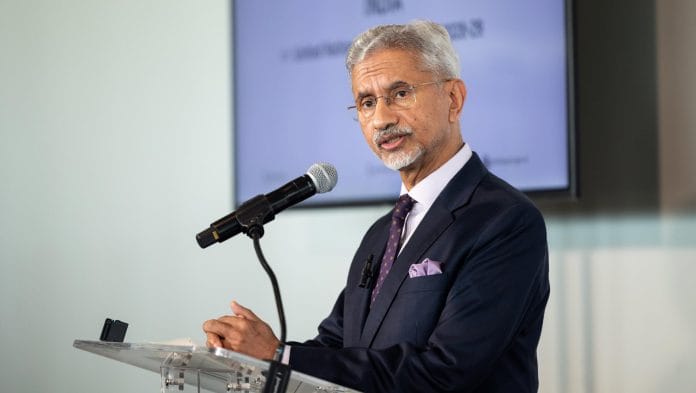


Earlier this month, External Affairs Minister S Jaishankar launched SHANTI — Securing Holistic Advancement through Norms, Trust and Integrity. This is the title for India’s campaign for a non-permanent seat on the United Nations Security Council (UNSC) for the 2028–2029 term. India would be seeking its ninth stint on the Council, with elections slated for June 2027. The campaign’s stated priorities are the interests of the Global South, counter-terrorism and maritime security, while wanting to be seen as a stakeholder ready to help run the system. However, India is not running unopposed, as Tajikistan has already declared its intent to contest the same Asia-Pacific seat.
But a two-year elected non-permanent seat is not India’s objective, though it is a meaningful step towards it. While a non-permanent membership puts India in the room where sanctions and the authorisation of force are decided and lets New Delhi build coalitions and influence agendas, the goal of a permanent seat matters because only permanent membership confers the durable voice and heft to shape outcomes rather than merely witness them.
India’s case is not just aspirational. The fact remains that it is the world’s most populous country, with the youngest population and the fourth-largest economy since overtaking Japan in 2025. India is also one of the largest contributors to UN peacekeeping in the organisation’s history, with nearly 300,000 personnel deployed across some 50 missions since 1948. It possesses nuclear weapons, fields one of the world’s largest militaries and has become a leading voice for the developing economies. It has introduced to the world the civilisational idea of Vasudhaiva Kutumbakam (‘the world is one family’) and is the largest democracy in the world. It has already served eight terms as a non-permanent member and has shown it can bridge the developed and developing worlds. By most measures of power and representation, India already meets the bar expected of a permanent member.
The logical question that must then arise is: Why does India still sit outside the permanent circle? The answer is simple. The Council has proved almost incapable of reforming itself, with its own rules making it hard to amend the UN Charter, which requires a two-thirds majority in the General Assembly and ratification by all five permanent members. Like every institution built for one era and asked to serve another, it is clear to all that the UNSC must adapt or it will lose its authority. However, the Council is trapped in a paradox: reform depends on the consent of those who benefit most from the status quo.
Also read: All about UN Security Council and India’s non-permanent membership for the 8th time
A moral case for India’s inclusion
The cost of this paralysis is no longer just evident in analysis. It was in 2024 that the permanent members cast eight vetoes, the most since 1986. On Gaza, the Council managed a ceasefire demand 171 days into the war, after the United States had vetoed four earlier drafts. In June 2025, Washington again vetoed a permanent ceasefire resolution backed by all ten elected members. On the Russia-Ukraine war, Russia repeatedly blocked action against itself. A body that cannot act on the gravest crises of the day because a single permanent member shields itself or an ally forfeits its claim to be the guardian of international peace. Each deadlock deepens a legitimacy crisis that reform exists to answer.
India’s exclusion is a symptom of the same disease. The permanent members guard their exclusivity. China, the one Asian veto holder, has consistently declined to endorse India’s bid, unwilling to admit a peer to its own rank. Coalition politics compound the crisis of reform. The Uniting for Consensus group, known colloquially as the Coffee Club, which includes Pakistan amongst others, opposes creating any new permanent seats at all. The group emerged in 1995 as a response to the aspirations of India, Brazil, Germany and Japan, the G4 countries, for permanent seats. Italy led the formation of the coalition, initially based on the idea that Germany’s entry could shift power in Europe. In later years, other countries with not much chance at a permanent seat of their own, but with regional rivalries, joined the coalition. India’s prospects are thus hostage less to its qualifications than to the politics and sometimes manipulations of others.
This is where the moral case becomes unavoidable. Incredulously, the UNSC is a Council of 15, with permanence reserved for five victors of the Second World War that ended 80 years ago, excluding 18 per cent of humanity in India alone and leaving Africa, with its 54 member states forming the largest UN regional group by membership, and the whole of Latin America without a single permanent seat. Legitimacy in governance flows from representation. A UNSC body that claims to speak for the world while excluding most of it cannot indefinitely command the world’s consent. India, on the other hand, has framed its bid not as a national entitlement but as a test of whether multilateralism can still be made to represent those it governs.
New Delhi, to its credit, has refused to let the stagnation in the UNSC deter it from its strategy of diplomatic accumulation, deepening partnerships with the United States, France, Japan and the developing economies, and building influence through the Quad, G20, BRICS, the International Solar Alliance and other flexible groupings. The SHANTI bid belongs to exactly that mature strategy. The campaign name means peace, something the world needs more than ever today. And while India continues to seek reform, it no longer waits for reform before it leads with the sentiment of peace.
Rami Niranjan Desai is a Distinguished Fellow at the India Foundation, New Delhi. She tweets @ramindesai. Views are personal.
(Edited by Prashant Dixit)
China’s veto is baked into the cake. They are not even allowing India to join the Nuclear Suppliers’ Group, a larger, less consequential body than thevUNSC.