






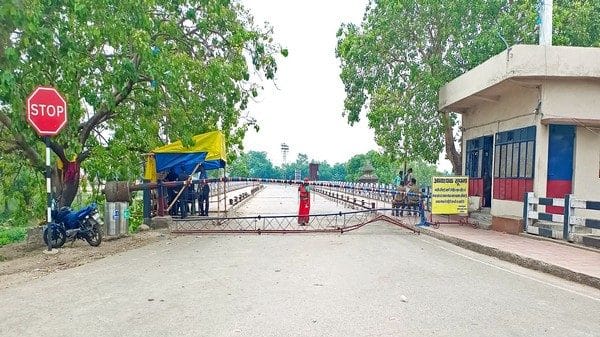

As Nepal confronts the devastating consequences of the recent floods, one lesson stands out with particular force: in moments of crisis, geography matters. The ability of a neighbour to move relief, rescue equipment, medical supplies, electricity, people and finance across borders can be as important as the ability to move goods and capital in normal times.
That is why the India–Nepal relationship has always been about more than conventional economic statistics. Geography, history, culture and people-to-people connections have created an intimacy between the two countries that is unusual in international relations. Yet the economic relationship has often been discussed in surprisingly traditional terms: exports, imports, investment projects and cross-border infrastructure.
That conversation is no longer ambitious enough.
The question for India and Nepal is not simply how to increase bilateral trade. It is whether the two countries can build a genuinely new economic relationship, one based on integrated value chains, clean energy, technology, entrepreneurship and shared access to regional and global markets. And, importantly, one that makes both countries more resilient when the unexpected happens.
In other words, the objective should be a new growth corridor.
India’s scale, Nepal’s assets
The starting point is already substantial. India is Nepal’s largest trading partner and the principal destination for the overwhelming majority of Nepal’s merchandise exports. India is also the largest source of foreign investment in Nepal, accounting for a significant share of the country’s accumulated FDI.
But the real opportunity lies in combining two very different economic strengths. India brings scale: a market of more than 1.4 billion people, a rapidly expanding economy, sophisticated financial markets, manufacturing capacity, technology, digital infrastructure and a growing global presence.
Nepal brings complementary advantages: renewable energy, tourism, agricultural potential, a young population, strategic geography and close proximity to one of the world’s largest markets. The economic asymmetry between the two countries, often presented as a challenge, can also be an advantage if properly managed.
Nepal does not need to replicate India’s scale. Nor should India expect Nepal to become merely a market for Indian products. The opportunity is to combine Indian scale with Nepalese assets and capabilities. That requires a change in mindset. Instead of asking, “How much can India invest in Nepal?” we should ask, “What can India and Nepal build together that neither could build as competitively alone?” This distinction is important. Investment is a means. Competitiveness is the objective.
Recent events in Nepal have demonstrated how quickly a natural disaster can disrupt communities, infrastructure, livelihoods and economic activity. In such circumstances, connectivity is no longer simply about reducing the cost of trade. Roads, bridges, transmission lines, digital networks, payment systems and logistics corridors become instruments of emergency response.
A well-connected neighbourhood is not only a more prosperous neighbourhood. It is a safer and more resilient one. Nowhere is this clearer than in energy.
Nepal’s hydropower potential has been discussed for decades. But the more interesting story today is not simply potential; it is the growing pipeline of projects, cross-border power trade and expanding transmission infrastructure. Nepal has already demonstrated that it can become an important electricity exporter to India. More significantly, Nepalese electricity has now begun reaching Bangladesh through India’s transmission network. That development may appear modest in terms of megawatts. Conceptually, however, it is extremely significant.
It demonstrates that the India–Nepal economic corridor does not have to end at the Indian border. India can serve not merely as a market for Nepalese electricity but as a platform connecting Nepal to a wider regional market. This is precisely the kind of thinking that should define the next phase of the relationship. But Nepal should also resist seeing hydropower simply as an export commodity. Nepal shouldn’t just export electricity; it should use its electricity to create value.
Reliable and competitively priced clean energy could become the foundation of an entirely new industrial proposition. Energy-intensive industries, data centres, digital services, agro-processing and other forms of clean manufacturing could potentially be attracted to locations where renewable power provides a competitive advantage. In a world increasingly concerned about the carbon footprint of supply chains, that could become a significant economic asset.
The relationship should therefore evolve from a simple model – Nepal generates and India consumes – to a more ambitious one: Nepal generates clean energy, India contributes capital, technology and market access, and both countries create new industries around that energy.
Also read: No sirens, just scrambling. The uneven reality of Nepal’s early warning systems
Areas of collaboration
The same thinking should apply to trade and manufacturing. The conventional objective has been to increase exports from Nepal to India and exports from India to Nepal. That remains important, but it is not enough. Modern trade is increasingly organised through value chains. A product can be designed in one country, manufactured using components from another, assembled in a third and sold globally.
India and Nepal should therefore think less about what they can sell to each other and more about what they can produce together for the world. Nepal does not need to manufacture everything. India does not need to manufacture everything. Together, they can manufacture more competitively.
Agriculture and agro-processing provide one opportunity. Nepal’s agricultural products can potentially be combined with Indian food-processing technology, logistics and access to global markets. Tourism provides another. Rather than viewing tourism as a national sector operating on either side of the border, the two countries could explore integrated regional tourism circuits.
Digital services and technology-enabled businesses create further possibilities. And there is a broader lesson from the recent crisis. The same networks that enable commerce in normal times can become lifelines during emergencies. Integrated logistics can move food and medical supplies. Digital connectivity can support coordination and payments. Cross-border electricity networks can provide additional energy security. Transport corridors can facilitate evacuation, relief and reconstruction.
Economic integration, in other words, is also an investment in resilience. But none of this will happen simply because the economic logic is attractive. Investors ultimately make decisions based on risk and predictability. This brings us to one of the most important challenges for the next phase of the relationship: policy and regulatory certainty.
Also read: Balen Shah is changing Nepal’s foreign policy. He’s treating India, China as equals
Building a growth corridor
Capital is not necessarily the greatest constraint. Investors today ask different questions. Can goods move efficiently? Can contracts be enforced? Can capital move predictably? Are regulations stable? Can disputes be resolved quickly? The cost of uncertainty can be greater than the cost of taxation. That is why India and Nepal should treat customs procedures, digital documentation, standards, payments and dispute resolution not as bureaucratic matters but as issues of economic competitiveness.
A growth corridor is not merely a road connecting two markets. It is an ecosystem. It moves goods, but also electricity, capital, data, technology, people and ideas. And when crisis strikes, it must also be capable of moving relief, expertise and assistance quickly.
Ultimately, the success of this new relationship should not be measured only by the value of bilateral trade. A more important question would be: how much are India and Nepal producing together for regional and global markets? And perhaps an equally important question is: how much more resilient are both countries because they are connected to each other?
The ambition, therefore, should be to move beyond “Made in Nepal” and “Made in India”. The next phase should increasingly be about “Made by India and Nepal.” India and Nepal already possess the foundations of an extraordinary economic relationship. Geography has given them proximity. History has given them trust. People-to-people connections have created familiarity. But geography and history do not automatically create prosperity. Connectivity does. Enterprise does. Investment does. And trust does.
The recent tragedy in Nepal reminds us of something else: neighbours ultimately depend on each other not only in prosperity, but also in adversity. When disaster strikes, the strength of the connections built during peaceful times can determine how quickly help arrives, how rapidly economies recover and how effectively communities rebuild. That is why the India–Nepal relationship must be about more than trade across a border.
The task now is to turn an exceptional neighbourhood into an exceptional economic partnership—one that creates jobs and industries in good times, and provides resilience and support in difficult ones. The real question is not whether India and Nepal can trade more. They undoubtedly can. The more interesting question is whether they can become more competitive – and more resilient – together. That is what would turn a traditional bilateral relationship into the next great growth corridor.
Shishir Priyadarshi is president, Chintan Research Foundation. He tweets @priyadarshi_crf. Views are personal.
(Edited by Prashant Dixit)