





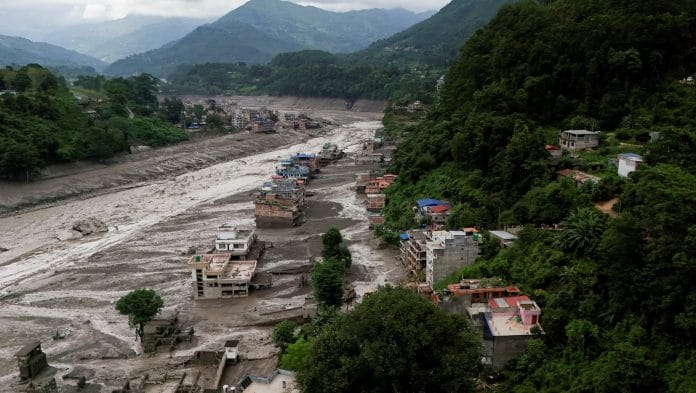

Nepal may seek electricity from India to cover any shortfalls after flash floods damaged hydropower plants, knocking out about 8% of the country’s generation capacity, according to the energy ministry.
The floods, triggered by a collapsing glacier in the Himalayan region between Nepal and Tibet, damaged nearly 360 megawatts of capacity, mostly hydro, according to Shaligram Bhandari, a ministry spokesman.
A 25-megawatt solar plant and five projects under construction with a combined capacity of 390 megawatts were also hit, he said by phone. Hydropower accounts for more than 90% of Nepal’s roughly 4,300 megawatts of generation capacity.
The land-locked nation typically exports hydropower to India during summer and imports electricity in winter, when rivers freeze curbing generation. Last year, Nepal supplied 600 megawatts of round-the-clock hydropower to its neighbor during the six months through November, and had plans to export an additional 500 megawatts this year.
The floods in a Nepalese valley near the Chinese border inundated villages and swept away buildings and people, killing at least 160 people. More than 1,300 are still missing. Nine operational hydro projects across two districts in Nepal were hit, according to a late Wednesday statement from the ministry.
Repair teams are working to resume power supplies, but Nepal may need to turn to India to bridge shortages in the meantime, Bhandari said.
The disaster has renewed concerns over hydropower development in the fragile Himalayan region. While the snow-fed rivers offer vast potential for carbon-free electricity, the rapid expansion of large dams has increased their exposure to extreme weather events.
Nepal’s Rasuwa district, which bore the brunt of the latest floods, was hit by a similar but smaller disaster last year, said Himanshu Thakkar, coordinator of the New Delhi-based South Asia Network on Dams, Rivers and People, which studies the social and environmental impact of water-related projects.
“We need a detailed, scientific assessment of risks and benefits before deciding on projects,” Thakkar said.
Disclaimer: This report is auto generated from the Bloomberg news service. ThePrint holds no responsibility for its content.