







The last time I was excited about a movie or any other form of entertainment was when Bolo Hau by Tarun Dhanrajgir was released in 2021. I won’t say it was a cinematic masterpiece, but I felt it was a worthwhile contribution to something more serious for Dakhni, a language we speak in Hyderabad and other parts of southern India.
Dakhni is often mistaken for Urdu, or is deliberately categorised as a sub-dialect of it in the South by chauvinists who either look down on the language or have tried to suppress it without looking at its history in conjunction with Urdu.
For those who don’t know, Dakhni is spoken across the Deccan, particularly in the cities of Hyderabad, Aurangabad, Bidar, Bijapur, Gulbarga, Guntur, Chennai and Bengaluru, among many others.
Who speaks Dakhni varies from city to city. In Chennai, it is spoken largely by Muslims. The same is true in Bengaluru, though many non-Muslims speak it as well. In Hyderabad, by contrast, Dakhni is spoken by almost everyone due to historical reasons.
Yet Hyderabad, the city most closely associated with Dakhni, is now being left behind by Bengaluru when it comes to taking the language seriously.
Also Read: Stop Urdu snobbery. Dakhni is 200 years older
The past and present of Dakhni
Dakhni evolved in the 15th century under the Bahamani kingdom (1347-1518) in Bidar as a mix of Dehalvi, Kannada, Marathi, and Telugu.
Dehalvi, the spoken language of Delhi between the 12th and 14th centuries, was itself a mix of Persian and the dialects spoken around Delhi. It travelled to the Deccan due to Mohammed Bin Tughlaq’s conquests in the 14th century. After the Bahamani kingdom broke away from the Tughlaq empire in 1347, Dakhni developed into a distinct language.
In the Bahamani kingdom’s second capital, Bidar, Dakhni came into its own and became the literary language of Hyderabad and Bijapur after both emerged as separate states following the empire’s collapse. In fact, Hyderabad’s founder, Mohd Quli Qutb Shah, is believed to be the first person to have his Dakhni works compiled in the Quliyat.
Dakhni predates Urdu in its present form. Its slow decline as a literary language came with the Mughal conquest of the Deccan, when it lost royal patronage. But people never stopped speaking it, which is why it is still so widely used. In Hyderabad and many other cities, we speak Dakhni, even though we write and learn standard Urdu, which became the official language under the Nizams from the 19th century onwards (Persian was the official language before that).
Good rap, bad rap
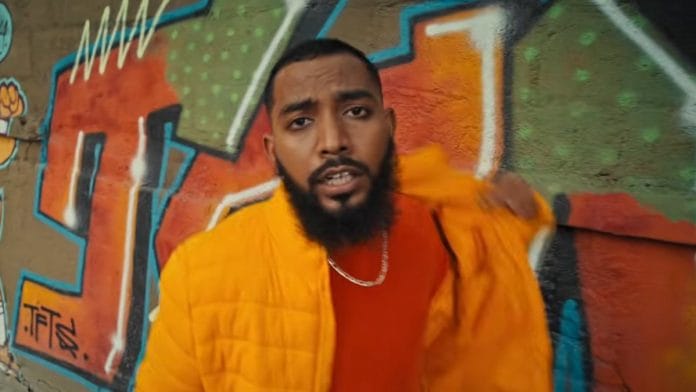
I’m writing this piece because there have been a few very exciting developments in Dakhni in recent years (apart from the release of Bolo Hau, and even preceding it), mainly from Bengaluru. There, the hip-hop artist Pasha Bhai really showed us how serious he was about pushing Dakhni as his medium.
His singles Eid ka Chand and Pasha Bhai were brilliant, especially in terms of identity, because very few people I knew were even interested in Dakhni. From my conversations with Pasha, whose real name is Mohd Affan, the very reason he began rapping in Dakhni rather than Urdu was that he realised the language he speaks is not Urdu.
But in Hyderabad, though there is a lot of interesting and fun content being created, most of it is mindless and honestly devoid of any intellectual thought process.
In a way, it reflects the larger culture in Hyderabad, which I have always felt lacks intellectual depth. People often send me content out of excitement, but honestly, most of it is very disappointing. Case in point is a song someone sent me a couple of months ago called Dikhre Bhi Nai by Salman Nawab, which describes itself as a ‘Hyderabadi rap song’.
There is a huge difference between Pasha’s work and Dikhre Bhi Nai, and the Hyderabadi artist has light years to go before he comes anywhere close to the work coming out of Bengaluru.
But I don’t just blame him, because this is how it has always been in Hyderabad. We are so happy and content with crass that we rarely get anything of substance.
Also Read: Osmania University’s absence from NEET paper leak protests betrays its own culture of dissent
Advantage Bengaluru
In the last five years, Bengaluru has become a serious space for Dakhni representation. Pasha and my good friend, the Bengaluru-based actor Maahir Mohiuddin (of Tere Isk Mein, Vritta and The Pawn of Marottichal fame), have both told me that Dakhni artists have almost stopped calling our language Urdu. Earlier, many would write or refer to it as Urdu because awareness was almost non-existent.
In fact, I remember when Pasha and I would almost religiously leave comments saying, “It’s Dakhni, NOT Urdu,” on videos posted by popular content creators. Needless to say, it seems to have worked, because most of them, including Danish Sait, Nida Tharana and Zoha Sanofer, now rightly call it Dakhni. So that’s a plus. Hyderabad’s creators have, of course, caught up too, but people here still largely call it Urdu.
I think the only great Dakhni movies I remember watching by anyone from Hyderabad were Ankur (1974) and Mandi (1983) by Shyam Benegal. They were not just brilliant movies, but amazing in terms of representation as well.
After that, Hyderabad had this caricature of a film called The Angrez (2005), which people still talk about for its humour. But however honest the film tried to be about Hyderabad, it was not, because all it did was paint the Old City and its people in a comic light, bordering on the profiling of an entire community.
Bolo Hau was a welcome change after that, but nothing else has moved here since, while artists in Bengaluru seem to have really understood why the language they speak needs to be preserved. I am in no way saying that Urdu should be sidelined, but we need to first understand the language we speak instead of undermining it.
Yunus Lasania is a Hyderabad-based journalist whose work primarily focuses on politics, history, and culture. Views are personal.
(Edited by Asavari Singh)