



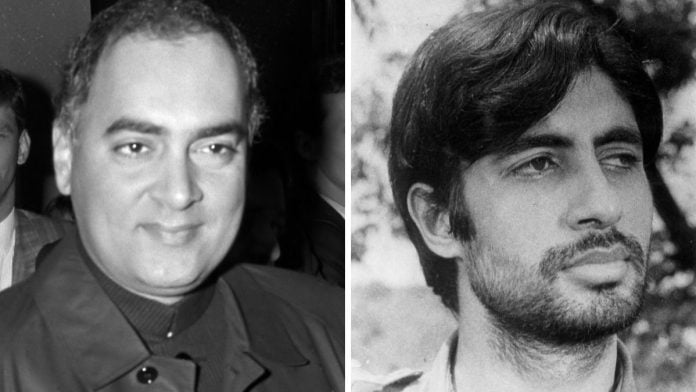
On a bitterly cold January morning in 1968, a 21-year-old Italian woman landed at Delhi’s Palam Airport (now Indira Gandhi International Airport), exhausted, apprehensive, and uncertain about the country in which she had decided to make her future. Waiting to receive her were Rajiv Gandhi, his younger brother Sanjay, and their friend Amitabh Bachchan.
Sonia Maino, as she was then known, had arrived to marry Rajiv. But before entering the household of then-Prime Minister Indira Gandhi, she would spend six weeks at 13, Willingdon Crescent, the home of poet Harivansh Rai Bachchan and his wife Teji.
Nearly six decades later, Sonia’s memoir, Belonging: A Journey of Love, returns to those formative weeks with extraordinary affection. The Bachchans emerge not merely as family friends but as the people who first made India feel like home to her.
There is an irony here. The two families, once inseparable, would eventually become estranged amid political controversies, competing loyalties, and personal misunderstandings. Yet Sonia’s account of the Bachchans is conspicuously free of bitterness. She recalls their kindness, humour, and generosity without dwelling on the rupture that followed.
That silence is perhaps as revealing as the recollections themselves.
A home away from home
Sonia’s first impressions of Delhi were hardly encouraging. The airport seemed poorly lit and unimpressive compared with those in Rome and Turin. The roads were dark, the winter severe, and much of her new environment unfamiliar.
At Willingdon Crescent, however, Teji Bachchan was waiting.
Sonia remembers being welcomed by a petite woman in a French-style scarf, whose warmth immediately put her at ease. Teji, she writes, would become “a mother figure, ever ready to help, teach, and counsel me”.
The arrangement had been carefully considered. Indira Gandhi, mindful of convention, did not want her future daughter-in-law staying in the family home before marriage. The Bachchans, old friends from Allahabad, provided the obvious alternative.
The friendship between the families predated Sonia’s arrival by decades. Harivansh Rai and Teji had been part of the Nehru family’s circle, while their sons Amitabh and Ajitabh had grown up alongside Rajiv and Sanjay.
Amitabh has recalled childhood holidays spent swimming with the Gandhi brothers and attending film screenings. Long before either Rajiv or Amitabh became household names, theirs was a friendship sustained by the ordinary pleasures of growing up together.
Sonia’s arrival gave that relationship a new dimension.
Rajiv had tried to make her room welcoming, furnishing it with flowers, a painting reproduction, and colourful accessories. One well-intentioned gesture went disastrously wrong. A rug retrieved from storage for the bathroom apparently contained pesticide residue, triggering Sonia’s asthma. Rajiv and Teji immediately came to her assistance.
The incident captures the intimacy of those early days: two young people in love, a household anxious to make its guest comfortable, and the small mishaps that become cherished memories.
Harivansh Rai Bachchan fascinated Sonia, as described in Belonging. She remembers the celebrated poet wrapped in a shawl, his thick hair and gentle manner making him resemble a storybook character. But he was also a perceptive observer of human nature. He warned Sonia: “In this country it is not what you are that counts, it is what people think you to be.”
For a young woman who believed that sincerity should speak for itself, the observation was unsettling. With hindsight, it seems almost prophetic.
Throughout her political career, Sonia would struggle against perceptions of her foreign origins, questions about her intentions, and accusations concerning the exercise of power. The poet had identified a central paradox of public life long before his young guest imagined entering politics.
The Bachchans and the making of an Indian bride
The memoir’s descriptions of Sonia’s early life in Delhi are rich in domestic detail.
She recalls being awakened by jackals howling near the Ridge, the footsteps of night guards, and Harivansh Rai’s morning ritual of blowing a conch shell. The smells of Indian cooking permeated her clothes, while she longed for the bread, pasta, and cheeses of Italy.
Rajiv introduced her to Delhi’s monuments and museums. The couple drove along the Central Vista and stopped for ice cream, Rajiv favouring vanilla.
Meanwhile, the Bachchans helped prepare her for marriage into a family where personal relationships, political history, and Indian traditions were inseparable.
Sonia’s wedding sari was made from khadi woven using yarn spun by Jawaharlal Nehru during his imprisonment. Relatives from different branches of the Nehru-Gandhi family contributed to the arrangements. Amitabh, then working in Calcutta and still years away from superstardom, helped organise the festivities. Teji became an indispensable guide.
In a 1985 interview with Dharmyug, Sonia described her affection for her as that of a third mother, after her own mother in Italy and Indira Gandhi. She regarded Amitabh and Ajitabh as brothers.
The relationship endured beyond the wedding. Teji helped Sonia adjust to Indian domestic life, taught her cooking, and provided comfort during her pregnancies. Following the loss of Sonia’s first child, Teji, as recounted in Belonging, gave her a puppy, Reshma, hoping to lift her spirits. She also presented Sonia with a brass mukhalingam, a representation of Shiva, on her birthday.
Their homes were so closely connected that, according to accounts of the period, a passage was created between the adjoining bungalows to facilitate visits.
When friendship entered politics
The transition from intimacy to estrangement did not happen overnight.
When Sanjay Gandhi died in an air crash in June 1980, the Bachchans rallied around Indira and Rajiv. Two years later, when Amitabh suffered his near-fatal accident during the filming of Coolie, Rajiv rushed to his bedside. Indira and Sonia also visited him in hospital.
The ties were tested more severely after Indira’s assassination in October 1984. With Sonia accompanying her wounded mother-in-law to hospital and Rajiv away in West Bengal, the Bachchan household provided a place of safety for Rahul and Priyanka.
Within weeks, Rajiv persuaded Amitabh to contest the Lok Sabha election from Allahabad on a Congress ticket. The superstar defeated veteran politician Hemvati Nandan Bahuguna by an overwhelming margin. It appeared a natural extension of their lifelong friendship. In retrospect, it was the beginning of its transformation.
Makhan Lal Fotedar, an influential Congress insider, later claimed that Indira had specifically warned Rajiv against bringing Amitabh into electoral politics. According to Fotedar’s memoir, she feared the consequences of mixing personal loyalties with political responsibilities.
Rajiv disregarded the advice.
Amitabh’s parliamentary career lasted barely three years. The Fairfax controversy, allegations surrounding the Bofors defence deal, and mounting political pressure eventually led to his resignation in 1987. Amitabh consistently denied wrongdoing, and the allegations against him in the Bofors affair were subsequently discredited.
The damage to the friendship, however, proved more enduring.
There are conflicting accounts of why the relationship deteriorated. Some Congress insiders believed Amitabh had become politically inconvenient. Others suggested the actor felt abandoned when his reputation came under attack.
The truth is unlikely to be found in a single incident. Political proximity had introduced expectations and obligations into a friendship that had previously depended upon personal affection.
Rajiv’s assassination in May 1991 brought another period of shared grief. Amitabh remained close enough to assist Sonia during the immediate aftermath. Along with journalist Suman Dubey, Amitabh even advised her against accepting the Congress presidency, warning of the political pressures and scrutiny she would face.
Yet the subsequent years witnessed a widening distance.
The Bachchans developed close ties with Amar Singh and the Samajwadi Party. Jaya Bachchan entered the Rajya Sabha as a Samajwadi Party member, while Sonia became Congress president and later the principal architect of the UPA. Political differences occasionally became public confrontations.
Jaya’s disqualification from the Rajya Sabha in 2006 over an office-of-profit controversy prompted Amar Singh to accuse the Congress of targeting the Bachchans. Disputes surrounding family celebrations and perceived slights compounded the bitterness.
Neither family has offered a definitive public explanation of the estrangement.
Also read: There are 3 different books in Sonia Gandhi’s memoir
An old friendship, an unfinished chapter
This is what makes Sonia’s account in Belonging particularly interesting.
She writes lovingly about the Bachchans who welcomed her in 1968, but does not substantially examine the circumstances that caused the families to drift apart.
For a memoir prepared by someone who occupied the centre of Indian politics for decades, the omission is notable.
Perhaps Sonia regards those early memories as too precious to be disturbed by subsequent disagreements. Perhaps the instinctive reserve that has characterised her public life makes her unwilling to reopen private wounds.
The political landscape, meanwhile, has changed again.
In July 2024, photographs of Sonia and Jaya Bachchan sharing a conversation and laughter in Parliament prompted speculation about a thaw. Weeks later, Sonia stood alongside Opposition members supporting Jaya during a confrontation with then-Rajya Sabha chairman Jagdeep Dhankhar.
The Congress and Samajwadi Party had become allies in the INDIA bloc, successfully challenging the BJP in Uttar Pradesh during the general election. Political circumstances that had once divided the families now placed Sonia and Jaya on the same side.
Whether this represents a genuine personal reconciliation remains uncertain. Amitabh’s relationship with the Gandhis has not visibly returned to its former intimacy, although Ajitabh has reportedly maintained cordial ties.
Yet, Belonging adds an unexpectedly tender chapter to this complicated history.
The memoir reminds us that before the controversies of Bofors, electoral alliances, and parliamentary confrontations, there existed a friendship between two families whose lives became entangled with modern India’s political and cultural history.
The Bachchans gave Sonia much more than accommodation before her wedding. They offered companionship, reassurance, and a bridge between the country she had left and the one she would eventually call her own.
In revisiting those early days, Sonia restores something that politics had obscured: the essential humanity of relationships that preceded fame and power.
The Gandhi-Bachchan friendship may never fully recover its old warmth. But in Sonia’s recollections, at least, the door of 13, Willingdon Crescent remains open. And Teji Bachchan is still standing there, welcoming a young Italian woman into her home.
Rasheed Kidwai is an ORF visiting fellow, author and journalist. He tweets @rasheedkidwai. Views are personal.
(Edited by Aamaan Alam Khan)