




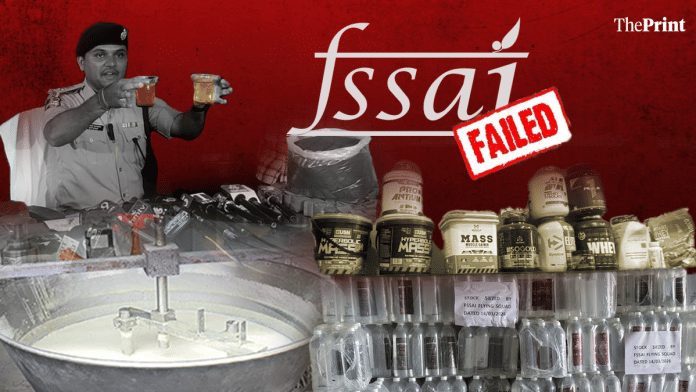

India’s food industry has been here before.
When the Food Safety and Standards Authority of India (FSSAI) launched the Eat Right India movement in July 2018, major food companies voluntarily pledged to reduce salt, sugar and saturated fat in their products. Several subsequently made sincere efforts at reformulation.
But the experience exposed a commercial reality. Mondelez India introduced a Cadbury Dairy Milk variant with 30 per cent less sugar, but the product failed to sustain demand and was eventually discontinued. Other healthier product offerings, including traditional snack manufacturer Haldiram’s low-sodium or reduced-fat variants or zero-sugar alternatives launched by major cola giants, encountered similar challenges.
The lesson was not that consumers do not care about health. Awareness of healthier eating has increased. But in the mass market, purchasing decisions continue to be driven by taste, familiarity, convenience and price.
This creates a first-mover problem. If one company reduces sugar, salt or fat while competing products remain unchanged, consumers accustomed to a particular taste can move to another brand. The company reformulating carries the commercial risk while its competitors do not.
A level-playing field for reformulation
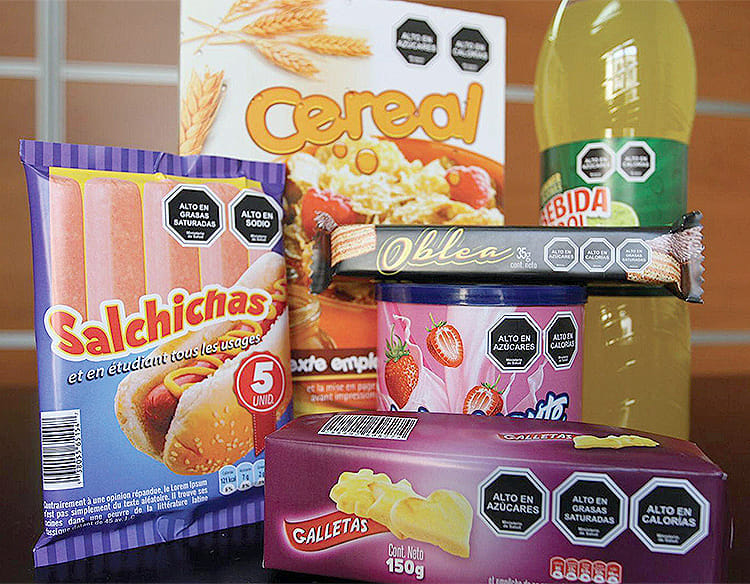
This is why the proposed front-of-pack warning labels should not be seen by industry as a setback. They could help solve precisely this problem.
When comparable products face the same nutrient thresholds, reformulation is no longer an isolated commercial gamble. Everyone has an incentive to improve. Competition can shift towards making healthier products that remain tasty, affordable and convenient.
But reformulation cannot happen overnight. Reducing sugar, salt or fat without affecting taste, texture, shelf life or price requires innovation. Consumer palates also take time to adapt. That’s why countries such as Chile, and later Peru and Argentina, used a multi-year, phased implementation with progressively tighter thresholds.
The objective should not be to penalise food companies, but to progressively move the market towards healthier products. Industry can turn this transition into an opportunity in four ways.
Also read: Mundhe’s crackdown only concerns cleanliness. India’s food safety problem is much bigger
Four opportunities for industry
First, the industry should invest collectively in food and nutrition literacy.
Companies spend enormous resources understanding and influencing consumer preferences. A fraction of that capability could be leveraged to create more informed consumers, particularly children, whose dietary habits are still developing.
Schools are the obvious starting point. Understanding food, nutrition, labels, portions, sugar, salt and fat should be treated as basic life skills. The recently launched Food, Nutrition and Lifestyle Literacy programme in Delhi schools offers a useful template that could be scaled nationally. By joining forces, companies can support credible nutrition education without turning classrooms into marketing spaces.
Second, the ecosystem must make healthier food economically attractive.
With clearer thresholds distinguishing nutritious items from less healthy products, the government and industry should examine whether current taxation and industrial incentives align with public health objectives.
GST rates deserve a close examination, as does the Production Linked Incentive (PLI) scheme for food processing. The Ministries of Food Processing, Health and Finance, together with the FSSAI, should consider incentives for product reformulation and healthier innovation. Ultimately, food regulation, taxation and industrial policy must pull in the same direction.
Third, nutrition should become a core pillar of ESG frameworks.
For food companies, corporate responsibility cannot stop at recyclable packaging, renewable energy, or reduced carbon emissions. The nutritional impact of what they sell matters just as much.
Large food and beverage companies should progressively disclose their overall reductions in salt, sugar and saturated fat, alongside the proportion of their portfolios meeting healthier nutritional standards. Non-food companies can also play a role by promoting healthier options through workplace cafeterias, vending machines, corporate meetings and employee wellbeing programmes.
Fourth, the healthy eating journey must eventually extend to food services and retail.
Restaurants are currently outside the front-of-pack labeling framework. But large quick-service chains increasingly operate with standardised recipes, portions and menus. Nutrient thresholds and menu labelling can progressively be adapted for them as well.
Similarly, traditional retailers and e-commerce platforms can design their interfaces and grocery aisles to make healthier products much easier for everyday shoppers to identify and choose.
Also read: From McDonald’s to Patanjali, an IAS officer explains how FSSAI is making food safer
From resistance to leadership
When it comes to warning labels, companies worry about brands, sales, implementation costs and consumer perceptions. While these concerns are understandable and deserve serious engagement, resisting the inevitable direction of change would be a mistake.
Back in 2018, India’s leading food companies themselves recognised the urgent need to reduce salt, sugar and fat. What voluntary reformulation could not provide was a level playing field. Front-of-pack warnings can now provide that much-needed common framework, ensuring no single company carries the commercial gamble alone.
The transition period should therefore be used not merely to redesign packaging labels, but to fundamentally redesign products.
The government must provide predictable regulation and appropriate fiscal incentives. The industry must innovate. Schools must build food literacy. And consumers can gradually evolve their preferences. Together, these steps will create an ecosystem where healthier food is no longer seen as a regulatory obligation, but embraced as a business opportunity.
India does not need a prolonged battle between public health advocates and the food industry. Instead, it needs the food industry to step up as a key partner in building a healthier nation.
The red hexagon is not a small symbol on a food pack. It can become the signal of a much larger movement, a change in how India eats.
Pawan Agarwal is the CEO of Food Future Foundation and Former CEO of FSSAI. He tweets @Pawan_Connect. Views are personal.
(Edited by Prashant Dixit)