






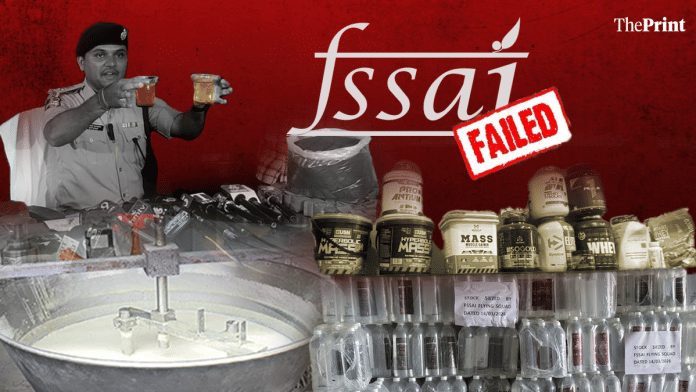

The response to Tukaram Mundhe’s campaign against unhygienic conditions in Maharashtra’s restaurants shows how concerned Indians are about food safety.
But the crackdown initiated by Maharashtra’s Food and Drug Administration (FDA) commissioner, which has involved 3,000 raids so far, touches upon just one aspect of food safety: cleanliness. There are many other areas that receive too little attention, possibly because regulators and those meant to enforce the regulations are either too lazy, too weak or too corrupt.
The first is food adulteration and the manufacture of fake food. For instance, we have all applauded Mundhe’s campaign against so-called analogue paneer. It is basically a bogus product but, bizarrely, it is legal to call it ‘paneer’ as long as you use the term ‘analogue’ with it.
There is also fake and unsafe ‘paneer’ made from maida, palm or other cheap oils, baking powder, detergent, discarded skimmed milk, sodium bicarbonate and industrial sulphuric acid. It is made in small workshops all over India and sold as real paneer to credulous consumers and to the restaurant and food-stall sector.
The Mundhe kind of crackdown targets restaurants that cook this ‘paneer’, which is good but does not go far enough. What about the places that actually manufacture it? You hear, once in a while, about a raid on a workshop, but these raids miss at least 95 per cent of the manufacturers. Usually, they pay off local authorities and are left alone.
This is true of most manufacturers who adulterate cooking oil, dal and other staples. There is no concentrated campaign against them, and they flourish.
As for analogue paneer, we should consider banning it completely. If it isn’t fully made from milk, then it isn’t paneer of any kind. The government has already stopped people who make so-called ‘ice cream’ from vegetable oil from calling it ice cream. So why not extend the same principle to ‘cheese’ and ‘paneer’ made from vegetable fat? Why confuse consumers with meaningless terms like ‘analogue’?
Also read: Tukaram Mundhe shows food is a big issue in India. Just not in the way BJP thought it was
Harmful ingredients
There is a second area of concern where food and good health collide. This has to do with products that are not, in themselves, poisonous but contain ingredients that can be harmful if consumed in excess.
A meticulously researched expose by Reuters, written by Aditya Kalra and Richa Naidu, released this week reveals that while we imagine we are consuming global food and drink products made by giant multinationals, products sold in the Indian market can be different from, and unhealthier than, their foreign versions despite their international branding.
For instance, Indian Fanta has three times the sugar of the British version. Indian Kit Kat has far less cocoa than the Australian version. Indian Maggi uses palm oil, which is rich in saturated fat, while the UK version uses healthier sunflower oil. And so on.
The multibillion-dollar multinationals defend some of these decisions on price grounds. And yes, they are right when they say it would cost more to use healthier ingredients. The prices of their products would go up as a consequence and sales would fall. But is that such a bad thing? For the multinationals and their profits, perhaps. But for the health of our nation? I doubt it very much.
I am not in favour of banning food on the grounds that excessive consumption could have harmful consequences. All the multinationals need to do is include health warnings about high levels of salt, sugar, etc on their products.
But even this has proved too much for multinationals that are content to profit from India but unwilling to include cigarette-package-style warnings on their labels. Reuters reveals that the multinational food industry has successfully stymied efforts by regulators in India, even though it has agreed to labelling changes in other markets. One argument offered was that if it had to put red warning labels on food products high in salt, fat and sugar, the packaging would be awash in red because as much as 80 per cent of packaged foods would fall into that category.
Obviously, something needs to be done, and the matter is now before the courts.
Also read: Can’t stop munching your ‘healthy’ quinoa snacks or cornflakes? You better read this
Ultra-processed foods
As worrying as all this is, there is also a third area of concern. All over the world, the movement against ultra-processed foods (UPFs) is growing. Various health risks have been identified with factory-manufactured foods that are essentially made by machines with the help of chemicals. The anti-UPF movement is growing in India and will soon enter the mainstream.
For food multinationals abroad, the campaign against UPFs has proved to be a real threat, and many have gone out of their way to say they are simplifying their processes and using fewer chemicals.
I am not a hardcore adherent of the anti-UPF movement, though it is no longer possible to deny that its central message is valid. It is also hard to be optimistic about the long-term future of the multinational food industry.
There are some parallels with the cigarette industry. For instance, cigarette sales in America have dropped by more than 40 per cent in the last decade. A similar dip may be starting with UPFs. After years of growth in America, sales have dipped or flattened. This makes India a vital market for multinationals because the campaign against UPFs has yet to take off. As a defensive position, food multinationals are holding firm in their short-term fight against labelling on sugar, salt and fat. Though Indian regulators have tried their best, one view is that the government is too scared of America to take any substantive action on the labelling issue.
I don’t know if that is true. But judging by the public anger about food safety and health, any government that ignores these issues risks damaging itself. No nation should sit back and let itself be poisoned. And no government should allow this to happen.
Vir Sanghvi is a print and television journalist and talk show host. He tweets @virsanghvi. Views are personal.
(Edited by Prashant Dixit)