






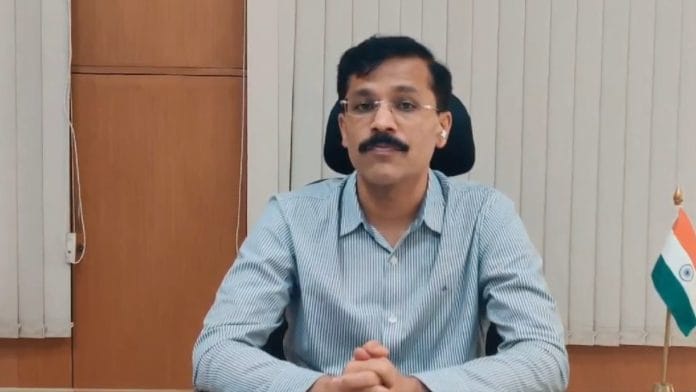

The emergence of Tukaram Mundhe as a hero to the Mumbai middle classes got me thinking about food policy. A decade ago, when a parliamentary election and a series of assembly polls sent India hurtling back to the Middle Ages, many of us were horrified by a new political obsession with food. The centrepiece of the campaign was originally meant to be beef.
Not only were harsh sentences imposed on anyone selling beef (five years of rigorous imprisonment in many states), but the real agenda of the campaign was revealed when people began to be lynched for possessing or transporting beef.
The political obsession was less with protecting the holy cow and more with persecuting poor Muslims, some of whom are beef eaters (beef can be one-third the price of goat meat).
Later, the beef obsession was extended to all non-vegetarian food, and a myth that Hinduism treated vegetarianism as one of its sacred canons was propounded. If a housing society or a landlord wanted to deny accommodation to a Muslim, then it had a ready excuse: it claimed that it did not want non-vegetarians.
So hysterical was the campaign that the Delhi police even raided the canteen at the capital’s Kerala Bhavan to check whether beef was being served (it was not), and third-rate news channels organised stings at hotels to trap them into admitting that beef was available.
This campaign has now been toned down, though the laws remain on the statute books. But the India-is-vegetarian motto seems like the official position of the government. We are a country where the two most powerful politicians and the two richest men are Gujarati vegetarians (three of them are Baniyas). As is now common, it’s the rich and powerful who set the agenda.
Why has the campaign now been toned down? Three reasons. One: it made the BJP seem too much like a Bania party, and it now needs to reach out to other non-vegetarian castes. Two: it had become too self-contradictory. The BJP wants to jail people in North India for selling beef. But in Goa and the North East, it takes the line that beef eating is fine.
Three: nobody really cares about food taboos. The anti-beef campaign may have pleased a Hindutva hardcore among BJP supporters and suited so-called gau rakshaks who were looking for justification to beat up Muslims. But I don’t think it made any difference to the average voter who was more concerned with governance and the economy than with the evil properties the BJP attributed to Beef Chilli Fry.
Eventually the BJP came to the conclusion that food is a non-issue and moved on to other dog whistles. Except, of course, that the BJP was completely wrong. Food is a major issue.
The BJP got it wrong because it believed that people care about what their neighbours are eating. They don’t. But they do care about what they themselves are eating. And the BJP has no interest in that.
So food is a big issue. Just not in the way the BJP thought it was.
Also read: Indian politicians need to learn to take a joke
The Indian reality
Which brings us back to Tukaram Mundhe—hero of the moment. He is the Commissioner in the Maharashtra government’s Food and Drug Administration. Over the last several weeks, he has launched a crackdown on restaurants, warehouses and food shops in Maharashtra. In Mumbai, Mundhe’s department has found rats, cockroaches and all kinds of vermin in kitchens and other places where food is stored or cooked.
Mundhe has proved to be no respecter of status or reputation, going after the Willingdon, Mumbai’s most prestigious club, Blinkit warehouses and even court canteens. At every stage, politicians and judges have huffed in disapproval, but he has been cheered on by citizens who treat him as that rare phenomenon: an officer who enforces the rules without favour or fear.
People are tired of eating adulterated, unsafe food. The Indian reality is that almost every food ingredient can be adulterated. Bogus paneer has nearly taken over the whole market. Edible oil is often adulterated and dangerous. Nobody is sure when they go out to eat (or eat at a food stall) that the food is safe. Are the kitchens full of cockroaches? We are not sure. And what about cloud kitchens created for home delivery? Most people don’t even know where they are, let alone how clean they are and what hygiene standards are required from those who work in them.
In a country that, we keep being told, is an emerging superpower, is it right that we can’t even be sure how safe our food is? What does it say about India that even the richest people end up eating bogus paneer at high-end restaurants where rats and cockroaches roam in the kitchen?
Now, imagine what the reaction would have been if, a decade ago, the government had focused on unsafe food and adulteration? If Prime Minister Narendra Modi had told the country that, because cleanliness and health come first, his government (in collaboration with state governments, at least in BJP-ruled states) would launch a crackdown to ensure that citizens faced no danger to their health?
Judging by the response that Mundhe is getting now, the crackdown would have been enormously popular and Modi would have been regarded as the man who gave us our health back, kept our children safe, and ensured that India had the hygiene standards of, say, Singapore.
But of course the government had no intention of doing anything like that. It talked about governance while promoting intolerance. Does it really harm anyone if a man in Kolkata enjoys his beef biryani? If a home in Kochi cooks beef chilli fry for dinner? Of course not. But it does harm us when we eat dangerously unsafe food.
Why did the government make the centre of its food focus all about imposing upper-caste (Brahmin-Bania mainly) habits on everyone? Yes, it probably appeals to some of its Muslim-hating supporters. But it did very little to take India forward. Or to benefit the average Indian.
Everyone in Mumbai thinks they know how the Mundhe episode will end. A judge will make some negative observations about Mundhe’s actions and the Maharashtra government will use that as an excuse to transfer him to another department. A more pliable officer will replace him and everyone in the department (and higher up) will make a fortune extracting bribes from the places that Mundhe has acted against. Once the bribes are paid, the offenders will be allowed to conduct business as usual.
It’s a cynical but mostly accurate view of how governments function. Mundhe himself has been transferred over two dozen times in his career, so the pattern is a familiar one.
But think of how different it could all have been if Mr Modi had got there first? If he had acted on the poisons that are tainting our food? It’s another opportunity missed. For India. And for this government.
Vir Sanghvi is a print and television journalist and talk show host. He tweets @virsanghvi. Views are personal.
(Edited by Ratan Priya)
Somehow this guy had to connect a food safety drive to BJP.
Also why should we compromise on our culture ? Do other countries do ? No. Even the so called western countries are obsessed about culture but people like vir are intolerant of Hindu culture.
His friends like mahua moitra would literally side with white supremacists saying Diwali should not be celebrated in US. People can see through your BS. Try again. It’s not about beef but it’s about your continuous attempt to erode our culture which has no protection in dozens of Christian and Muslim countries. Everyone can see the speech of Muslims to eat beef just to piss on us. Do you want to know what Christian’s do ? They make people who are converting (through dubious means) eat blood of the cow. How evil is that huh ? Have you talked about it.
If it was just about consumption it would have been a different debate. But it’s not. So don’t think we are fools.