





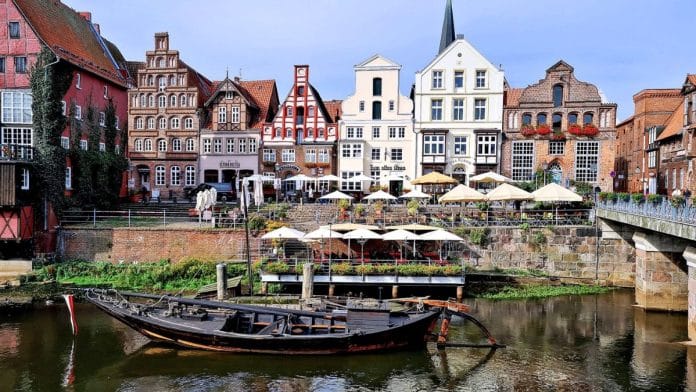


France or Spain may sit higher on most travellers’ lists than Germany — which, for the curious traveller, is actually an advantage. It means there is a great deal to discover off the beaten track, in places few people have heard of. In some ways, I find Germany comparable to Rajasthan or Uttar Pradesh: you will find cities with a centuries-old independent history, with courts and kings, their own cultural particularities, and their own identity and traditions. Most people know the larger cities — Berlin, Hamburg, Frankfurt, Munich. So let us take a look at the hidden gems.
In the north, there is Lübeck. You may have heard of it if you either have a sweet tooth or are a literature buff. For those who like mithai, Lübeck is the birthplace of one of Germany’s signature sweets, marzipan: a blend of almonds, sugar, and a dash of rosewater, often finished in dark chocolate. You can buy Lübecker marzipan in any good German supermarket, but nothing beats tasting it where it was invented. And if you have read the German Nobel laureate Thomas Mann, you will know Buddenbrooks. Set in Lübeck, this book tells the saga of a fictional trading dynasty. At the city’s Buddenbrookhaus, you can step into the world of Thomas Mann — who came from a very similar background — and of the Buddenbrooks themselves.
Another northern city worth exploring is Lüneburg. Its wealth rested on a vast underground salt deposit — the ‘white gold’ that made it one of Germany’s richest cities. As it happens, the salt was shipped out through the port of Lübeck. Lüneburg has a maze of charming small alleyways, a beautiful historic market square, and a very peaceful atmosphere.
Looking eastwards, you will find other small but beautiful towns. Weimar in Thuringia is world famous as the namesake of Germany’s short-lived Weimar Republic of the 1920s and early 30s. But it is worth visiting for quite different reasons: 200 years ago, it was not merely a German centre of culture, but one of the most influential in Europe.
Many of Germany’s greatest intellectuals called Weimar their home — Goethe, Schiller, Herder, Wieland. The composer Franz Liszt spent a significant part of his life working in Weimar, and he is the reason that you will find some of Germany’s most talented classical musicians in Weimar. Its music university bears his name, and if you spend a day in Weimar you will see music students busking in the streets, which makes this city very enchanting. Further east, in Saxony and right on the Czech border, lies Görlitz. If you have seen Wes Anderson’s The Grand Budapest Hotel (2014), you already know it — much of the film was shot there, thanks to the particular charm of its historic architecture. It is a place where the architecture and culture of the two countries flow into one another.
Also read: What makes India so fascinating is that no one can prepare for it: German Ambassador
Music and culture
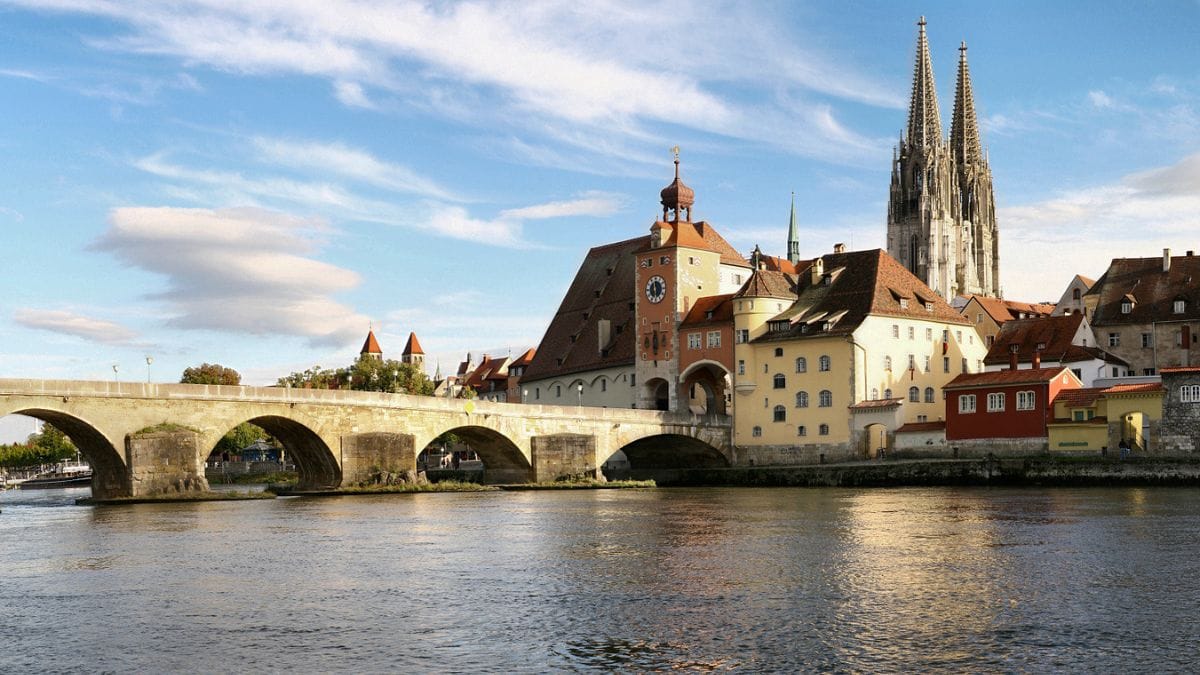
The south is my favourite region, though I admit to some bias: I come from the small but beautiful town of Miltenberg am Main in Bavaria. There is no shortage of lovely cities in Germany’s south. Regensburg is one of Germany’s oldest, founded by the Romans in 179 AD; it has the same Biergarten culture Munich is famous for, but at a gentler, more neighbourly pace. In the southwest lies Lindau, whose old town sits on an island of barely 70 hectares in Germany’s largest lake — a sight worth the journey in itself. From Lindau you can reach Austria and Switzerland by boat, and like much of the south, the city is blessed with a great deal of sunshine.
Germany is, of course, famous for its classical music; most readers will have heard of Bach, Beethoven or Wagner. But let me point to a lesser-known German genre, one that will particularly reward anyone learning the language. Neue Deutsche Welle is not a television station or the equivalent to The New Indian Express — it is German pop music of the 1980s, and it cheerfully undermines the cliché of the serious German.
The music of those years was funny, self-ironic, and provocative in a light-hearted way. 99 Luftballons by Nena is probably the most famous song of that era, but several others have lyrics well worth translating. Try Bruttosozialprodukt by Geier Sturzflug, whose refrain loosely translates as “We’re raising the gross national product, yes, yes, yes, now we’re spitting on our hands again”, or Extrabreit’s Hurra, hurra, die Schule brennt — “Hurray, hurray, the school is burning.” Do not take any of this too seriously: Neue Deutsche Welle was meant to be silly and ironic.
If you want to get under the surface of German society, culture, and politics, I would recommend two contemporary German sociologists: Andreas Reckwitz and Steffen Mau. Reckwitz is an excellent guide to the dynamics of German cultural and political life. In Society of Singularities, he traces the logic of the modern Western cultural economy and its consequences for social inequality — which sounds technical, but makes for an enlightening and genuinely fascinating read.
Steffen Mau, in Sorting Machines: The Reinvention of the Border in the 21st Century, examines how a seemingly borderless, globalised world has produced new and less visible forms of borders that quietly structure our lives and our global pathways. Most striking, though, is his work on German reunification — a historic moment we celebrate till this day, and one that also produced social, cultural, and political tensions we are still working through.
The author is the German Ambassador to India. He tweets @AmbAckermann. Views are personal.
This article is part of a series on the life, travels, and adventures of serving diplomats in New Delhi.
(Edited by Aamaan Alam Khan)