



First, let me put Poland on the map.
For many Indians, Poland is still a country somewhere in Europe, quite a long way away, but perhaps not exactly where one would first choose to go on a European holiday.
When Indians think of Europe, they usually think of France, Britain, Italy, or Switzerland. Poland is not often among their first choices. I would like to change that.
Poland today is a different country from the one many people may remember from history books. We are the sixth-largest economy in the European Union, the 20th largest economy in the world, with a GDP of $1 trillion. Over the past 35 years, Poland has experienced one of the most remarkable periods of economic growth in modern Europe.
For India, this makes Poland particularly interesting. India is one of the world’s great rising powers, and Poland is increasingly becoming one of Europe’s important economic and strategic powers. There are many opportunities for our two countries to do more business, invest, study, and work together.
There is one more advantage: Poland is still relatively affordable by Western European standards. Our cities are clean and safe, and Warsaw is one of Europe’s safer capitals.
But I would argue that Poland’s greatest advantage for an Indian visitor is something that does not appear in any economic statistic: Indians are very popular in Poland.
Indians are already winning hearts
India has an extraordinarily positive image among Poles. Ask a Pole about India and, very often, you will hear about yoga, Bollywood, spirituality, and food. In fact, Indian restaurants have become so popular that the cuisine is one of the most visible foreign food cultures in Poland.
The interest goes both ways. Increasing numbers of Indians are coming to Poland to study, work, and build businesses. There is a growing Indian community, and while I cannot claim that every Pole gets up at sunrise to practice yoga, I can assure you that it is very much a success story in Poland.
There are also some fascinating linguistic and cultural connections between India and Poland. Sanskrit and Hindi have fascinated Polish scholars for generations.
I would like my Indian friends to think of Poland not as a distant corner of Europe, but as a friendly gateway to the continent.
Also read: I started liking paneer in India. Shahi paneer is my favourite now: Polish Ambassador
If you want to understand Poland, read us
Poland takes literature rather seriously. Perhaps this is because, during difficult periods in our history, literature was one of the ways we preserved our national identity.
We have had six Nobel laureates in literature—Henryk Sienkiewicz, Władysław Reymont, Isaac Bashevis Singer, Czesław Miłosz, Wisława Szymborska, and Olga Tokarczuk. Our most recent laureate, Tokarczuk, won the Nobel Prize in 2018.
Tokarczuk is a writer I would particularly recommend to Indian readers because she is fascinated by movement between cultures, travel, memory, and identity. Her Flights (2007) is about travelling itself, which seems appropriate for anyone thinking about travelling from India to Poland.
But if you ask me for my favourite author, I would name Bruno Schulz.
He was a wonderfully strange writer who took the ordinary world around him—a small Polish town, family life, shops, streets—and turned it into something almost mythical. In The Street of Crocodiles (1934), reality and fantasy constantly change places.
I like writers who remind us that the world is stranger than we think. Schulz certainly does that.
For something more contemporary, I would recommend Andrzej Sapkowski, author of The Witcher saga. Many Indians may know The Witcher first from Netflix or the enormously successful video games. But before Geralt of Rivia became a global celebrity, he was a character created by a Polish writer.
And beneath all the monsters, magic, and sword fights, Sapkowski is actually asking very serious questions about prejudice, power, morality, and what makes someone a hero.
Among Polish poets, one of my favourites is Marcin Świetlicki. His poetry is urban, ironic, and sometimes wonderfully dark. His collection Night Truck Driver (2020) has recently become available in English, giving English-speaking readers a chance to discover his distinctive voice.
If you want to understand Poland beyond the tourist brochures, I would say, read us.
Try Polish food
Now we come to a subject on which every Polish person becomes an expert: food.
I will admit that Polish cuisine is not exactly famous for being light. If you are looking for a cuisine based on salads and gentle portions, Poland may require some preparation.
Our traditional food was developed in a climate where winter means winter. So we have potatoes, cabbage, meat, mushrooms, dumplings, and soups substantial enough to survive a snowstorm.
In fact, I think soups are one of the most interesting parts of Polish cuisine. We have żurek (a sour rye soup), rosół (traditional chicken broth), and barszcz czerwony (beetroot soup).
Some of our dishes require a certain amount of courage. There is milk soup and fruit soup. However, the ultimate test of whether you are Polish is czernina, a traditional duck-blood soup. It is not for everyone, to say the least.
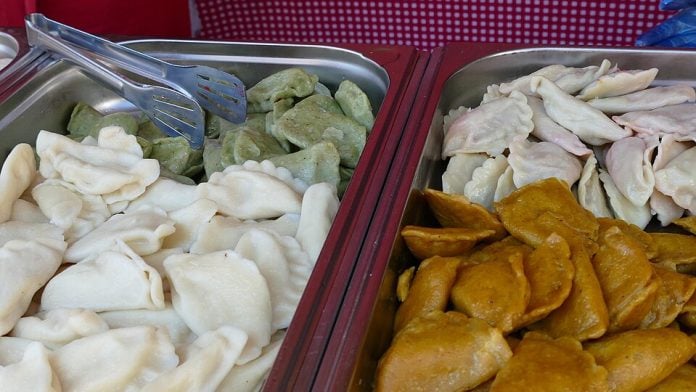
For Indian vegetarian visitors, my recommendation would be pierogi ruskie, dumplings traditionally filled with potato and cheese, and our excellent potato pancakes.
Pierogi are particularly interesting because they are not simply food. They are part of Polish family culture. Every Polish grandmother seems to have her own recipe, and every family believes, naturally, that their grandmother makes the best pierogi.
And if you want something less formal, try a zapiekanka. It is essentially a toasted piece of baguette with mushrooms and melted cheese, usually covered with ketchup. It sounds simple, and it is.
My travel recommendations
If I had to recommend one destination to an Indian visitor, I would choose Kraków. It is one of the best places to experience the layers of Polish history and culture in a compact and beautiful setting. Its medieval Old Town, Wawel Castle, churches, cafés, and lively cultural life make it an ideal starting point. From Kraków, one can also easily explore southern Poland and the Tatra Mountains, with their beautiful alpine landscapes.
If you like the sea, go north to Gdańsk and the Baltic coast. If you like lakes, forests, and quiet landscapes, visit the Masurian Lake District. If you like medieval architecture, visit Malbork, home to one of the largest medieval castles in the world.
And if you want something truly wild, go to the Białowieża Forest in the northeast. It is one of Europe’s last great primaeval forests and home to the European bison.
Also read: Andes to Amazon—here’s how Indian travellers can experience Ecuador: Ecuadorian Ambassador
Polish music is not just music
Music is another essential part of my life. I listen to music for more than 10 hours a day. I find it difficult to work or even read without music.
Naturally, if you talk about Polish music, you have to begin with Frédéric Chopin.
I often tell people: if you want to understand Poland and the Polish character, listen to Chopin. His music contains extraordinary beauty, but also drama and longing. Perhaps this should not surprise us. Poland has experienced enough history to give a nation a very complicated relationship with happiness.
But Chopin is only the beginning.
We have produced outstanding 20th-century composers such as Karol Szymanowski and Krzysztof Penderecki, and Poland has developed one of Europe’s most distinctive jazz traditions.
If I had to introduce one Polish jazz musician to Indian audiences, I would choose Krzysztof Komeda.
Komeda was an extraordinary musician and composer who helped create the distinctive Polish jazz sound. He also worked with Roman Polański on several films, most famously Rosemary’s Baby (1968). The lullaby from Rosemary’s Baby—‘Sleep Safe and Warm’—is one of those melodies that you may recognise without even knowing where you heard it.
Komeda’s story is also a good example of what I find fascinating about Polish culture. We have always absorbed influences from elsewhere and then transformed them into something of our own.
That brings me to contemporary music.
Polish pop music has not conquered the world in quite the way that American or British pop has. Perhaps we are simply too original. Or perhaps we have not yet found the right marketing department!
But there are musicians creating interesting connections between Poland and India. One of them is Michał Rudaś, who has a particular interest in Indian music and culture. His work has brought Polish and Indian musical traditions into conversation with one another.
The fact remains that the best way to discover a country is not through statistics, monuments, or even guidebooks, but through the small experiences that stay with you: a conversation over coffee, a plate of pierogi, a Chopin melody, a walk through an old city, or an unexpected friendship.
Poland may still be far away from India geographically, but I hope that more Indians will discover how close our two countries can feel in spirit. Come to Poland with curiosity—not only as visitors, but as friends. You may arrive looking for Europe and leave having discovered Poland.
Piotr Antoni Świtalski is the Ambassador of Poland to India. Views are personal.
This article is part of a series on the life, travels, and adventures of serving diplomats in New Delhi.
(Edited by Prasanna Bachchhav)